
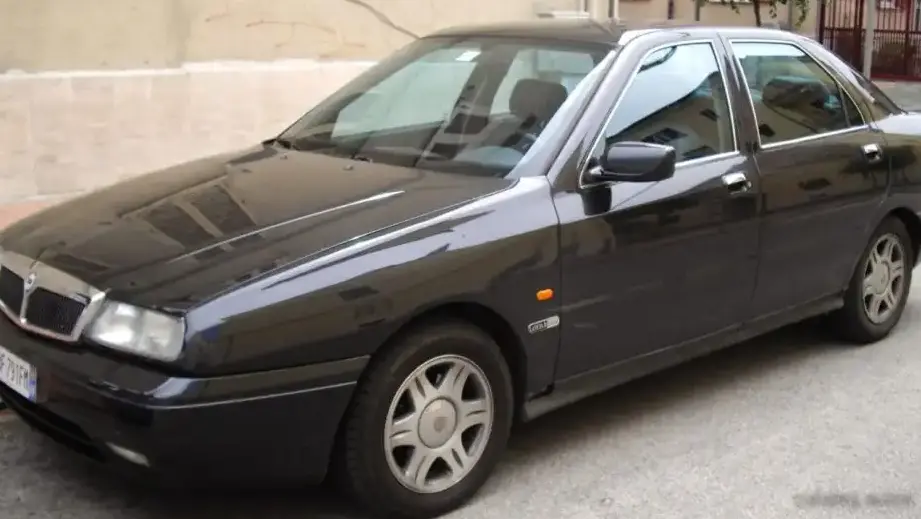
The Lancia Kappa 2.0 LE (146 hp) was a mid-range variant of the 838 series Kappa, produced between August 1994 and June 1996. Positioned within Lancia’s executive car lineup, the Kappa aimed to recapture the brand’s historical prestige and offer a blend of Italian styling, comfort, and technology. The 838 platform, shared with the Alfa Romeo 166 and Fiat Croma, represented a significant investment for the Fiat Group, and the 2.0 LE offered a balance between performance and affordability within the Kappa range. It served as a step up from the base 1.8-liter models, while remaining more accessible than the flagship 3.0 V6 versions.
Technical Specifications
| Brand | Lancia |
| Model | Kappa |
| Generation | Kappa (838) |
| Type (Engine) | 2.0 LE (146 Hp) |
| Start of production | August, 1994 |
| End of production | June, 1996 |
| Powertrain Architecture | Internal Combustion engine |
| Body type | Sedan |
| Seats | 5 |
| Doors | 4 |
| Fuel consumption (combined) | 9.6 l/100 km |
| Fuel consumption (US mpg) | 24.5 US mpg |
| Fuel consumption (UK mpg) | 29.4 UK mpg |
| Fuel consumption (km/l) | 10.4 km/l |
| Fuel Type | Petrol (Gasoline) |
| Acceleration 0 – 100 km/h | 9.8 sec |
| Acceleration 0 – 62 mph | 9.8 sec |
| Acceleration 0 – 60 mph | 9.3 sec |
| Maximum speed | 205 km/h (127.38 mph) |
| Weight-to-power ratio | 9.9 kg/Hp |
| Power per tonne | 100.7 Hp/tonne |
| Weight-to-torque ratio | 7.8 kg/Nm |
| Torque per tonne | 127.6 Nm/tonne |
| Power | 146 Hp @ 6000 rpm |
| Power per litre | 73.1 Hp/l |
| Torque | 185 Nm @ 4500 rpm (136.45 lb.-ft. @ 4500 rpm) |
| Engine layout | Front, Transverse |
| Engine Model/Code | 838 A1.000 |
| Engine displacement | 1998 cm3 (121.93 cu. in.) |
| Number of cylinders | 5 |
| Engine configuration | Inline |
| Cylinder Bore | 82 mm (3.23 in.) |
| Piston Stroke | 75.7 mm (2.98 in.) |
| Compression ratio | 10:1 |
| Number of valves per cylinder | 4 |
| Fuel injection system | Multi-port manifold injection |
| Engine aspiration | Naturally aspirated engine |
| Valvetrain | DOHC |
| Engine oil capacity | 5.4 l (5.71 US qt | 4.75 UK qt) |
| Coolant capacity | 8.3 l (8.77 US qt | 7.3 UK qt) |
| Kerb Weight | 1450 kg (3196.7 lbs.) |
| Max. weight | 1990 kg (4387.2 lbs.) |
| Max load | 540 kg (1190.5 lbs.) |
| Trunk (boot) space – minimum | 565 l (19.95 cu. ft.) |
| Fuel tank capacity | 70 l (18.49 US gal | 15.4 UK gal) |
| Length | 4687 mm (184.53 in.) |
| Width | 1822 mm (71.73 in.) |
| Height | 1462 mm (57.56 in.) |
| Wheelbase | 2700 mm (106.3 in.) |
| Front track | 1547 mm (60.91 in.) |
| Rear track | 1535 mm (60.43 in.) |
| Drivetrain Architecture | The Internal combustion engine (ICE) drives the front wheels of the vehicle. |
| Drive wheel | Front wheel drive |
| Number of gears | 5 gears, manual transmission |
| Front suspension | Wishbone |
| Rear suspension | Spring Strut |
| Front brakes | Ventilated discs |
| Rear brakes | Disc |
| Assisting systems | ABS (Anti-lock braking system) |
| Steering type | Steering rack and pinion |
| Power steering | Hydraulic Steering |
| Tires size | 195/65 R15 |
| Wheel rims size | 15 |
Powertrain & Engine Architecture
The Lancia Kappa 2.0 LE was powered by the 838 A1.000 engine, a 1998cc inline-five cylinder gasoline engine. This engine was notable for its relatively smooth operation and distinctive sound, a characteristic of five-cylinder designs. It featured multi-port fuel injection and a double overhead camshaft (DOHC) valvetrain, contributing to its respectable power output for the time. The engine’s 10:1 compression ratio was a standard figure for naturally aspirated engines of this era. The 2.0 LE utilized a five-speed manual transmission, delivering power to the front wheels. This transmission was chosen for its balance of efficiency and driver engagement, although an automatic transmission was available as an option in some markets.
Driving Characteristics
The 2.0 LE offered a comfortable and refined driving experience. With 146 horsepower, acceleration from 0 to 60 mph took approximately 9.3 seconds, and it reached a top speed of 127.38 mph. While not a sports car, the 2.0 LE provided adequate performance for everyday driving and highway cruising. The inline-five engine delivered a broad torque curve, making it relatively flexible in various driving situations. Compared to the base 1.8-liter Kappa, the 2.0 LE offered noticeably improved acceleration and passing power. However, it didn’t possess the outright performance of the 3.0 V6 models. The five-speed manual transmission allowed for precise control, and the gear ratios were well-suited for both city and highway driving.
Equipment & Trim Levels
The 2.0 LE trim level offered a good level of standard equipment. Interior features typically included cloth upholstery, power windows, central locking, and an integrated audio system. Air conditioning was standard. The dashboard layout was characterized by a clean, ergonomic design, typical of Italian automotive interiors of the period. Optional extras included leather upholstery, a sunroof, and upgraded audio systems. The Kappa prioritized comfort and convenience, offering a more luxurious experience than many of its competitors in the same price range.
Chassis & Braking
The Kappa 2.0 LE featured a front-wheel-drive layout with independent wishbone suspension at the front and a spring strut rear suspension. This suspension setup provided a comfortable ride quality while maintaining reasonable handling characteristics. The car was equipped with ventilated disc brakes at the front and solid disc brakes at the rear, providing adequate stopping power for its weight class. An anti-lock braking system (ABS) was standard, enhancing safety and control during emergency braking situations. The steering was rack and pinion with hydraulic power assistance, offering precise and responsive steering feel.
Market Reception & Comparison
The Lancia Kappa 2.0 LE was generally well-received by automotive critics. It was praised for its stylish design, comfortable interior, and refined driving experience. However, some critics noted that the Kappa’s reliability record was somewhat inconsistent, a common issue for Italian cars of the era. Compared to other cars in its class, such as the Ford Mondeo and Opel/Vauxhall Vectra, the Kappa offered a more distinctive and luxurious experience, but it often came at a slightly higher price point. Fuel economy was reasonable for a car of its size and engine displacement, averaging around 24.5 US mpg. The 2.0 LE represented a sweet spot in the Kappa lineup, offering a good balance of performance, comfort, and value.
Legacy
The Lancia Kappa, while not a commercial blockbuster, remains a fondly remembered car among enthusiasts. The 2.0 LE powertrain, while not without its quirks, proved to be relatively durable with proper maintenance. Today, well-maintained examples of the Kappa 2.0 LE are becoming increasingly sought after by collectors and enthusiasts who appreciate its unique Italian character and distinctive design. Parts availability can be a challenge, but a dedicated community of Lancia owners and specialists exists to support the preservation of these classic vehicles. The Kappa’s innovative features and stylish design continue to influence automotive design today, cementing its place in automotive history.
