
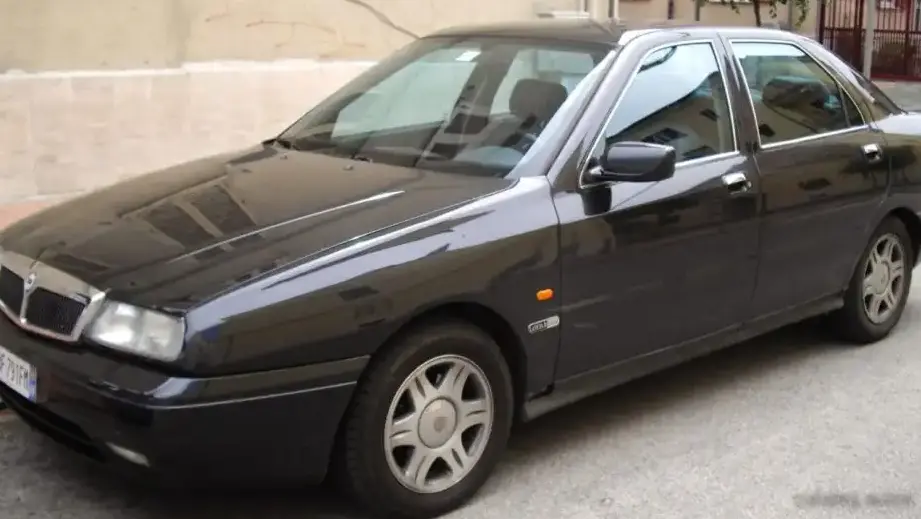
The Lancia Kappa 2.4 JTD (136 hp) was a diesel-powered variant of the Kappa (838) executive sedan, produced between 1998 and July 2000. Positioned as a more economical and torque-rich alternative to the gasoline engines in the Kappa lineup, the 2.4 JTD aimed to appeal to drivers prioritizing fuel efficiency and long-distance comfort. It represented Lancia’s attempt to compete in the increasingly popular European diesel market, offering a blend of Italian style and modern common-rail diesel technology. The Kappa itself was a significant model for Lancia, intended to revive the brand’s image as a purveyor of sophisticated and technologically advanced automobiles.
Technical Specifications
| Brand | Lancia |
| Model | Kappa |
| Generation | Kappa (838) |
| Type (Engine) | 2.4 JTD (136 Hp) |
| Start of production | 1998 |
| End of production | July, 2000 |
| Powertrain Architecture | Internal Combustion engine |
| Body type | Sedan |
| Seats | 5 |
| Doors | 4 |
| Fuel consumption (urban) | 10.2 l/100 km (23.1 US mpg) |
| Fuel consumption (extra urban) | 6.2 l/100 km (37.9 US mpg) |
| Fuel Type | Diesel |
| Acceleration 0 – 100 km/h | 10 sec |
| Acceleration 0 – 62 mph | 10 sec |
| Acceleration 0 – 60 mph | 9.5 sec |
| Maximum speed | 202 km/h (125.52 mph) |
| Weight-to-power ratio | 11.1 kg/Hp |
| Weight-to-torque ratio | 5 kg/Nm |
| Power | 136 Hp @ 4000 rpm |
| Power per litre | 57 Hp/l |
| Torque | 304 Nm @ 2000 rpm (224.22 lb.-ft. @ 2000 rpm) |
| Engine layout | Front, Transverse |
| Engine Model/Code | 838 A8.000 |
| Engine displacement | 2387 cm3 (145.66 cu. in.) |
| Number of cylinders | 5 |
| Engine configuration | Inline |
| Cylinder Bore | 82 mm (3.23 in.) |
| Piston Stroke | 90.4 mm (3.56 in.) |
| Compression ratio | 18.45:1 |
| Number of valves per cylinder | 2 |
| Fuel injection system | Diesel Commonrail |
| Engine aspiration | Turbocharger |
| Valvetrain | OHC |
| Engine oil capacity | 5.5 l (5.81 US qt | 4.84 UK qt) |
| Coolant | 8.3 l (8.77 US qt | 7.3 UK qt) |
| Kerb Weight | 1510 kg (3328.98 lbs.) |
| Max. weight | 2030 kg (4475.38 lbs.) |
| Max load | 520 kg (1146.4 lbs.) |
| Trunk (boot) space – minimum | 525 l (18.54 cu. ft.) |
| Fuel tank capacity | 70 l (18.49 US gal | 15.4 UK gal) |
| Length | 4687 mm (184.53 in.) |
| Width | 1826 mm (71.89 in.) |
| Height | 1462 mm (57.56 in.) |
| Wheelbase | 2700 mm (106.3 in.) |
| Front track | 1547 mm (60.91 in.) |
| Rear (Back) track | 1535 mm (60.43 in.) |
| Drivetrain Architecture | The Internal combustion engine (ICE) drives the front wheels of the vehicle. |
| Drive wheel | Front wheel drive |
| Number of gears and type of gearbox | 5 gears, manual transmission |
| Front suspension | Wishbone |
| Rear suspension | Spring Strut |
| Front brakes | Ventilated discs |
| Rear brakes | Disc |
| Assisting systems | ABS (Anti-lock braking system) |
| Steering type | Steering rack and pinion |
| Power steering | Hydraulic Steering |
| Tires size | 195/65 R15; 205/60 R15 |
| Wheel rims size | 6.5J x 15 ET 37 |
Powertrain & Engine Architecture
The heart of the Kappa 2.4 JTD was the 838 A8.000, a 2.4-liter inline-five cylinder diesel engine. This engine was a key component of Fiat Group’s push towards modern diesel technology. It featured a turbocharger and, crucially, a common-rail direct injection system. This system, relatively new at the time, allowed for more precise fuel delivery, resulting in improved combustion efficiency, reduced noise, and lower emissions compared to older diesel injection methods. The engine produced 136 horsepower at 4000 rpm and a substantial 304 Nm (224 lb-ft) of torque at just 2000 rpm. The five-cylinder configuration, while less common than four-cylinder diesels, contributed to a smoother and more refined engine character. The engine utilized an overhead camshaft (OHC) valvetrain with two valves per cylinder. The 5-speed manual transmission was the only gearbox option available with this engine.
Driving Characteristics
The 2.4 JTD offered a distinctly different driving experience compared to the gasoline-powered Kappa variants. The high torque output meant strong acceleration from low engine speeds, making it well-suited for relaxed cruising and overtaking. While not a sports car, the 2.4 JTD provided ample power for everyday driving and long highway journeys. The 0-60 mph time of around 9.5 seconds was respectable for a diesel of that era. The manual transmission, while offering driver engagement, had relatively long throws. The gear ratios were optimized for fuel efficiency and mid-range acceleration, rather than outright performance. Compared to the more powerful V6 gasoline engines available in the Kappa range, the 2.4 JTD prioritized fuel economy and usability over outright speed.
Equipment & Trim Levels
The Kappa 2.4 JTD typically came with a reasonably well-equipped specification, reflecting its positioning as a mid-range offering. Standard features often included air conditioning, power windows, central locking, and an anti-lock braking system (ABS). Interior upholstery was typically cloth, although leather options were available. Dashboard design was characterized by a clean, functional layout with a focus on ergonomics. Optional extras could include a sunroof, upgraded audio system, and alloy wheels. The Kappa aimed for a sophisticated and comfortable interior ambiance, though material quality wasn’t always on par with its German rivals.
Chassis & Braking
The Kappa 2.4 JTD utilized a front-wheel-drive layout. Suspension consisted of a wishbone setup at the front and a spring strut arrangement at the rear. The braking system featured ventilated discs at the front and solid discs at the rear. The suspension was tuned for comfort, providing a relatively smooth ride, although it wasn’t particularly sporty in its handling characteristics. Stabilizer bars were fitted to both the front and rear axles to reduce body roll during cornering. The chassis was designed to accommodate the added weight of the diesel engine and its associated components.
Market Reception & Comparison
The Lancia Kappa 2.4 JTD was generally well-received by automotive critics for its fuel efficiency, comfortable ride, and refined engine. However, it faced stiff competition from established German brands like Audi, BMW, and Mercedes-Benz. Critics noted that the Kappa’s interior quality and overall build quality weren’t quite up to the standards of its rivals. Fuel economy was a strong point, offering a significant advantage over the gasoline engines. Reliability was generally good, although the common-rail injection system could be susceptible to issues if not properly maintained. Compared to the 2.0 JTD variant, the 2.4 JTD offered more power and torque, but at a slightly higher price point.
Legacy
The Lancia Kappa 2.4 JTD represents an interesting chapter in Lancia’s history, showcasing the brand’s attempt to embrace modern diesel technology. While the Kappa itself didn’t achieve widespread commercial success, the 2.4 JTD powertrain proved to be relatively durable and reliable. Today, well-maintained examples are sought after by enthusiasts who appreciate the car’s unique character and fuel efficiency. The common-rail diesel engine technology pioneered in the Kappa paved the way for future generations of diesel engines. In the used car market, the Kappa 2.4 JTD offers a relatively affordable entry point into Italian executive car ownership, but potential buyers should be aware of the need for regular maintenance and careful inspection of the fuel injection system.
