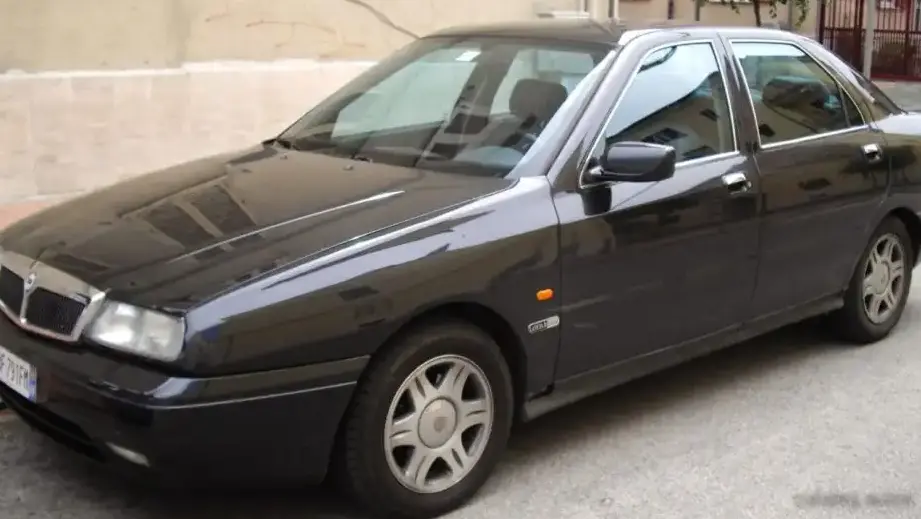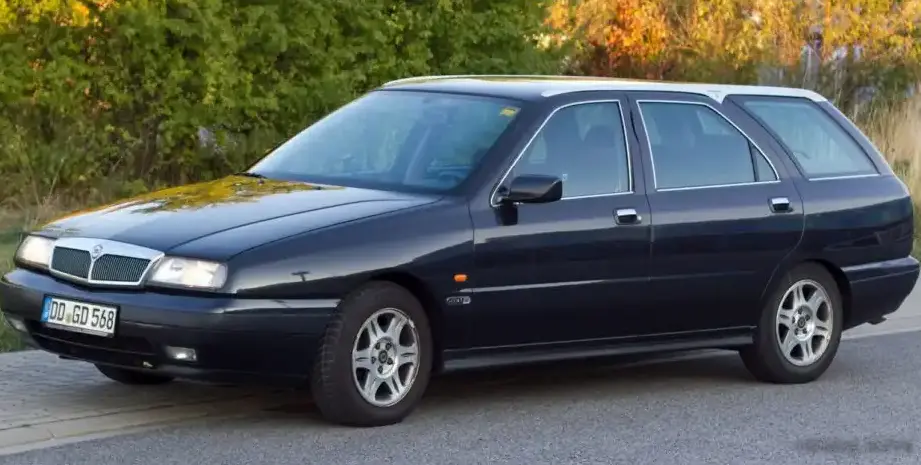
The Lancia Kappa Station Wagon (838) 2.0 20V Turbo, produced between May 1998 and July 2000, represented a performance-oriented variant within the Kappa range. Positioned as a premium offering, it combined the practicality of a station wagon body style with a potent turbocharged engine. The Kappa, as a whole, aimed to recapture Lancia’s historical reputation for innovative engineering and sophisticated design, and the 838 series, specifically the station wagon, was intended to appeal to buyers seeking a blend of space, comfort, and performance. It was built on the 1HX0 platform, shared with other Fiat Group vehicles like the Alfa Romeo 166 and the Lancia Lybra.
Technical Specifications
| Brand | Lancia |
| Model | Kappa |
| Generation | Kappa Station Wagon (838) |
| Type (Engine) | 2.0 20V Turbo (220 Hp) |
| Start of production | May, 1998 |
| End of production | July, 2000 |
| Powertrain Architecture | Internal Combustion engine |
| Body type | Station wagon (estate) |
| Seats | 5 |
| Doors | 5 |
| Fuel consumption (urban) | 15 l/100 km (15.7 US mpg, 18.8 UK mpg, 6.7 km/l) |
| Fuel consumption (extra urban) | 8.3 l/100 km (28.3 US mpg, 34 UK mpg, 12 km/l) |
| Fuel Type | Petrol (Gasoline) |
| Acceleration 0 – 100 km/h | 7.7 sec |
| Acceleration 0 – 62 mph | 7.7 sec |
| Acceleration 0 – 60 mph | 7.3 sec |
| Maximum speed | 235 km/h (146.02 mph) |
| Weight-to-power ratio | 7 kg/Hp, 141.9 Hp/tonne |
| Weight-to-torque ratio | 5 kg/Nm, 199.4 Nm/tonne |
| Power | 220 Hp @ 6000 rpm |
| Power per litre | 110.1 Hp/l |
| Torque | 309 Nm @ 2750 rpm (227.91 lb.-ft. @ 2750 rpm) |
| Engine layout | Front, Transverse |
| Engine Model/Code | 175 A3.000 |
| Engine displacement | 1998 cm3 (121.93 cu. in.) |
| Number of cylinders | 5 |
| Engine configuration | Inline |
| Cylinder Bore | 82 mm (3.23 in.) |
| Piston Stroke | 75.65 mm (2.98 in.) |
| Compression ratio | 8.5:1 |
| Number of valves per cylinder | 4 |
| Fuel injection system | Multi-port manifold injection |
| Engine aspiration | Turbocharger |
| Valvetrain | DOHC |
| Engine oil capacity | 5.4 l (5.71 US qt, 4.75 UK qt) |
| Coolant capacity | 8.5 l (8.98 US qt, 7.48 UK qt) |
| Kerb Weight | 1550 kg (3417.17 lbs.) |
| Max. weight | 2130 kg (4695.85 lbs.) |
| Max load | 580 kg (1278.68 lbs.) |
| Trunk (boot) space – minimum | 505 l (17.83 cu. ft.) |
| Trunk (boot) space – maximum | 1500 l (52.97 cu. ft.) |
| Fuel tank capacity | 70 l (18.49 US gal, 15.4 UK gal) |
| Length | 4687 mm (184.53 in.) |
| Width | 1826 mm (71.89 in.) |
| Height | 1464 mm (57.64 in.) |
| Wheelbase | 2700 mm (106.3 in.) |
| Front track | 1547 mm (60.91 in.) |
| Rear track | 1541 mm (60.67 in.) |
| Drivetrain Architecture | Front wheel drive |
| Number of gears | 5 |
| Gearbox type | Manual transmission |
| Front suspension | Wishbone |
| Rear suspension | Spring Strut |
| Front brakes | Ventilated discs |
| Rear brakes | Disc |
| Assisting systems | ABS (Anti-lock braking system) |
| Steering type | Steering rack and pinion |
| Power steering | Hydraulic |
| Tires size | 215/55R16 |
Powertrain & Engine Architecture
The heart of the Kappa 2.0 20V Turbo was the 175 A3.000 engine, a 1998cc inline-five cylinder powerplant. This engine was a significant departure from the more common four-cylinder engines found in the Kappa lineup. The five-cylinder configuration offered a smoother power delivery and a more distinctive engine note. The engine featured a 20-valve double overhead camshaft (DOHC) cylinder head and a Garrett turbocharger, boosting output to 220 horsepower at 6000 rpm and 309 Nm (227.91 lb-ft) of torque at 2750 rpm. Fuel was delivered via multi-port fuel injection. The engine’s relatively high compression ratio of 8.5:1, combined with the turbocharging, demanded premium fuel for optimal performance and to prevent detonation. The engine was transversely mounted in the front of the vehicle, driving the front wheels. The transmission was a five-speed manual gearbox, chosen to complement the engine’s power output and provide a more engaging driving experience.
Driving Characteristics
The 2.0 20V Turbo offered a noticeably more spirited driving experience compared to the lower-powered Kappa variants. Acceleration to 60 mph was achieved in approximately 7.3 seconds, and the car could reach a top speed of 146 mph. The turbocharger provided a surge of power in the mid-range, making overtaking maneuvers effortless. However, the turbo lag was noticeable, requiring the driver to downshift to access the engine’s full potential. The five-speed manual transmission was well-matched to the engine, offering precise shifts and a good spread of ratios. Compared to the naturally aspirated 2.0-liter engine, the turbo version felt significantly more powerful, but it also demanded more attentive driving. The handling was generally secure, but the front-wheel-drive configuration could exhibit torque steer under hard acceleration.
Equipment & Trim Levels
The 2.0 20V Turbo station wagon was typically equipped with a higher level of standard features than the base Kappa models. These included air conditioning, power windows and mirrors, central locking, and an upgraded audio system. Interior upholstery was typically a combination of cloth and leather, with a focus on comfort and quality. Optional extras included a sunroof, leather seats, and a more advanced navigation system. The dashboard layout was typical of Lancia designs of the period, featuring a clean and functional design with a focus on ergonomics. Safety features included ABS brakes and dual airbags.
Chassis & Braking
The Kappa station wagon utilized an independent wishbone suspension at the front and a spring strut suspension at the rear. This setup provided a comfortable ride while maintaining reasonable handling characteristics. The 2.0 20V Turbo variant typically featured slightly stiffer suspension components compared to the lower-powered models to better manage the increased power and weight. Braking duties were handled by ventilated discs at the front and solid discs at the rear, with ABS as standard. The braking system was generally effective, providing adequate stopping power for everyday driving and spirited performance.
Market Reception & Comparison
The Lancia Kappa 2.0 20V Turbo station wagon was generally well-received by automotive critics, who praised its performance, spacious interior, and comfortable ride. However, some critics noted the noticeable turbo lag and the potential for torque steer. Compared to other station wagons in its class, such as the Volvo V70 and the Audi A6 Avant, the Kappa offered a more distinctive Italian flair and a more engaging driving experience. Fuel economy was reasonable for a turbocharged engine, but not class-leading. Reliability was a mixed bag, with some owners reporting issues with the turbocharger and the electrical system.
Legacy
The Lancia Kappa 2.0 20V Turbo station wagon remains a relatively rare and sought-after vehicle among Lancia enthusiasts. The inline-five turbocharged engine is particularly prized for its unique character and performance potential. While the Kappa as a whole did not achieve significant sales success, it represents a bold attempt by Lancia to recapture its former glory. Today, well-maintained examples of the 2.0 20V Turbo are becoming increasingly collectible, and the powertrain, while requiring careful maintenance, is considered robust when properly cared for. The Kappa’s innovative features and distinctive styling continue to appeal to those seeking a unique and characterful European station wagon.