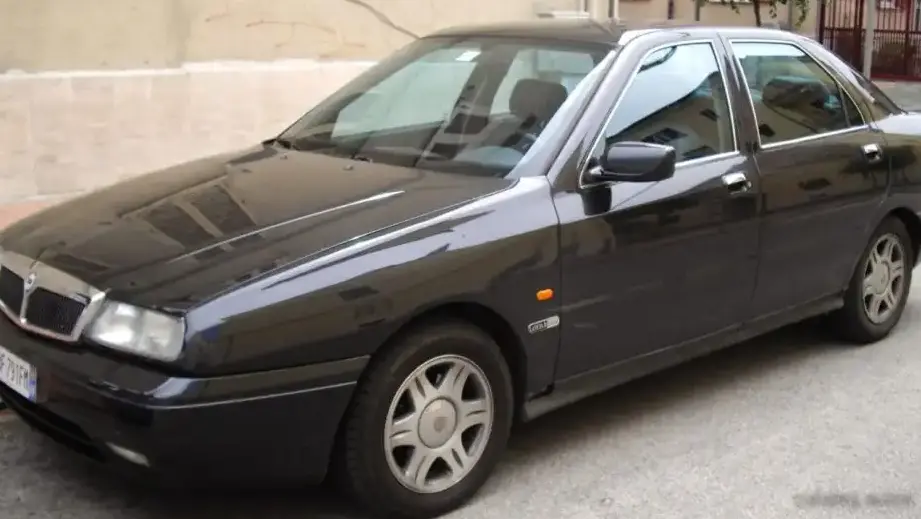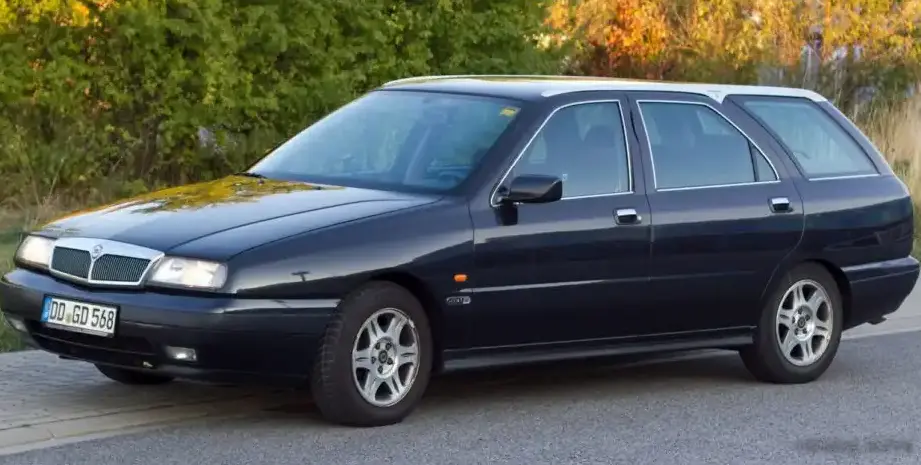
The Lancia Kappa Station Wagon (838) 2.4 20V, produced from 1996 to 2000, represented a significant offering in the upper-midsize station wagon segment for the Italian automaker. Positioned as a more practical variant of the Kappa sedan, the station wagon aimed to combine Lancia’s traditional focus on comfort and style with the versatility demanded by family buyers. This particular 2.4-liter, 20-valve engine configuration, producing 175 horsepower, occupied a mid-range position within the Kappa wagon lineup, offering a balance between performance and fuel economy. It was designed to appeal to those seeking a refined and spacious vehicle for long-distance travel and everyday use.
Technical Specifications
| Brand | Lancia |
| Model | Kappa |
| Generation | Kappa Station Wagon (838) |
| Type (Engine) | 2.4 20V (175 Hp) |
| Start of production | 1996 |
| End of production | July, 2000 |
| Powertrain Architecture | Internal Combustion engine |
| Body type | Station wagon (estate) |
| Seats | 5 |
| Doors | 5 |
| Fuel consumption (urban) | 15.3 l/100 km (15.4 US mpg, 18.5 UK mpg, 6.5 km/l) |
| Fuel consumption (extra urban) | 8.4 l/100 km (28 US mpg, 33.6 UK mpg, 11.9 km/l) |
| Fuel Type | Petrol (Gasoline) |
| Acceleration 0 – 100 km/h | 8.9 sec |
| Acceleration 0 – 62 mph | 8.9 sec |
| Acceleration 0 – 60 mph | 8.5 sec |
| Maximum speed | 212 km/h (131.73 mph) |
| Weight-to-power ratio | 8.7 kg/Hp, 115.1 Hp/tonne |
| Weight-to-torque ratio | 6.6 kg/Nm, 151.3 Nm/tonne |
| Power | 175 Hp @ 6100 rpm |
| Power per litre | 71.5 Hp/l |
| Torque | 230 Nm @ 3750 rpm (169.64 lb.-ft. @ 3750 rpm) |
| Engine layout | Front, Transverse |
| Engine Model/Code | 838 A2.000 |
| Engine displacement | 2446 cm3 (149.26 cu. in.) |
| Number of cylinders | 5 |
| Engine configuration | Inline |
| Cylinder Bore | 83 mm (3.27 in.) |
| Piston Stroke | 90.4 mm (3.56 in.) |
| Compression ratio | 10:1 |
| Number of valves per cylinder | 4 |
| Fuel injection system | Multi-port manifold injection |
| Engine aspiration | Naturally aspirated engine |
| Valvetrain | DOHC |
| Engine oil capacity | 5.4 l (5.71 US qt | 4.75 UK qt) |
| Coolant capacity | 8.3 l (8.77 US qt | 7.3 UK qt) |
| Kerb Weight | 1520 kg (3351.03 lbs.) |
| Max. weight | 2100 kg (4629.71 lbs.) |
| Max load | 580 kg (1278.68 lbs.) |
| Trunk (boot) space – minimum | 505 l (17.83 cu. ft.) |
| Trunk (boot) space – maximum | 1500 l (52.97 cu. ft.) |
| Fuel tank capacity | 70 l (18.49 US gal | 15.4 UK gal) |
| Length | 4687 mm (184.53 in.) |
| Width | 1826 mm (71.89 in.) |
| Height | 1464 mm (57.64 in.) |
| Wheelbase | 2700 mm (106.3 in.) |
| Front track | 1547 mm (60.91 in.) |
| Rear track | 1541 mm (60.67 in.) |
| Drivetrain Architecture | Front wheel drive |
| Number of gears | 5 |
| Gearbox type | Manual transmission |
| Front suspension | Wishbone |
| Rear suspension | Spring Strut |
| Front brakes | Ventilated discs |
| Rear brakes | Disc |
| Assisting systems | ABS (Anti-lock braking system) |
| Steering type | Steering rack and pinion |
| Power steering | Hydraulic Steering |
| Tires size | 205/65 R15 |
| Wheel rims size | 15 |
Powertrain & Engine Architecture
The heart of the Kappa 2.4 20V was the 838 A2.000 engine, a 2.4-liter inline five-cylinder powerplant. This engine was a departure from the more common four-cylinder configurations, offering a smoother and more refined driving experience. The 20-valve cylinder head, featuring dual overhead camshafts (DOHC), maximized airflow for improved performance. Fuel delivery was handled by a multi-port fuel injection system, ensuring precise fuel metering and efficient combustion. The engine’s 175 horsepower output and 230 Nm (169.64 lb-ft) of torque provided adequate performance for the Kappa wagon, allowing for comfortable cruising and reasonable acceleration. The engine was paired with a five-speed manual transmission, which was the standard offering for this trim level. While an automatic transmission was available on other Kappa variants, it wasn’t typically paired with the 2.4-liter engine due to torque management concerns.
Driving Characteristics
The 2.4-liter engine in the Kappa Station Wagon delivered a balanced driving experience. While not overtly sporty, it provided sufficient power for overtaking and maintaining highway speeds. The inline-five configuration contributed to a unique engine note and reduced vibrations compared to a four-cylinder. The five-speed manual transmission allowed drivers to effectively utilize the engine’s torque band, providing good control and responsiveness. Compared to the lower-powered 1.8-liter versions, the 2.4 offered noticeably improved acceleration and a more relaxed feel during highway driving. However, it didn’t possess the outright performance of the higher-end V6 models. The gear ratios were tuned for a blend of fuel efficiency and usability, prioritizing comfortable cruising over aggressive acceleration.
Equipment & Trim Levels
The Kappa 2.4 20V station wagon typically came equipped with a respectable level of standard features. Interior appointments included comfortable cloth upholstery, power windows, central locking, and an integrated audio system. Air conditioning was standard. Higher trim levels offered options such as leather upholstery, a sunroof, upgraded audio systems, and automatic climate control. The dashboard layout was typically characterized by a clean and functional design, with easy-to-read gauges and intuitive controls. Safety features included ABS anti-lock brakes and driver and passenger airbags.
Chassis & Braking
The Kappa Station Wagon utilized a front-wheel-drive layout with independent wishbone suspension at the front and a spring strut rear suspension. This setup provided a comfortable ride quality, absorbing bumps and irregularities in the road surface effectively. The braking system consisted of ventilated discs at the front and solid discs at the rear, providing adequate stopping power for the vehicle’s weight. ABS was standard, enhancing braking performance and stability, particularly in adverse conditions. Stabilizer bars were fitted to both the front and rear axles to reduce body roll during cornering.
Market Reception & Comparison
The Lancia Kappa Station Wagon, particularly the 2.4 20V variant, was generally well-received by automotive critics for its comfortable ride, spacious interior, and refined engine. However, it faced competition from established players in the upper-midsize segment, such as the Volvo V70 and Audi A6 Avant. Compared to the 1.8-liter Kappa wagons, the 2.4 offered superior performance and a more premium feel, justifying its higher price point. Fuel economy was reasonable for a vehicle of its size and engine displacement, but it wasn’t a standout feature. Reliability was generally considered average, with some reports of electrical issues and minor mechanical problems.
Legacy
The Lancia Kappa Station Wagon 2.4 20V, while not a massive sales success, remains a fondly remembered vehicle among Lancia enthusiasts. The inline-five engine is particularly appreciated for its smoothness and unique character. Today, these wagons are relatively rare on the used car market, and well-maintained examples are sought after by collectors and those seeking a distinctive and comfortable classic. The powertrain, while not without its quirks, has proven to be reasonably durable with proper maintenance. Parts availability can be a challenge, but a dedicated community of Lancia owners provides support and resources for keeping these vehicles on the road.