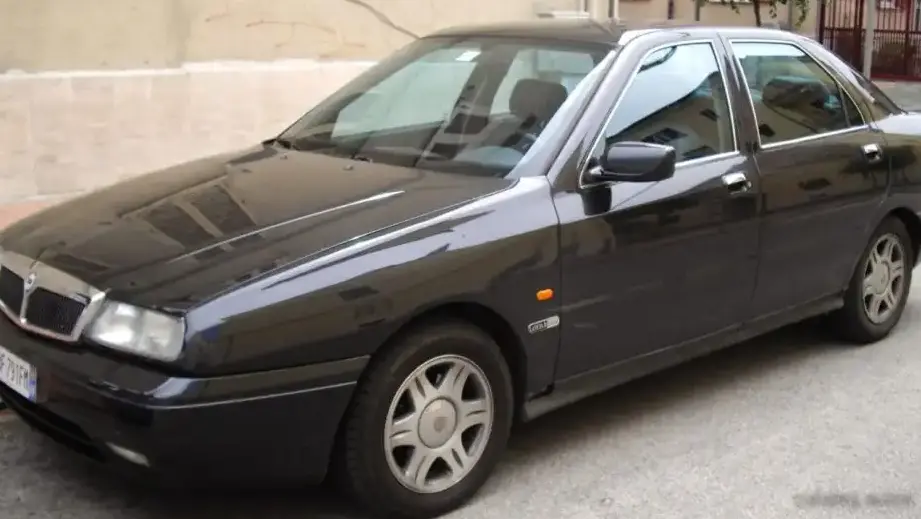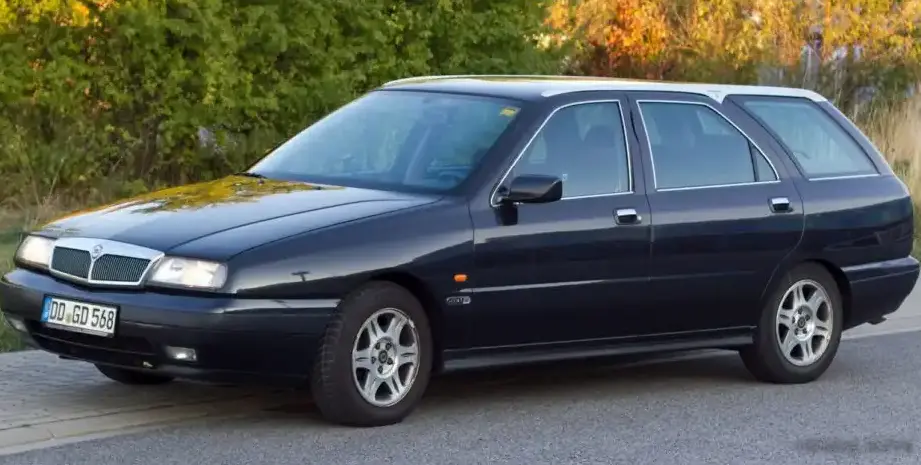
The Lancia Kappa Station Wagon (838) 2.4 20V Automatic, produced between 1996 and July 2000, represented a significant offering in the upper-midsize segment for the Italian automaker. Positioned as a more practical variant of the Kappa sedan, the station wagon aimed to combine Lancia’s traditional focus on comfort and style with the versatility demanded by family buyers. This particular configuration, featuring the 2.4-liter 20-valve engine paired with a four-speed automatic transmission, occupied a mid-range position within the Kappa lineup, offering a balance between performance and ease of use. It was built on the 838 platform, shared with the Alfa Romeo 166, and represented Lancia’s attempt to regain market share in a competitive European market.
Technical Specifications
| Brand | Lancia |
| Model | Kappa |
| Generation | Kappa Station Wagon (838) |
| Type (Engine) | 2.4 20V (175 Hp) Automatic |
| Start of production | 1996 |
| End of production | July, 2000 |
| Powertrain Architecture | Internal Combustion engine |
| Body type | Station wagon (estate) |
| Seats | 5 |
| Doors | 5 |
| Fuel consumption (urban) | 15.6 l/100 km (15.1 US mpg, 18.1 UK mpg, 6.4 km/l) |
| Fuel consumption (extra urban) | 9.2 l/100 km (25.6 US mpg, 30.7 UK mpg, 10.9 km/l) |
| Fuel Type | Petrol (Gasoline) |
| Acceleration 0 – 100 km/h | 10.7 sec |
| Acceleration 0 – 62 mph | 10.7 sec |
| Acceleration 0 – 60 mph | 10.2 sec |
| Maximum speed | 206 km/h (128 mph) |
| Weight-to-power ratio | 8.7 kg/Hp, 115.1 Hp/tonne |
| Weight-to-torque ratio | 6.6 kg/Nm, 151.3 Nm/tonne |
| Power | 175 Hp @ 6100 rpm |
| Power per litre | 71.5 Hp/l |
| Torque | 230 Nm @ 3750 rpm (169.64 lb.-ft. @ 3750 rpm) |
| Engine layout | Front, Transverse |
| Engine Model/Code | 838 A2.000 |
| Engine displacement | 2446 cm3 (149.26 cu. in.) |
| Number of cylinders | 5 |
| Engine configuration | Inline |
| Cylinder Bore | 83 mm (3.27 in.) |
| Piston Stroke | 90.4 mm (3.56 in.) |
| Compression ratio | 10:1 |
| Number of valves per cylinder | 4 |
| Fuel injection system | Multi-port manifold injection |
| Engine aspiration | Naturally aspirated engine |
| Valvetrain | DOHC |
| Engine oil capacity | 5.4 l (5.71 US qt | 4.75 UK qt) |
| Coolant | 8.3 l (8.77 US qt | 7.3 UK qt) |
| Kerb Weight | 1520 kg (3351.03 lbs.) |
| Max. weight | 2100 kg (4629.71 lbs.) |
| Max load | 580 kg (1278.68 lbs.) |
| Trunk (boot) space – minimum | 505 l (17.83 cu. ft.) |
| Trunk (boot) space – maximum | 1500 l (52.97 cu. ft.) |
| Fuel tank capacity | 70 l (18.49 US gal | 15.4 UK gal) |
| Length | 4687 mm (184.53 in.) |
| Width | 1826 mm (71.89 in.) |
| Height | 1464 mm (57.64 in.) |
| Wheelbase | 2700 mm (106.3 in.) |
| Front track | 1547 mm (60.91 in.) |
| Rear (Back) track | 1541 mm (60.67 in.) |
| Drivetrain Architecture | The Internal combustion engine (ICE) drives the front wheels of the vehicle. |
| Drive wheel | Front wheel drive |
| Number of gears and type of gearbox | 4 gears, automatic transmission |
| Front suspension | Wishbone |
| Rear suspension | Spring Strut |
| Front brakes | Ventilated discs |
| Rear brakes | Disc |
| Assisting systems | ABS (Anti-lock braking system) |
| Steering type | Steering rack and pinion |
| Power steering | Hydraulic Steering |
| Tires size | 205/65 R15 |
| Wheel rims size | 15 |
Powertrain & Engine Architecture
The heart of the Kappa 2.4 Automatic is the 838 A2.000 engine, a 2.4-liter inline five-cylinder powerplant. This engine was a relatively sophisticated design for its time, featuring a double overhead camshaft (DOHC) valvetrain and multi-port fuel injection. The 20 valves (four per cylinder) contributed to improved breathing and a broader powerband. The inline-five configuration, while less common than inline-fours or V6s, offered a compromise between smoothness and compactness. The engine produced 175 horsepower at 6100 rpm and 230 Nm (169.64 lb-ft) of torque at 3750 rpm. The four-speed automatic transmission, while providing convenience, was a somewhat dated design by the late 1990s, lacking the efficiency and responsiveness of more modern automatic gearboxes. It featured standard torque converter technology and lacked manual shift capabilities.
Driving Characteristics
The 2.4-liter engine and four-speed automatic combination delivered adequate, but not particularly exhilarating, performance. Acceleration from 0 to 60 mph took around 10.2 seconds, and the top speed was approximately 128 mph. The automatic transmission, while smooth in normal driving, could feel somewhat sluggish during quick acceleration or overtaking maneuvers. The gear ratios were geared more towards comfortable cruising than sporty driving. Compared to the more powerful 3.0-liter V6 Kappa, the 2.4 Automatic felt noticeably less responsive. However, it offered a significant improvement in fuel economy over the V6, and was more refined than the lower-powered 1.8-liter and 2.0-liter four-cylinder options. The front-wheel-drive layout contributed to predictable handling, but also limited the car’s dynamic capabilities.
Equipment & Trim Levels
The Kappa Station Wagon 2.4 Automatic typically came well-equipped, reflecting its positioning as a premium vehicle. Standard features included air conditioning, power windows and mirrors, central locking, and an AM/FM radio with cassette player. Higher trim levels offered options such as leather upholstery, a sunroof, upgraded audio systems, and automatic climate control. The interior design emphasized comfort and spaciousness, with supportive seats and a well-laid-out dashboard. The station wagon body style provided a generous cargo area, making it a practical choice for families.
Chassis & Braking
The Kappa Station Wagon utilized a front-wheel-drive chassis with independent wishbone suspension at the front and a spring strut rear suspension. This setup provided a comfortable ride, but wasn’t particularly sporty. The braking system consisted of ventilated discs at the front and solid discs at the rear. Anti-lock braking system (ABS) was standard, enhancing safety. The steering was rack and pinion with hydraulic power assistance, offering a reasonable level of feel and precision.
Market Reception & Comparison
The Lancia Kappa Station Wagon 2.4 Automatic received mixed reviews from automotive critics. While praised for its comfortable ride, spacious interior, and stylish design, it was often criticized for its somewhat lackluster performance and the dated four-speed automatic transmission. Compared to rivals such as the Volvo V70 and Audi A6 Avant, the Kappa offered a more distinctive Italian flair but lacked the same level of refinement and technological sophistication. Fuel economy was reasonable for its class, but not exceptional. Reliability was also a concern for some owners, with reports of electrical issues and occasional mechanical problems.
Legacy
The Lancia Kappa, including the 2.4 Automatic station wagon, is now a relatively rare sight on the roads. While not known for exceptional long-term reliability, well-maintained examples can still provide comfortable and stylish transportation. The 838 A2.000 engine, while not a high-performance unit, is generally considered durable if properly serviced. The four-speed automatic transmission, however, can be a potential weak point. Today, the Kappa Station Wagon 2.4 Automatic appeals to enthusiasts who appreciate its unique Italian character and are willing to accept the challenges of owning a classic European car. Parts availability can be limited, and specialist knowledge is often required for repairs.