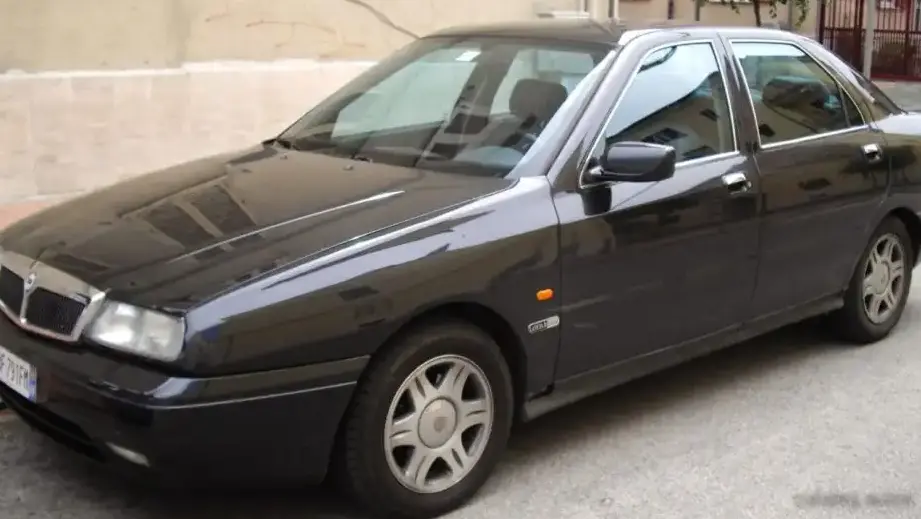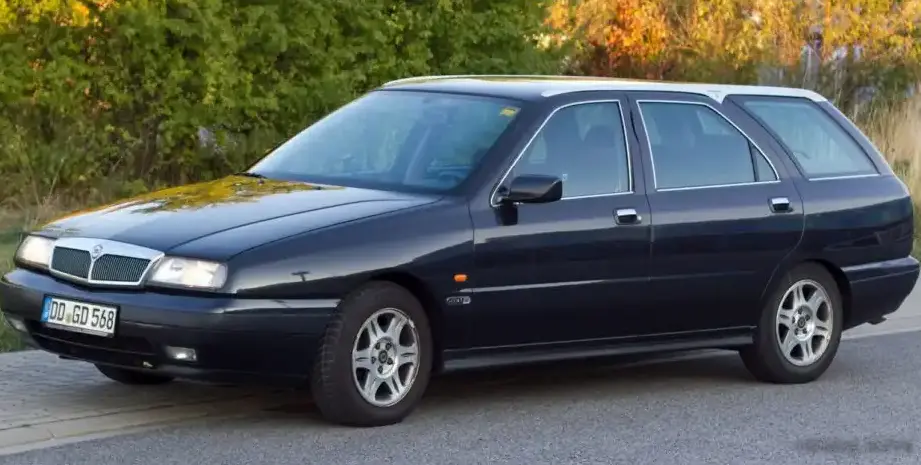
The Lancia Kappa Station Wagon (838) 3.0 24V, produced from 1996 to July 2000, represented the top-of-the-line offering in Lancia’s estate car range. Positioned as a premium, comfortable, and technologically advanced vehicle, the Kappa aimed to recapture Lancia’s historical reputation for innovation and style. This variant, equipped with the 3.0-liter 24-valve V6 engine, was the flagship of the Kappa wagon lineup, offering a significant performance upgrade over the four-cylinder models. It was primarily marketed in Europe, where large, comfortable station wagons remained popular, and targeted buyers seeking a sophisticated alternative to more mainstream offerings.
Technical Specifications
| Brand | Lancia |
| Model | Kappa |
| Generation | Kappa Station Wagon (838) |
| Type (Engine) | 3.0 24V (204 Hp) |
| Start of production | 1996 |
| End of production | July, 2000 |
| Powertrain Architecture | Internal Combustion engine |
| Body type | Station wagon (estate) |
| Seats | 5 |
| Doors | 5 |
| Fuel consumption (combined) | 10.9 l/100 km (21.6 US mpg, 25.9 UK mpg, 9.2 km/l) |
| Fuel Type | Petrol (Gasoline) |
| Acceleration 0 – 100 km/h | 9.9 sec |
| Acceleration 0 – 62 mph | 9.9 sec |
| Acceleration 0 – 60 mph | 9.4 sec |
| Maximum speed | 218 km/h (135.46 mph) |
| Weight-to-power ratio | 7.9 kg/Hp, 126.7 Hp/tonne |
| Weight-to-torque ratio | 6 kg/Nm, 167.7 Nm/tonne |
| Power | 204 Hp @ 6300 rpm |
| Power per litre | 68.9 Hp/l |
| Torque | 270 Nm @ 4500 rpm (199.14 lb.-ft. @ 4500 rpm) |
| Engine layout | Front, Transverse |
| Engine Model/Code | 838 B.000 |
| Engine displacement | 2959 cm3 (180.57 cu. in.) |
| Number of cylinders | 6 |
| Engine configuration | V-engine |
| Cylinder Bore | 93 mm (3.66 in.) |
| Piston Stroke | 72.6 mm (2.86 in.) |
| Compression ratio | 10:1 |
| Number of valves per cylinder | 4 |
| Fuel injection system | Multi-port manifold injection |
| Engine aspiration | Naturally aspirated engine |
| Valvetrain | DOHC |
| Engine oil capacity | 5.9 l (6.23 US qt | 5.19 UK qt) |
| Coolant | 9 l (9.51 US qt | 7.92 UK qt) |
| Kerb Weight | 1610 kg (3549.44 lbs.) |
| Max. weight | 2190 kg (4828.12 lbs.) |
| Max load | 580 kg (1278.68 lbs.) |
| Trunk (boot) space – minimum | 505 l (17.83 cu. ft.) |
| Trunk (boot) space – maximum | 1500 l (52.97 cu. ft.) |
| Fuel tank capacity | 70 l (18.49 US gal | 15.4 UK gal) |
| Length | 4687 mm (184.53 in.) |
| Width | 1826 mm (71.89 in.) |
| Height | 1462 mm (57.56 in.) |
| Wheelbase | 2700 mm (106.3 in.) |
| Front track | 1546 mm (60.87 in.) |
| Rear (Back) track | 1530 mm (60.24 in.) |
| Drivetrain Architecture | The Internal combustion engine (ICE) drives the front wheels of the vehicle. |
| Drive wheel | Front wheel drive |
| Number of gears and type of gearbox | 5 gears, manual transmission |
| Front suspension | Wishbone |
| Rear suspension | Semi-independent suspension, longitudinal arms with transverse torsion shafts |
| Front brakes | Ventilated discs |
| Rear brakes | Disc |
| Assisting systems | ABS (Anti-lock braking system) |
| Steering type | Steering rack and pinion |
| Power steering | Hydraulic Steering |
| Tires size | 205/60 R15 |
INTRODUCTION
The Lancia Kappa Station Wagon 3.0 24V, launched in 1996, was a significant addition to the Kappa range. Building upon the success of the saloon (sedan) version, the station wagon offered increased practicality without sacrificing the Kappa’s core values of comfort, refinement, and advanced technology. The Kappa, as a whole, was designed to replace the aging Delta and Prisma models, aiming to re-establish Lancia as a premium brand. The 838 series specifically denoted the station wagon body style. This 3.0-liter variant represented the pinnacle of the Kappa wagon lineup, offering a blend of performance and luxury.
Powertrain & Engine Architecture
The heart of the Kappa 3.0 24V is the 838 B.000 engine, a 2.959-liter (180.6 cubic inch) V6. This engine, derived from the earlier Lancia Thema V6, featured a 60-degree V-angle and a dual overhead camshaft (DOHC) valvetrain with four valves per cylinder. The engine utilized multi-port fuel injection, delivering precise fuel metering for optimal performance and efficiency. The 24-valve configuration allowed for improved breathing and higher power output. The engine produced 204 horsepower at 6300 rpm and 270 Nm (199 lb-ft) of torque at 4500 rpm. The engine was transversely mounted in the front of the vehicle. The Kappa 3.0 24V was exclusively offered with a 5-speed manual transmission, providing drivers with full control over the engine’s power. This transmission was chosen to handle the increased torque output of the V6 engine.
Driving Characteristics
The Kappa 3.0 24V offered a distinctly different driving experience compared to the lower-spec models. The V6 engine provided smooth, linear power delivery, making it well-suited for long-distance cruising. Acceleration to 60 mph was achieved in approximately 9.4 seconds, and the car had a top speed of 135 mph. While not a sports car, the Kappa 3.0 24V offered ample power for overtaking and maintaining high speeds on motorways (freeways). The 5-speed manual transmission allowed for precise gear selection, maximizing the engine’s performance. Compared to the 1.8-liter and 2.0-liter four-cylinder versions, the V6 offered significantly more refinement and a more relaxed driving experience. The increased weight of the V6 engine did slightly impact handling, but the Kappa’s well-tuned suspension provided a comfortable and stable ride.
Equipment & Trim Levels
The Kappa 3.0 24V was generously equipped, reflecting its position as the flagship model. Standard features included power windows, central locking, air conditioning, and an upgraded audio system. Higher trim levels offered leather upholstery, wood trim, and a sunroof. Optional extras included automatic climate control, heated seats, and a navigation system. The interior was designed with comfort and luxury in mind, featuring supportive seats and a well-appointed dashboard. The Kappa also boasted a number of advanced safety features for its time, including ABS brakes and airbags.
Chassis & Braking
The Kappa Station Wagon utilized a front-wheel-drive layout with independent wishbone suspension at the front and a semi-independent torsion beam suspension at the rear. This setup provided a good balance between ride comfort and handling. The front brakes were ventilated discs, while the rear brakes were solid discs. ABS (Anti-lock Braking System) was standard, enhancing braking performance and safety. The steering was rack and pinion with hydraulic power assistance, providing precise and responsive steering feel.
Market Reception & Comparison
The Lancia Kappa 3.0 24V received generally positive reviews from automotive critics. It was praised for its comfortable ride, refined engine, and spacious interior. However, some critics noted the Kappa’s relatively high price and occasional reliability issues. Compared to rivals such as the Volvo V70 and Audi A6 Avant, the Kappa offered a more distinctive style and a more luxurious interior, but lacked the brand recognition and established reputation of its competitors. Fuel economy was reasonable for a V6 engine of this size, averaging around 21.6 mpg. The 1.8-liter and 2.0-liter Kappa wagons offered better fuel economy but lacked the performance and refinement of the 3.0-liter model.
Legacy
The Lancia Kappa, while not a commercial success in the same vein as some of its competitors, remains a fondly remembered car among enthusiasts. The 3.0 24V variant, in particular, is prized for its smooth V6 engine and luxurious appointments. Today, well-maintained examples are becoming increasingly rare and sought after by collectors. The engine itself is generally considered reliable, although regular maintenance is essential. Common issues include corrosion and electrical problems, typical of Italian cars of this era. The Kappa 3.0 24V represents a high point in Lancia’s engineering and design, showcasing the brand’s commitment to innovation and style.