
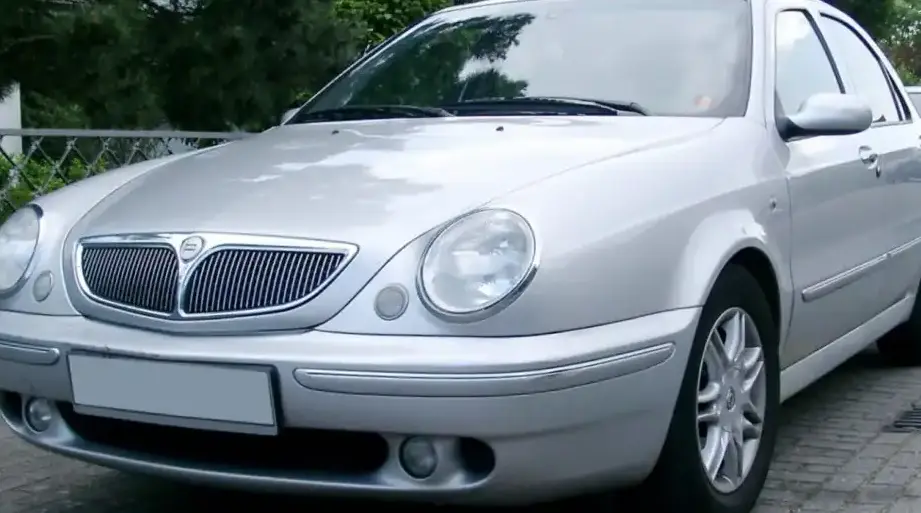
The Lancia Lybra 1.6 16V, produced from July 1999 to December 2003, served as the entry-level model within the 839 Lybra range. Designed as a comfortable and practical sedan, it aimed to balance affordability with Lancia’s reputation for interior refinement. The Lybra itself was Lancia’s replacement for the Dedra, and was built on the Tipo-derived 839 platform, which it shared with the Alfa Romeo 156. This particular variant, equipped with a 1.6-liter engine and five-speed manual transmission, primarily targeted buyers in European markets – where Lancia maintained a stronger presence – who desired a reasonably efficient and well-equipped family vehicle.
Technical Specifications
| Brand | Lancia |
| Model | Lybra |
| Generation | Lybra (839) |
| Type (Engine) | 1.6 16V (103 Hp) |
| Start of production | July, 1999 |
| End of production | December, 2003 |
| Powertrain Architecture | Internal Combustion engine |
| Body type | Sedan |
| Seats | 5 |
| Doors | 4 |
| Fuel consumption (urban) | 11.2 l/100 km (21 US mpg, 25.2 UK mpg, 8.9 km/l) |
| Fuel consumption (extra urban) | 6.4 l/100 km (36.8 US mpg, 44.1 UK mpg, 15.6 km/l) |
| Fuel consumption (combined) | 8.2 l/100 km (28.7 US mpg, 34.4 UK mpg, 12.2 km/l) |
| Fuel Type | Petrol (Gasoline) |
| Acceleration 0 – 100 km/h | 11.3 sec |
| Acceleration 0 – 62 mph | 11.3 sec |
| Acceleration 0 – 60 mph | 10.7 sec |
| Maximum speed | 185 km/h (114.95 mph) |
| Weight-to-power ratio | 12.1 kg/Hp, 82.4 Hp/tonne |
| Weight-to-torque ratio | 8.7 kg/Nm, 115.2 Nm/tonne |
| Power | 103 Hp @ 5750 rpm |
| Power per litre | 65.1 Hp/l |
| Torque | 144 Nm @ 4000 rpm (106.21 lb.-ft. @ 4000 rpm) |
| Engine layout | Front, Transverse |
| Engine Model/Code | 182 A4.000 |
| Engine displacement | 1581 cm3 (96.48 cu. in.) |
| Number of cylinders | 4 |
| Engine configuration | Inline |
| Cylinder Bore | 86.4 mm (3.4 in.) |
| Piston Stroke | 67.4 mm (2.65 in.) |
| Compression ratio | 10.5:1 |
| Number of valves per cylinder | 4 |
| Fuel injection system | Multi-port manifold injection |
| Engine aspiration | Naturally aspirated engine |
| Valvetrain | DOHC |
| Engine oil capacity | 3.8 l (4.02 US qt | 3.34 UK qt) |
| Coolant capacity | 8 l (8.45 US qt | 7.04 UK qt) |
| Kerb Weight | 1250 kg (2755.78 lbs.) |
| Max. weight | 1770 kg (3902.18 lbs.) |
| Max load | 520 kg (1146.4 lbs.) |
| Trunk (boot) space – minimum | 420 l (14.83 cu. ft.) |
| Fuel tank capacity | 60 l (15.85 US gal | 13.2 UK gal) |
| Length | 4466 mm (175.83 in.) |
| Width | 1743 mm (68.62 in.) |
| Height | 1462 mm (57.56 in.) |
| Wheelbase | 2593 mm (102.09 in.) |
| Front track | 1497 mm (58.94 in.) |
| Rear (Back) track | 1459 mm (57.44 in.) |
| Drivetrain Architecture | The Internal combustion engine (ICE) drives the front wheels of the vehicle. |
| Drive wheel | Front wheel drive |
| Number of gears and type of gearbox | 5 gears, manual transmission |
| Front suspension | Spring Strut |
| Rear suspension | Coil spring |
| Front brakes | Disc |
| Rear brakes | Disc |
| Assisting systems | ABS (Anti-lock braking system) |
| Steering type | Steering rack and pinion |
| Power steering | Hydraulic Steering |
| Tires size | 195/65R15 |
Powertrain & Engine Architecture
The Lybra 1.6 16V was powered by the 182 A4.000 engine, a naturally aspirated, inline-four cylinder gasoline engine. This engine was a common powerplant within the Fiat group during that period, finding its way into numerous models. It featured a dual overhead camshaft (DOHC) valvetrain operating four valves per cylinder, which contributed to its relatively high specific output for its displacement. Fuel delivery was managed by a multi-port fuel injection system, providing precise fuel metering for improved efficiency and reduced emissions. The engine’s 1581cc displacement generated 103 horsepower at 5750 rpm and 144 Nm (106 lb-ft) of torque at 4000 rpm. The standard transmission for this variant was a five-speed manual, offering a direct connection between the engine and the front wheels. The gear ratios were optimized for a balance of acceleration and fuel economy, prioritizing usability over outright performance.
Driving Characteristics
The Lybra 1.6 16V delivered a comfortable, rather than sporty, driving experience. Acceleration was adequate for everyday driving, with the 0-60 mph sprint taking approximately 10.7 seconds. However, it was noticeably slower than the more powerful Lybra variants, such as the 2.0 16V or the turbocharged models. The engine felt somewhat stressed when pushed to its limits, and the five-speed gearbox, while precise, didn’t offer particularly short ratios for maximizing performance. The emphasis was on smooth power delivery and ease of use, making it well-suited for commuting and longer journeys. In comparison to the higher-performance Lybra models, the 1.6 16V prioritized fuel efficiency, achieving around 28.7 US mpg in combined driving conditions.
Equipment & Trim Levels
The Lybra 1.6 16V typically came equipped with a respectable array of standard features, reflecting Lancia’s commitment to comfort and refinement. These included power steering, central locking, electric front windows, and an anti-lock braking system (ABS). Interior upholstery was generally cloth, utilizing durable and comfortable materials. Optional extras included air conditioning, alloy wheels, a sunroof, and an upgraded audio system. The specific trim level often determined the availability of these options, with higher trims offering more features as standard equipment.
Chassis & Braking
The Lybra 839 employed a conventional front-wheel-drive chassis layout. The front suspension utilized MacPherson struts, while the rear suspension consisted of a coil spring setup. This configuration provided a comfortable ride quality, effectively absorbing bumps and road imperfections. Braking was handled by disc brakes on all four wheels, providing adequate stopping power for the vehicle’s weight and performance. The ABS system further enhanced safety by preventing wheel lockup during hard braking maneuvers.
Market Reception & Comparison
The Lybra 1.6 16V was generally well-received as a practical and comfortable family car. Critics praised its spacious interior, comfortable ride, and reasonable fuel economy. However, it was often criticized for its lack of outright performance when compared to its competitors and the higher-powered Lybra variants. Compared to the 2.0 16V, the 1.6 offered significantly less power and acceleration, but at a more accessible price point. The 1.8 models offered a compromise, providing a better balance between performance and economy. In terms of reliability, the 1.6 16V engine was generally considered robust and dependable, although regular maintenance was crucial to prevent potential issues.
Legacy
The Lancia Lybra 1.6 16V, while not the most dynamic variant in the lineup, remains a reasonably popular choice in the used car market, particularly for buyers seeking an affordable and comfortable sedan. The 182 A4.000 engine is known for its durability, and parts availability is generally good. However, prospective buyers should be aware of the potential for age-related issues, such as corrosion and wear and tear on suspension components. Overall, the Lybra 1.6 16V represents a solid and dependable option for those seeking a classic Italian sedan with a focus on comfort and practicality.
