
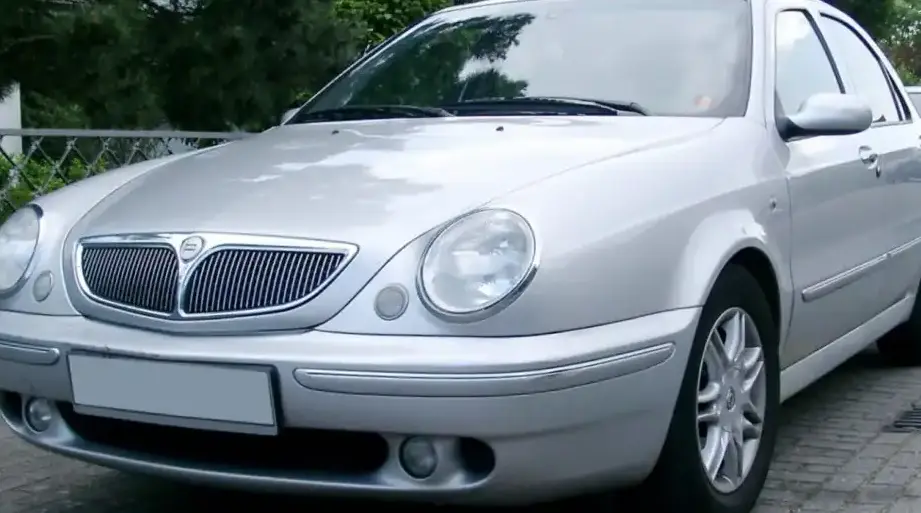
The Lancia Lybra 2.0 20V (150 hp) was a mid-range variant of the 839 series Lybra, produced between September 2000 and December 2004. Positioned within Lancia’s lineup as a comfortable and relatively sporty sedan, it aimed to bridge the gap between the more basic 1.8-liter models and the flagship 2.4-liter V6. The Lybra, as a whole, represented Lancia’s attempt to create a modern, upscale family car, building upon the legacy of its predecessors like the Prisma and Dedra. It was primarily marketed in Europe, where Lancia maintained a stronger brand presence than in North America. The 839 Lybra shared its platform – the Tipo 2 platform, also known as the 1HX0/A3 platform – with other Fiat Group vehicles like the Alfa Romeo 156 and the Fiat Marea.
Technical Specifications
| Brand | Lancia |
| Model | Lybra |
| Generation | Lybra (839) |
| Type (Engine) | 2.0 20V (150 Hp) |
| Start of production | September, 2000 |
| End of production | December, 2004 |
| Powertrain Architecture | Internal Combustion engine |
| Body type | Sedan |
| Seats | 5 |
| Doors | 4 |
| Fuel consumption (urban) | 13.8 l/100 km (17 US mpg, 20.5 UK mpg, 7.2 km/l) |
| Fuel consumption (extra urban) | 7.5 l/100 km (31.4 US mpg, 37.7 UK mpg, 13.3 km/l) |
| Fuel consumption (combined) | 8.8 l/100 km (26.7 US mpg, 32.1 UK mpg, 11.4 km/l) |
| Fuel Type | Petrol (Gasoline) |
| Acceleration 0 – 100 km/h | 9.6 sec |
| Acceleration 0 – 62 mph | 9.6 sec |
| Acceleration 0 – 60 mph | 9.1 sec |
| Maximum speed | 210 km/h (130.49 mph) |
| Weight-to-power ratio | 9 kg/Hp, 111.1 Hp/tonne |
| Weight-to-torque ratio | 7.5 kg/Nm, 134.1 Nm/tonne |
| Power | 150 Hp @ 6500 rpm |
| Power per litre | 75.1 Hp/l |
| Torque | 181 Nm @ 3750 rpm (133.5 lb.-ft. @ 3750 rpm) |
| Engine layout | Front, Transverse |
| Engine Model/Code | 185 A8.000 |
| Engine displacement | 1998 cm3 (121.93 cu. in.) |
| Number of cylinders | 5 |
| Engine configuration | Inline |
| Cylinder Bore | 82 mm (3.23 in.) |
| Piston Stroke | 75.65 mm (2.98 in.) |
| Compression ratio | 10.7:1 |
| Number of valves per cylinder | 4 |
| Fuel injection system | Multi-port manifold injection |
| Engine aspiration | Naturally aspirated engine |
| Valvetrain | DOHC |
| Engine oil capacity | 5 l (5.28 US qt | 4.4 UK qt) |
| Coolant | 8.6 l (9.09 US qt | 7.57 UK qt) |
| Kerb Weight | 1350 kg (2976.24 lbs.) |
| Max. weight | 1870 kg (4122.64 lbs.) |
| Max load | 520 kg (1146.4 lbs.) |
| Trunk (boot) space – minimum | 420 l (14.83 cu. ft.) |
| Fuel tank capacity | 60 l (15.85 US gal | 13.2 UK gal) |
| Length | 4466 mm (175.83 in.) |
| Width | 1743 mm (68.62 in.) |
| Height | 1462 mm (57.56 in.) |
| Wheelbase | 2593 mm (102.09 in.) |
| Front track | 1497 mm (58.94 in.) |
| Rear (Back) track | 1459 mm (57.44 in.) |
| Drivetrain Architecture | The Internal combustion engine (ICE) drives the front wheels of the vehicle. |
| Drive wheel | Front wheel drive |
| Number of gears and type of gearbox | 5 gears, manual transmission |
| Front suspension | Spring Strut |
| Rear suspension | Coil spring |
| Front brakes | Ventilated discs |
| Rear brakes | Disc |
| Assisting systems | ABS (Anti-lock braking system) |
| Steering type | Steering rack and pinion |
| Power steering | Hydraulic Steering |
| Tires size | 195/65 R15 |
Powertrain & Engine Architecture
The Lybra 2.0 20V utilized the 185 A8.000 engine, a 1998cc inline-five cylinder gasoline engine. This engine was a key feature of the Lybra range, offering a balance between performance and fuel efficiency. The “20V” designation refers to the engine’s dual overhead camshafts (DOHC) and four valves per cylinder, contributing to its relatively high specific output. Fuel delivery was managed by a multi-port fuel injection system, providing precise control over the air-fuel mixture. The engine’s five-cylinder configuration, while less common than inline-fours or V6s, offered a unique engine note and a smoother power delivery compared to a four-cylinder. The 5-speed manual transmission was the standard offering for this variant, providing drivers with full control over the engine’s power.
Driving Characteristics
The 150 hp and 181 Nm (133.5 lb-ft) of torque provided by the 2.0 20V engine translated to respectable, though not exhilarating, performance. Acceleration from 0 to 60 mph took approximately 9.1 seconds, and the car had a top speed of around 130 mph. The manual transmission allowed for engaging driving experience, and the engine’s torque curve provided adequate power for everyday driving situations. Compared to the base 1.8-liter models, the 2.0 20V offered noticeably improved acceleration and highway cruising ability. However, it didn’t possess the outright performance of the 2.4-liter V6, which was aimed at a more performance-oriented buyer. The gear ratios were tuned for a balance between fuel economy and responsiveness, making it a comfortable and practical daily driver.
Equipment & Trim Levels
The Lybra 2.0 20V typically came equipped with a reasonable level of standard features. These included power windows, central locking, power steering, ABS brakes, and an air conditioning system. Interior upholstery was generally cloth, though leather options were available. The dashboard layout was functional and ergonomically designed, with a focus on ease of use. Optional extras included alloy wheels, a sunroof, upgraded audio systems, and automatic climate control. The trim level often dictated the availability of these options, with higher trims offering more standard features and a more luxurious interior.
Chassis & Braking
The Lybra 2.0 20V featured a front-wheel-drive layout with independent suspension at the front (Spring Strut) and a coil spring setup at the rear. The braking system consisted of ventilated discs at the front and solid discs at the rear, providing adequate stopping power for the car’s weight and performance. The suspension was tuned for comfort, offering a relatively smooth ride quality. The hydraulic power steering provided light and precise steering feel. The tires were typically 195/65 R15, offering a good balance between grip and ride comfort.
Market Reception & Comparison
The Lancia Lybra 2.0 20V was generally well-received by automotive critics as a comfortable and well-equipped family sedan. It was praised for its spacious interior, comfortable ride, and relatively refined engine. However, some critics noted that its styling was somewhat conservative and that it lacked the sporty character of some of its rivals. Compared to other trims in the Lybra lineup, the 2.0 20V offered a compelling balance between performance, fuel economy, and price. It was a popular choice for buyers who wanted a comfortable and practical sedan with a bit more power than the base models.
Legacy
The Lancia Lybra, while not a massive sales success, remains a fondly remembered car among enthusiasts. The 2.0 20V engine, in particular, is considered a reliable and durable unit when properly maintained. Today, Lybras are relatively affordable on the used car market, making them an attractive option for those seeking a comfortable and stylish Italian sedan. However, finding well-maintained examples can be challenging, as age and mileage can take their toll. Parts availability can also be an issue, as Lancia no longer sells cars in North America and has a limited presence in other markets. Despite these challenges, the Lybra 2.0 20V continues to offer a unique and rewarding driving experience for those willing to invest the time and effort to keep it running.
