
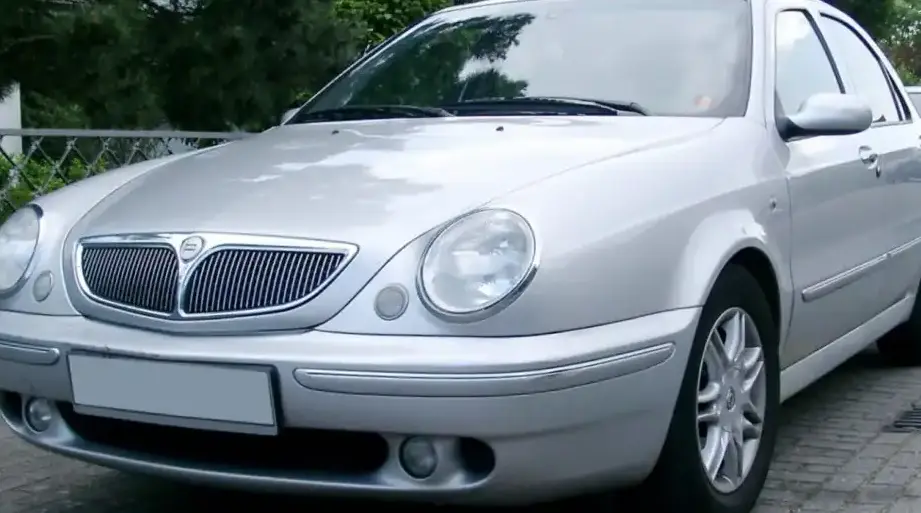
The Lancia Lybra 2.0 20V (154 Hp), produced between 1999 and 2000, represents a sophisticated offering within the 839 series Lybra range. Positioned as a mid-range variant, it aimed to balance performance with practicality and comfort, appealing to buyers seeking a more engaging driving experience than the base models but without the outright sportiness of potential future high-performance trims. The Lybra itself was Lancia’s replacement for the Dedra, and shared its underpinnings with the Alfa Romeo 156, Fiat Marea, and even the early Saab 9-3, all built on the Tipo Due (Type 2) platform – internally designated as the 839 project. This collaboration aimed to leverage economies of scale while maintaining distinct brand identities.
Technical Specifications
| Brand | Lancia |
| Model | Lybra |
| Generation | Lybra (839) |
| Type (Engine) | 2.0 20V (154 Hp) |
| Start of production | 1999 |
| End of production | 2000 |
| Powertrain Architecture | Internal Combustion engine |
| Body type | Sedan |
| Seats | 5 |
| Doors | 4 |
| Fuel consumption (urban) | 14.5 l/100 km (16.2 US mpg, 19.5 UK mpg) |
| Fuel consumption (extra urban) | 7.3 l/100 km (32.2 US mpg, 38.7 UK mpg) |
| Fuel consumption (combined) | 9.9 l/100 km (23.8 US mpg, 28.5 UK mpg) |
| CO2 emissions | 236 g/km |
| Fuel Type | Petrol (Gasoline) |
| Acceleration 0 – 100 km/h | 9.6 sec |
| Acceleration 0 – 62 mph | 9.6 sec |
| Acceleration 0 – 60 mph | 9.1 sec |
| Maximum speed | 210 km/h (130.49 mph) |
| Emission standard | Euro 2 |
| Weight-to-power ratio | 8.3 kg/Hp |
| Weight-to-torque ratio | 6.9 kg/Nm |
| Power | 154 Hp @ 6500 rpm |
| Torque | 186 Nm @ 3750 rpm (137.19 lb.-ft. @ 3750 rpm) |
| Engine layout | Front, Transverse |
| Engine Model/Code | 182B7000 |
| Engine displacement | 1998 cm3 (121.93 cu. in.) |
| Number of cylinders | 5 |
| Engine configuration | Inline |
| Cylinder Bore | 82 mm (3.23 in.) |
| Piston Stroke | 75.65 mm (2.98 in.) |
| Compression ratio | 10.7:1 |
| Number of valves per cylinder | 4 |
| Fuel injection system | Multi-port manifold injection |
| Engine aspiration | Naturally aspirated |
| Valvetrain | DOHC |
| Engine oil capacity | 5 l (5.28 US qt | 4.4 UK qt) |
| Coolant capacity | 8.6 l (9.09 US qt | 7.57 UK qt) |
| Kerb Weight | 1275 kg (2810.89 lbs.) |
| Max. weight | 1870 kg (4122.64 lbs.) |
| Max load | 595 kg (1311.75 lbs.) |
| Trunk (boot) space (minimum) | 420 l (14.83 cu. ft.) |
| Fuel tank capacity | 60 l (15.85 US gal | 13.2 UK gal) |
| Permitted trailer load (with brakes) | 1400 kg (3086.47 lbs.) |
| Permitted trailer load (without brakes) | 400 kg (881.85 lbs.) |
| Permitted towbar download | 75 kg (165.35 lbs.) |
| Length | 4466 mm (175.83 in.) |
| Width | 1743 mm (68.62 in.) |
| Height | 1462 mm (57.56 in.) |
| Wheelbase | 2593 mm (102.09 in.) |
| Front track | 1517 mm (59.72 in.) |
| Rear track | 1476 mm (58.11 in.) |
| Front overhang | 926 mm (36.46 in.) |
| Rear overhang | 947 mm (37.28 in.) |
| Minimum turning circle | 10.9 m (35.76 ft.) |
| Drivetrain | Front wheel drive |
| Number of gears | 5 |
| Gearbox type | Manual transmission |
| Front suspension | Independent type McPherson, Transverse stabilizer |
| Rear suspension | Wishbone, Transverse stabilizer, Trailing arm |
| Front brakes | Ventilated discs, 284×22 mm |
| Rear brakes | Disc, 251×10 mm |
| Assisting systems | ABS (Anti-lock braking system) |
| Steering type | Steering rack and pinion |
| Power steering | Hydraulic |
| Tires size | 195/65 R15 |
| Wheel rims size | 6J x 15 |
Powertrain & Engine Architecture
The Lybra 2.0 20V utilized Fiat’s 182 series engine, a naturally aspirated, five-cylinder inline gasoline engine. This engine, designated as 182B7000, displaced 1998cc and featured a double overhead camshaft (DOHC) valvetrain with four valves per cylinder – hence the “20V” designation. Fuel delivery was handled by a multi-port fuel injection system. The five-cylinder configuration was relatively uncommon, offering a balance between smoothness and performance. The engine produced 154 horsepower at 6500 rpm and 186 Nm (137 lb-ft) of torque at 3750 rpm. The engine was transversely mounted in the front of the vehicle, driving the front wheels. The 5-speed manual transmission was the standard offering, providing a reasonably direct connection to the engine.
Driving Characteristics
The 2.0 20V Lybra offered a noticeable step up in performance compared to the lower-displacement engines available in the range. While not a sports car, the 154 hp engine provided adequate power for comfortable highway cruising and overtaking. The five-cylinder engine delivered a unique exhaust note and a relatively smooth power delivery. The manual transmission allowed for greater driver control, although the gear ratios were geared towards fuel efficiency rather than outright acceleration. Compared to the more powerful (but less common) 2.4 T.S. variant, the 2.0 20V felt less urgent, but offered a better balance of performance and fuel economy.
Equipment & Trim Levels
The Lybra 2.0 20V typically came equipped with a respectable level of standard features. These included power windows, central locking, power steering, ABS brakes, and an air conditioning system. Interior upholstery was generally cloth, with options for leather available. Dashboard design was modern for its time, featuring a clean layout with easy-to-read instrumentation. Optional extras could include a sunroof, upgraded audio system, and alloy wheels. The Lybra aimed for a premium feel, with attention paid to interior materials and build quality.
Chassis & Braking
The Lybra 839 utilized an independent McPherson strut suspension at the front and a trailing arm/wishbone setup at the rear. This configuration provided a comfortable ride while maintaining reasonable handling characteristics. Front brakes were ventilated discs, while rear brakes were solid discs. The ABS system helped to maintain stability during hard braking. Stabilizer bars were fitted to both the front and rear axles to reduce body roll during cornering. The suspension tuning was biased towards comfort, making the Lybra a pleasant long-distance cruiser.
Market Reception & Comparison
The Lancia Lybra 2.0 20V was generally well-received by automotive critics. It was praised for its comfortable ride, spacious interior, and distinctive styling. However, some critics noted that the engine, while capable, lacked the refinement of some of its competitors. Fuel economy was considered average for its class. Compared to the 1.8L models, the 2.0 20V offered a significant performance boost, justifying the higher price tag. Against rivals like the Ford Mondeo and Volkswagen Passat, the Lybra offered a more unique and stylish alternative, but often lacked the brand recognition and extensive dealer network of its competitors.
Legacy
The Lancia Lybra, while not a massive sales success, remains a fondly remembered car among enthusiasts. The 182 series engine proved to be relatively reliable, although regular maintenance is crucial. The five-cylinder engine, in particular, has a dedicated following. Today, well-maintained examples of the Lybra 2.0 20V are becoming increasingly sought after by collectors and classic car enthusiasts. Parts availability can be a challenge, but a dedicated community exists to support Lybra owners. The Lybra represents a unique chapter in Lancia’s history, showcasing the brand’s commitment to style, comfort, and engineering innovation.
