
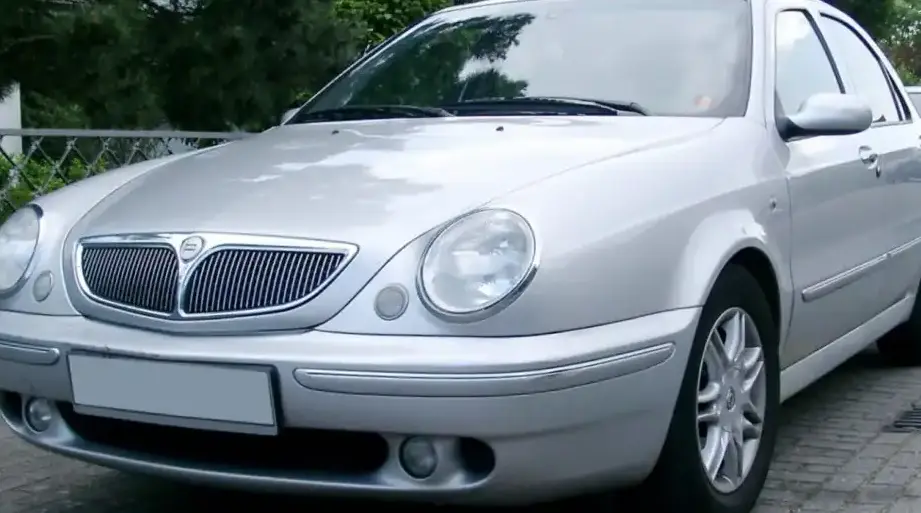
The Lancia Lybra 2.4 JTD, produced from August 2002 to December 2004, represented a sophisticated offering in the mid-size executive car segment. Positioned as a premium variant within the 839 Lybra series, it aimed to combine Italian styling with the efficiency and performance of a modern turbodiesel engine. The Lybra itself was a successor to the Lancia Dedra, built on the Tipo Due platform (also known as the 1HX0/A3 platform shared with Alfa Romeo 156 and Fiat Marea), and represented Lancia’s attempt to regain market share in a competitive European market. This 2.4 JTD model was primarily sold in Europe, offering a blend of comfort, performance, and fuel economy geared towards discerning buyers.
Technical Specifications
| Brand | Lancia |
| Model | Lybra |
| Generation | Lybra (839) |
| Type (Engine) | 2.4 JTD (150 Hp) |
| Start of production | August, 2002 |
| End of production | December, 2004 |
| Powertrain Architecture | Internal Combustion engine |
| Body type | Sedan |
| Seats | 5 |
| Doors | 4 |
| Fuel consumption (urban) | 9 l/100 km (26.1 US mpg, 31.4 UK mpg, 11.1 km/l) |
| Fuel consumption (extra urban) | 5.4 l/100 km (43.6 US mpg, 52.3 UK mpg, 18.5 km/l) |
| Fuel consumption (combined) | 6.7 l/100 km (35.1 US mpg, 42.2 UK mpg, 14.9 km/l) |
| Fuel Type | Diesel |
| Acceleration 0 – 100 km/h | 9.5 sec |
| Acceleration 0 – 62 mph | 9.5 sec |
| Acceleration 0 – 60 mph | 9 sec |
| Maximum speed | 205 km/h (127.38 mph) |
| Weight-to-power ratio | 9.7 kg/Hp, 102.7 Hp/tonne |
| Weight-to-torque ratio | 4.8 kg/Nm, 208.2 Nm/tonne |
| Power | 150 Hp @ 4000 rpm |
| Power per litre | 62.8 Hp/l |
| Torque | 304 Nm @ 1800 rpm (224.22 lb.-ft. @ 1800 rpm) |
| Engine layout | Front, Transverse |
| Engine Model/Code | 841 C.000 |
| Engine displacement | 2387 cm3 (145.66 cu. in.) |
| Number of cylinders | 5 |
| Engine configuration | Inline |
| Cylinder Bore | 82 mm (3.23 in.) |
| Piston Stroke | 90.4 mm (3.56 in.) |
| Compression ratio | 18.45:1 |
| Number of valves per cylinder | 2 |
| Fuel injection system | Diesel Commonrail |
| Engine aspiration | Turbocharger, Intercooler |
| Valvetrain | OHC |
| Engine oil capacity | 5.5 l (5.81 US qt | 4.84 UK qt) |
| Coolant | 8.5 l (8.98 US qt | 7.48 UK qt) |
| Kerb Weight | 1460 kg (3218.75 lbs.) |
| Max. weight | 1935 kg (4265.94 lbs.) |
| Max load | 475 kg (1047.2 lbs.) |
| Trunk (boot) space – minimum | 420 l (14.83 cu. ft.) |
| Fuel tank capacity | 60 l (15.85 US gal | 13.2 UK gal) |
| Length | 4466 mm (175.83 in.) |
| Width | 1743 mm (68.62 in.) |
| Height | 1462 mm (57.56 in.) |
| Wheelbase | 2593 mm (102.09 in.) |
| Front track | 1497 mm (58.94 in.) |
| Rear (Back) track | 1459 mm (57.44 in.) |
| Drivetrain Architecture | The Internal combustion engine (ICE) drives the front wheels of the vehicle. |
| Drive wheel | Front wheel drive |
| Number of gears and type of gearbox | 5 gears, manual transmission |
| Front suspension | Spring Strut |
| Rear suspension | Coil spring |
| Front brakes | Ventilated discs |
| Rear brakes | Disc |
| Assisting systems | ABS (Anti-lock braking system) |
| Steering type | Steering rack and pinion |
| Power steering | Hydraulic Steering |
| Tires size | 195/65 R15 |
Powertrain & Engine Architecture
The heart of the Lybra 2.4 JTD is the 841 C.000 engine, a 2.4-liter inline-five cylinder diesel. This engine was a product of Fiat’s advanced diesel technology of the early 2000s, utilizing a common rail direct injection system. Common rail injection allowed for multiple injection events per combustion cycle, improving refinement, reducing noise, and optimizing combustion efficiency. The engine featured a turbocharger with an intercooler, boosting power output to 150 horsepower at 4000 rpm and 304 Nm (224 lb-ft) of torque at a relatively low 1800 rpm. The five-cylinder configuration, while less common than four or six-cylinder layouts, contributed to a smoother power delivery and a distinctive engine note. The engine employed an overhead camshaft (OHC) valvetrain with two valves per cylinder. The 5-speed manual transmission was the standard offering, providing a balance between fuel economy and driver engagement.
Driving Characteristics
The 2.4 JTD engine provided a noticeable step up in performance compared to the lower-powered 1.8-liter gasoline and diesel variants available in the Lybra range. The abundant torque, available from low engine speeds, made the car feel responsive in everyday driving situations. While not a sports car, the Lybra 2.4 JTD offered confident acceleration, completing the 0-60 mph sprint in around 9 seconds and achieving a top speed of 127 mph. The manual transmission allowed for precise control, although the gear ratios were geared more towards fuel efficiency than outright performance. Compared to the gasoline engines, the diesel offered significantly better fuel economy, making it a popular choice for long-distance drivers. The ride quality was generally comfortable, typical of Lancia’s focus on refinement, but the handling wasn’t particularly sporty.
Equipment & Trim Levels
The Lybra 2.4 JTD typically came well-equipped, reflecting its position as a premium trim level. Standard features included air conditioning, power windows, central locking, and an RDS radio. Higher trim levels added features such as leather upholstery, automatic climate control, alloy wheels, and a sunroof. Safety features included ABS brakes and dual front airbags. Optional extras included a navigation system, parking sensors, and upgraded audio systems. Interior materials were generally of good quality, with a focus on creating a comfortable and refined cabin environment. The dashboard layout was functional and ergonomically designed, although some critics found the styling somewhat dated.
Chassis & Braking
The Lybra 2.4 JTD utilized a front-wheel-drive layout with independent suspension at the front (Spring Strut) and a coil spring setup at the rear. The suspension was tuned for comfort, providing a smooth ride over most road surfaces. Braking duties were handled by ventilated discs at the front and solid discs at the rear, coupled with an ABS system. The braking performance was adequate for the car’s weight and performance, but not exceptional. The steering was a hydraulic power-assisted rack and pinion system, providing a reasonable level of feel and precision.
Market Reception & Comparison
The Lancia Lybra 2.4 JTD was generally well-received by automotive critics, who praised its comfortable ride, refined engine, and good fuel economy. However, it faced stiff competition from established rivals such as the Ford Mondeo, Volkswagen Passat, and Audi A4. Compared to the gasoline-powered Lybra variants, the 2.4 JTD offered superior torque and fuel efficiency, but at a higher initial cost. The 2.4 JTD was often seen as a more sensible and practical choice than the more powerful (but less fuel-efficient) gasoline engines. Reliability was generally good, although some owners reported issues with the common rail injection system and turbocharger.
Legacy
The Lancia Lybra, and particularly the 2.4 JTD variant, has developed a modest following among enthusiasts. The 841 C.000 engine is known for its durability and relatively straightforward maintenance, although sourcing parts can sometimes be challenging due to the Lybra’s limited production numbers. On the used car market, Lybra 2.4 JTD models in good condition can still command reasonable prices, appealing to buyers seeking a comfortable, economical, and stylish executive car with a touch of Italian flair. The Lybra represents a final chapter in Lancia’s history as an independent manufacturer, before its integration into the Fiat Group.
