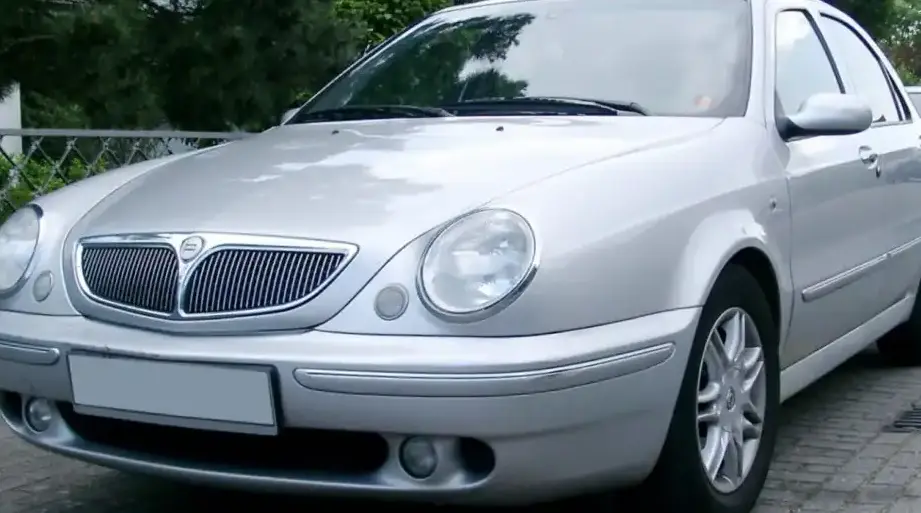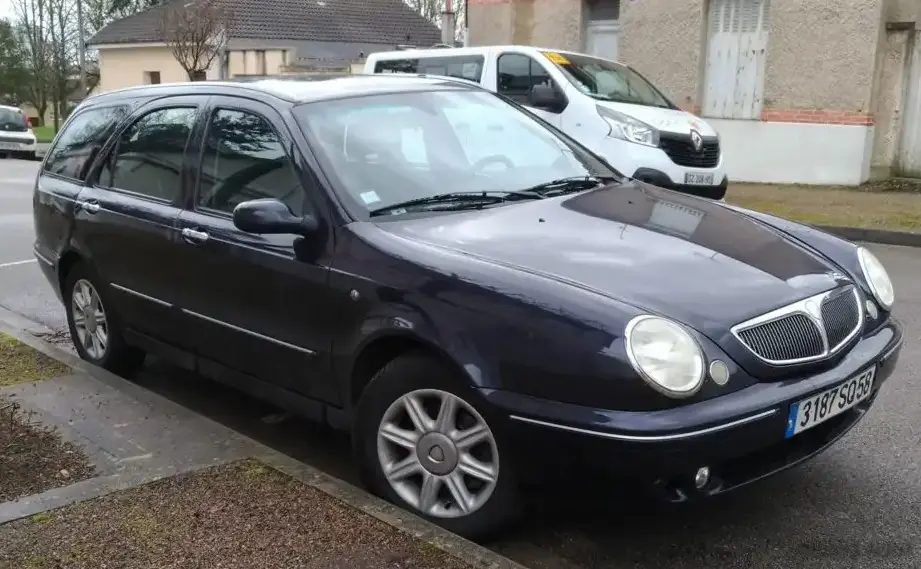
The Lancia Lybra SW (839) 1.6 16V, produced from July 1999 to December 2003, represents a key variant within the second generation Lybra range. Positioned as an entry-level offering in the SW (Station Wagon) body style, it aimed to provide a practical and relatively affordable option within Lancia’s lineup. The Lybra SW itself was built upon the 198 platform, shared with other Fiat Group vehicles like the Alfa Romeo 156, offering a blend of Italian styling and a focus on passenger comfort. This particular 1.6-liter engine and five-speed manual transmission combination was designed to appeal to buyers prioritizing fuel efficiency and everyday usability over outright performance.
Technical Specifications
| Brand | Lancia |
| Model | Lybra |
| Generation | Lybra SW (839) |
| Type (Engine) | 1.6 16V (103 Hp) |
| Start of production | July, 1999 |
| End of production | December, 2003 |
| Powertrain Architecture | Internal Combustion engine |
| Body type | Station wagon (estate) |
| Seats | 5 |
| Doors | 5 |
| Fuel Type | Petrol (Gasoline) |
| Acceleration 0 – 100 km/h | 11.9 sec |
| Acceleration 0 – 62 mph | 11.9 sec |
| Acceleration 0 – 60 mph | 11.3 sec |
| Maximum speed | 185 km/h (114.95 mph) |
| Weight-to-power ratio | 12.5 kg/Hp, 79.8 Hp/tonne |
| Weight-to-torque ratio | 9 kg/Nm, 111.6 Nm/tonne |
| Power | 103 Hp @ 5750 rpm |
| Power per litre | 65.1 Hp/l |
| Torque | 144 Nm @ 4000 rpm (106.21 lb.-ft. @ 4000 rpm) |
| Engine layout | Front, Transverse |
| Engine Model/Code | 182 A4.000 |
| Engine displacement | 1581 cm3 (96.48 cu. in.) |
| Number of cylinders | 4 |
| Engine configuration | Inline |
| Cylinder Bore | 86.4 mm (3.4 in.) |
| Piston Stroke | 67.4 mm (2.65 in.) |
| Compression ratio | 10.5:1 |
| Number of valves per cylinder | 4 |
| Fuel injection system | Multi-port manifold injection |
| Engine aspiration | Naturally aspirated engine |
| Valvetrain | DOHC |
| Engine oil capacity | 3.8 l (4.02 US qt | 3.34 UK qt) |
| Coolant | 8 l (8.45 US qt | 7.04 UK qt) |
| Kerb Weight | 1290 kg (2843.96 lbs.) |
| Max. weight | 1815 kg (4001.39 lbs.) |
| Max load | 525 kg (1157.43 lbs.) |
| Trunk (boot) space – minimum | 420 l (14.83 cu. ft.) |
| Fuel tank capacity | 60 l (15.85 US gal | 13.2 UK gal) |
| Length | 4466 mm (175.83 in.) |
| Width | 1743 mm (68.62 in.) |
| Height | 1470 mm (57.87 in.) |
| Wheelbase | 2593 mm (102.09 in.) |
| Front track | 1497 mm (58.94 in.) |
| Rear (Back) track | 1459 mm (57.44 in.) |
| Drivetrain Architecture | The Internal combustion engine (ICE) drives the front wheels of the vehicle. |
| Drive wheel | Front wheel drive |
| Number of gears and type of gearbox | 5 gears, manual transmission |
| Front suspension | Spring Strut |
| Rear suspension | Coil spring |
| Front brakes | Disc |
| Rear brakes | Disc |
| Assisting systems | ABS (Anti-lock braking system) |
| Steering type | Steering rack and pinion |
| Power steering | Hydraulic Steering |
| Tires size | 195/65R15 |
Powertrain & Engine Architecture
The Lancia Lybra SW 1.6 16V utilizes the 182 A4.000 engine, a naturally aspirated, inline-four cylinder gasoline engine. This engine is a member of the Fiat Group’s family of 1.6-liter engines, known for its relatively simple design and ease of maintenance. It features a double overhead camshaft (DOHC) valvetrain operating four valves per cylinder, contributing to improved breathing and a broader powerband. Fuel delivery is managed by a multi-port fuel injection system, providing precise fuel metering for optimal combustion. The engine’s 103 horsepower output at 5750 rpm and 144 Nm (106 lb-ft) of torque at 4000 rpm are respectable for its displacement, but are decidedly modest compared to the larger engines offered in the Lybra range, such as the 2.0-liter five-cylinder or the potent 2.4-liter V6. The engine is transversely mounted, driving the front wheels through a five-speed manual transmission. This transmission was a standard unit across several Fiat Group models, known for its smooth operation and relatively direct shift feel.
Driving Characteristics
The 1.6 16V Lybra SW offers a driving experience geared towards comfort and practicality rather than sporty performance. Acceleration from 0-60 mph takes approximately 11.3 seconds, and top speed is around 115 mph. The engine feels adequate for everyday driving, providing sufficient power for highway cruising and city commutes. However, it can feel strained when fully loaded or tackling steep inclines. The five-speed manual transmission allows for reasonable control over the engine’s powerband, but the gear ratios are spaced to prioritize fuel economy over rapid acceleration. Compared to the higher-output Lybra variants, the 1.6 feels noticeably slower, particularly in overtaking situations. The manual transmission provides a more engaging driving experience than the optional automatic, offering greater control and responsiveness.
Equipment & Trim Levels
The 1.6 16V Lybra SW typically came equipped with a reasonable level of standard features, reflecting its position as an entry-level model. These included power steering, central locking, electric front windows, and an anti-lock braking system (ABS). Interior upholstery was typically cloth, with a functional and durable design. Optional extras included air conditioning, alloy wheels, a sunroof, and a more advanced audio system. Trim levels varied slightly depending on the market, but generally focused on adding comfort and convenience features. The dashboard layout was typical of Lancia designs of the period, featuring a clean and ergonomic design with easy-to-read instrumentation.
Chassis & Braking
The Lybra SW’s chassis utilizes a MacPherson strut front suspension and a coil spring rear suspension. This setup provides a comfortable ride quality, absorbing bumps and imperfections in the road surface effectively. The suspension is tuned for comfort rather than handling precision, resulting in a slight degree of body roll during cornering. Braking is provided by disc brakes on all four wheels, offering adequate stopping power for everyday driving. The ABS system helps to maintain stability during emergency braking maneuvers. The 1.6 16V models typically featured smaller diameter tires (195/65R15) compared to the higher-spec variants, contributing to a softer ride but reducing grip levels.
Market Reception & Comparison
The Lancia Lybra SW 1.6 16V was generally well-received by critics as a practical and affordable station wagon. However, its performance was often criticized as being underwhelming, particularly when compared to the more powerful engine options available. Fuel economy was a strong point, making it an attractive option for buyers prioritizing running costs. Compared to the 2.0-liter and 2.4-liter Lybra SW models, the 1.6 offered a significantly lower purchase price but sacrificed performance and refinement. Reliability was generally good, although some owners reported minor issues with the fuel injection system and electrical components.
Legacy
The Lancia Lybra SW 1.6 16V has become a relatively affordable and accessible classic in the used car market. The 182 A4.000 engine is known for its durability and relatively simple maintenance requirements, making it a good choice for enthusiasts looking for a reliable and practical Italian station wagon. While not a performance icon, the Lybra SW 1.6 16V represents a unique blend of Italian style, practicality, and affordability, and continues to appeal to a niche group of buyers who appreciate its understated charm.