Technical Specifications
| Brand | Lancia |
| Model | Lybra |
| Generation | Lybra SW (839) |
| Type (Engine) | 1.9 JTD (105 Hp) |
| Start of production | July, 1999 |
| End of production | September, 2000 |
| Powertrain Architecture | Internal Combustion engine |
| Body type | Station wagon (estate) |
| Seats | 5 |
| Doors | 5 |
| Fuel consumption (urban) | 8.2 l/100 km (28.7 US mpg, 34.4 UK mpg, 12.2 km/l) |
| Fuel consumption (extra urban) | 4.7 l/100 km (50 US mpg, 60.1 UK mpg, 21.3 km/l) |
| Fuel consumption (combined) | 6 l/100 km (39.2 US mpg, 47.1 UK mpg, 16.7 km/l) |
| Fuel Type | Diesel |
| Acceleration 0 – 100 km/h | 11.9 sec |
| Acceleration 0 – 62 mph | 11.9 sec |
| Acceleration 0 – 60 mph | 11.3 sec |
| Maximum speed | 185 km/h (114.95 mph) |
| Weight-to-power ratio | 12.9 kg/Hp, 77.8 Hp/tonne |
| Weight-to-torque ratio | 5.3 kg/Nm, 188.9 Nm/tonne |
| Power | 105 Hp @ 4000 rpm |
| Power per litre | 55 Hp/l |
| Torque | 255 Nm @ 2000 rpm (188.08 lb.-ft. @ 2000 rpm) |
| Engine layout | Front, Transverse |
| Engine Model/Code | AR 32302 |
| Engine displacement | 1910 cm3 (116.56 cu. in.) |
| Number of cylinders | 4 |
| Engine configuration | Inline |
| Cylinder Bore | 82 mm (3.23 in.) |
| Piston Stroke | 90.4 mm (3.56 in.) |
| Compression ratio | 18.5:1 |
| Number of valves per cylinder | 2 |
| Fuel injection system | Diesel Commonrail |
| Engine aspiration | Turbocharger |
| Valvetrain | OHC |
| Engine oil capacity | 4.8 l (5.07 US qt | 4.22 UK qt) |
| Coolant | 7.3 l (7.71 US qt | 6.42 UK qt) |
| Kerb Weight | 1350 kg (2976.24 lbs.) |
| Max. weight | 1875 kg (4133.67 lbs.) |
| Max load | 525 kg (1157.43 lbs.) |
| Trunk (boot) space – minimum | 420 l (14.83 cu. ft.) |
| Fuel tank capacity | 60 l (15.85 US gal | 13.2 UK gal) |
| Length | 4466 mm (175.83 in.) |
| Width | 1743 mm (68.62 in.) |
| Height | 1470 mm (57.87 in.) |
| Wheelbase | 2593 mm (102.09 in.) |
| Front track | 1497 mm (58.94 in.) |
| Rear (Back) track | 1459 mm (57.44 in.) |
| Drivetrain Architecture | The Internal combustion engine (ICE) drives the front wheels of the vehicle. |
| Drive wheel | Front wheel drive |
| Number of gears and type of gearbox | 5 gears, manual transmission |
| Front suspension | Spring Strut |
| Rear suspension | Coil spring |
| Front brakes | Disc |
| Rear brakes | Disc |
| Assisting systems | ABS (Anti-lock braking system) |
| Steering type | Steering rack and pinion |
| Power steering | Hydraulic Steering |
| Tires size | 195/65R15 |
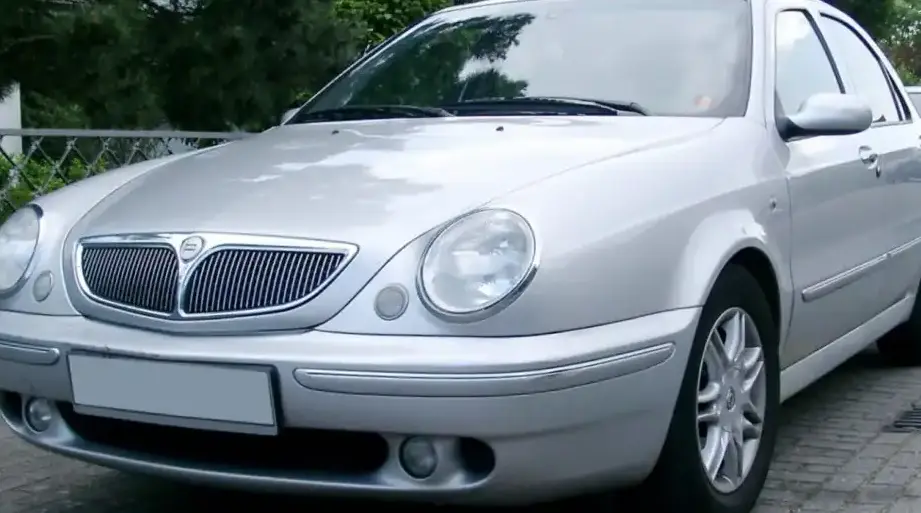
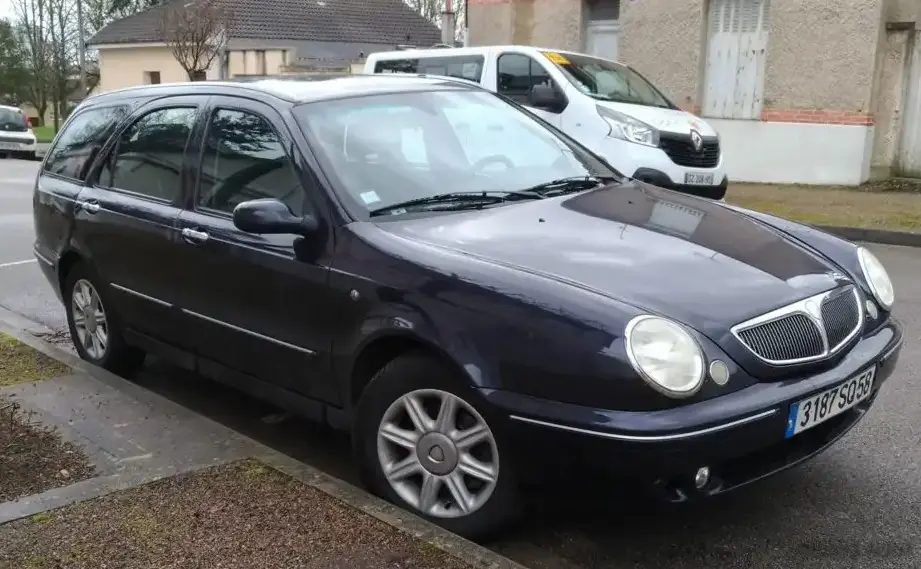
The Lancia Lybra SW 1.9 JTD, produced from July 1999 to September 2000, represents a compelling blend of Italian styling and diesel efficiency within the mid-size station wagon segment. Part of the 839 series Lybra SW (Station Wagon) range, this variant was positioned as a practical and economical option for families and those requiring substantial cargo space. It utilized Lancia’s 1HX0/A3 platform, shared with other Fiat Group vehicles like the Alfa Romeo 156. The 1.9 JTD engine offered a balance between performance and fuel economy, making it a popular choice in European markets where diesel engines were favored.
Powertrain & Engine Architecture
The heart of the Lybra SW 1.9 JTD is the AR 32302 engine, a 1910cc inline-four cylinder diesel. This engine is a representative of Fiat’s second-generation JTD (Jet Direct Injection) technology, utilizing a common rail direct injection system. This system allowed for multiple injections per combustion cycle, improving refinement, reducing noise, and enhancing fuel efficiency. The engine featured an overhead camshaft (OHC) valvetrain with two valves per cylinder. A turbocharger with an intercooler was employed to boost power output to 105 horsepower at 4000 rpm and 255 Nm (188 lb-ft) of torque at 2000 rpm. The engine’s high compression ratio of 18.5:1 contributed to its efficiency, but also required high-quality diesel fuel. The 1.9 JTD was paired with a five-speed manual transmission, delivering power to the front wheels.
Driving Characteristics
The 1.9 JTD engine in the Lybra SW provided a respectable level of performance for everyday driving. While not a sports car, the 105 hp and 255 Nm of torque offered adequate acceleration, with a 0-60 mph time of around 11.3 seconds and a top speed of 115 mph. The turbocharger provided a noticeable boost in power at lower engine speeds, making overtaking maneuvers relatively easy. The five-speed manual transmission was well-matched to the engine’s characteristics, offering smooth gear changes. Compared to the more powerful 2.0 16V petrol engine, the 1.9 JTD prioritized fuel economy and low-end torque over outright speed. The manual transmission offered more driver engagement than the optional automatic, but the automatic was favored by those seeking a more relaxed driving experience.
Equipment & Trim Levels
The Lybra SW 1.9 JTD typically came with a reasonable level of standard equipment. This included central locking, electric front windows, power steering, and an ABS anti-lock braking system. Interior upholstery was generally cloth, with options for upgraded materials. Air conditioning was a common option, as were alloy wheels and a radio/cassette player. Higher trim levels might have included features like a sunroof, rear electric windows, and upgraded audio systems. The Lybra SW aimed for a comfortable and practical interior, with a focus on space and usability.
Chassis & Braking
The Lybra SW utilized a MacPherson strut front suspension and a coil spring rear suspension. This setup provided a comfortable ride quality, although it wasn’t particularly sporty. The car featured disc brakes on all four wheels, providing adequate stopping power. The ABS system helped to maintain control during emergency braking situations. The steering was a hydraulic power-assisted rack and pinion system, offering a reasonable level of feel and precision. The suspension was tuned for comfort rather than handling, reflecting the car’s intended role as a family station wagon.
Market Reception & Comparison
The Lancia Lybra SW 1.9 JTD was generally well-received by automotive critics for its spacious interior, comfortable ride, and fuel-efficient engine. It was seen as a practical and sensible choice for families and those needing a versatile vehicle. Compared to other station wagons in its class, such as the Ford Mondeo Estate and the Volkswagen Passat Variant, the Lybra SW offered a unique blend of Italian style and diesel economy. However, it wasn’t as widely available as some of its competitors, and its reliability record was somewhat mixed. The 1.9 JTD engine was generally considered reliable, but some owners reported issues with the fuel injection system and turbocharger.
Legacy
The Lancia Lybra SW 1.9 JTD, while not a high-volume seller, has developed a following among enthusiasts who appreciate its unique character and practicality. The 1.9 JTD engine is known for its durability and fuel efficiency, making it a popular choice for those seeking a reliable and economical diesel vehicle. Today, well-maintained examples of the Lybra SW 1.9 JTD are becoming increasingly rare, and are sought after by collectors and enthusiasts. The car represents a unique chapter in Lancia’s history, showcasing the brand’s commitment to style, comfort, and innovation.