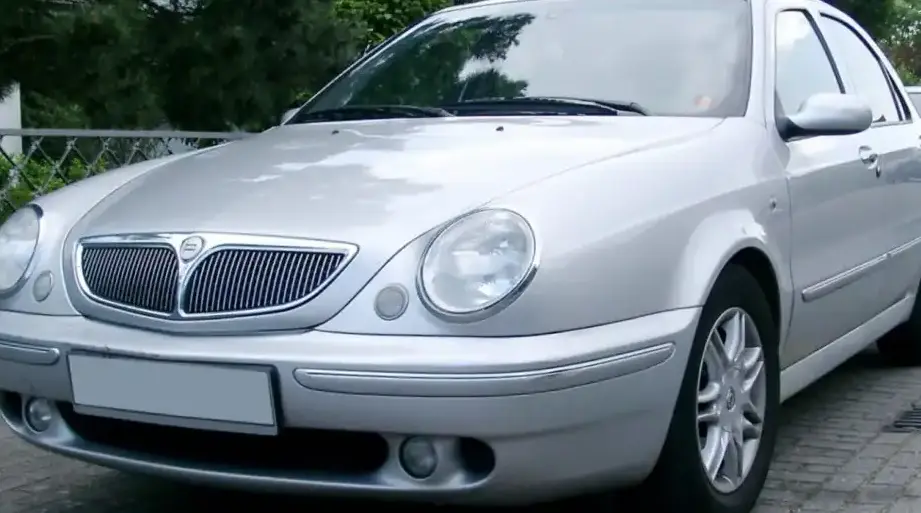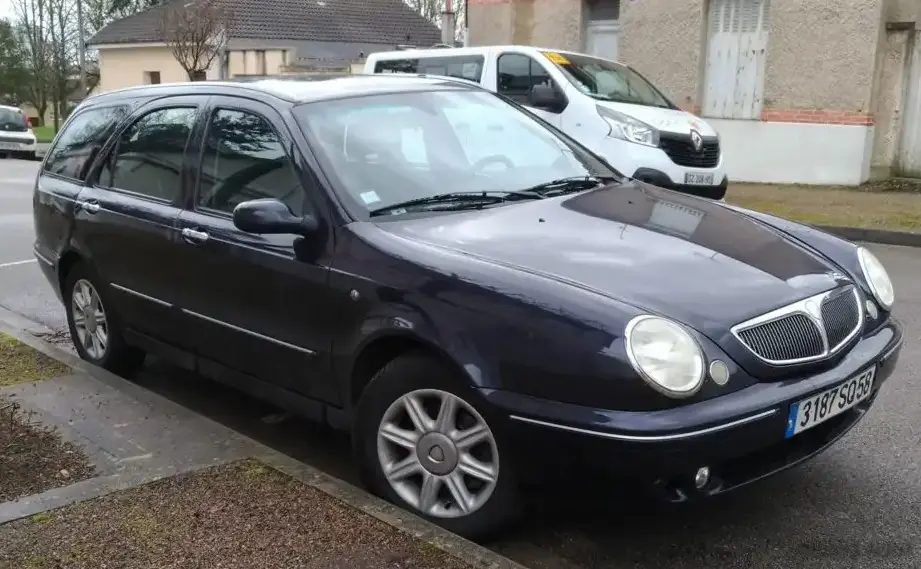
The Lancia Lybra SW 1.9 JTD, produced from 2000 to 2001, represents a compelling blend of Italian styling and diesel efficiency within the mid-size station wagon segment. Part of the 839 series, the Lybra SW (Station Wagon) aimed to provide a practical and comfortable alternative to traditional sedans, offering increased cargo capacity and versatility. This particular variant, equipped with the 1.9-liter JTD diesel engine producing 110 horsepower, occupied a middle ground in the Lybra lineup, positioned between the lower-powered gasoline engines and the more potent, though less fuel-efficient, higher-output diesel options. It was primarily marketed towards families and individuals seeking a refined and economical vehicle for long-distance travel and everyday use, particularly in European markets where diesel engines enjoyed significant popularity.
Technical Specifications
| Brand | Lancia |
| Model | Lybra |
| Generation | Lybra SW (839) |
| Type (Engine) | 1.9 JTD (110 Hp) |
| Start of production | 2000 year |
| End of production | 2001 year |
| Powertrain Architecture | Internal Combustion engine |
| Body type | Station wagon (estate) |
| Seats | 5 |
| Doors | 5 |
| Fuel consumption (economy) – urban (NEDC) | 8.4 l/100 km (28 US mpg, 33.6 UK mpg, 11.9 km/l) |
| Fuel consumption (economy) – extra urban (NEDC) | 4.8 l/100 km (49 US mpg, 58.9 UK mpg, 20.8 km/l) |
| Fuel consumption (economy) – combined (NEDC) | 6.1 l/100 km (38.6 US mpg, 46.3 UK mpg, 16.4 km/l) |
| CO2 emissions (NEDC) | 162 g/km |
| Fuel Type | Diesel |
| Acceleration 0 – 100 km/h | 11.6 sec |
| Acceleration 0 – 62 mph | 11.6 sec |
| Acceleration 0 – 60 mph | 11 sec |
| Maximum speed | 187 km/h (116.2 mph) |
| Emission standard | Euro 3 |
| Weight-to-power ratio | 11.6 kg/Hp, 86.3 Hp/tonne |
| Weight-to-torque ratio | 4.6 kg/Nm, 215.7 Nm/tonne |
| Power | 110 Hp @ 4000 rpm |
| Power per litre | 57.6 Hp/l |
| Torque | 275 Nm @ 2000 rpm (202.83 lb.-ft. @ 2000 rpm) |
| Engine layout | Front, Transverse |
| Engine Model/Code | AR 37101 |
| Engine displacement | 1910 cm3 (116.56 cu. in.) |
| Number of cylinders | 4 |
| Engine configuration | Inline |
| Cylinder Bore | 82 mm (3.23 in.) |
| Piston Stroke | 90.4 mm (3.56 in.) |
| Number of valves per cylinder | 2 |
| Fuel injection system | Diesel Commonrail |
| Engine aspiration | Turbocharger, Intercooler |
| Valvetrain | SOHC |
| Engine oil capacity | 4.8 l (5.07 US qt, 4.22 UK qt) |
| Coolant | 6.85 l (7.24 US qt, 6.03 UK qt) |
| Kerb Weight | 1275 kg (2810.89 lbs.) |
| Max. weight | 1875 kg (4133.67 lbs.) |
| Max load | 600 kg (1322.77 lbs.) |
| Trunk (boot) space – minimum | 420 l (14.83 cu. ft.) |
| Trunk (boot) space – maximum | 1300 l (45.91 cu. ft.) |
| Fuel tank capacity | 60 l (15.85 US gal, 13.2 UK gal) |
| Permitted trailer load with brakes (8%) | 1500 kg (3306.93 lbs.) |
| Permitted trailer load with brakes (12%) | 1400 kg (3086.47 lbs.) |
| Permitted trailer load without brakes | 400 kg (881.85 lbs.) |
| Permitted towbar download | 75 kg (165.35 lbs.) |
| Length | 4466 mm (175.83 in.) |
| Width | 1743 mm (68.62 in.) |
| Height | 1470 mm (57.87 in.) |
| Wheelbase | 2593 mm (102.09 in.) |
| Front track | 1517 mm (59.72 in.) |
| Rear (Back) track | 1476 mm (58.11 in.) |
| Front overhang | 926 mm (36.46 in.) |
| Rear overhang | 947 mm (37.28 in.) |
| Minimum turning circle | 10.5 m (34.45 ft.) |
| Drivetrain Architecture | The Internal combustion engine (ICE) drives the front wheels of the vehicle. |
| Drive wheel | Front wheel drive |
| Number of gears and type of gearbox | 5 gears, manual transmission |
| Front suspension | Independent type McPherson, Transverse stabilizer |
| Rear suspension | Wishbone, Transverse stabilizer, Trailing arm |
| Front brakes | Ventilated discs, 284 mm |
| Rear brakes | Disc, 251 mm |
| Assisting systems | ABS (Anti-lock braking system) |
| Steering type | Steering rack and pinion |
| Power steering | Hydraulic Steering |
| Tires size | 195/65 R15 |
| Wheel rims size | 6J x 15 |
Powertrain & Engine Architecture
The heart of the Lybra SW 1.9 JTD is the AR 37101 engine, a 1910cc inline-four cylinder diesel. This engine is a representative of Fiat’s second-generation JTD (Jet Diesel Technology) common rail direct injection system. This system allowed for more precise fuel delivery, resulting in improved combustion efficiency, reduced noise, and lower emissions compared to earlier diesel designs. The engine features a single overhead camshaft (SOHC) valvetrain operating two valves per cylinder. A turbocharger with an intercooler is employed to boost power output and improve throttle response. The intercooler cools the compressed air from the turbocharger, increasing its density and further enhancing performance. The engine’s robust construction and relatively simple design contribute to its reputation for reliability. The 5-speed manual transmission was the standard offering, providing a balance between fuel economy and drivability.
Driving Characteristics
The 110 horsepower and 275 Nm (202.83 lb-ft) of torque produced by the 1.9 JTD engine provide adequate, though not exhilarating, performance for the Lybra SW. Acceleration from 0 to 60 mph takes around 11 seconds, and the top speed is approximately 116 mph. The engine’s torque curve is relatively flat, delivering usable power across a wide rev range, making it well-suited for relaxed cruising and overtaking maneuvers. Compared to the more powerful 2.4 JTD variant, the 1.9 JTD offers a more economical driving experience, but sacrifices some outright performance. The 5-speed manual transmission is well-matched to the engine’s characteristics, providing smooth and precise gear changes. The Lybra SW’s suspension setup prioritizes comfort, resulting in a compliant ride quality, even on uneven road surfaces.
Equipment & Trim Levels
The Lybra SW 1.9 JTD typically came equipped with a reasonable level of standard features, including power windows, central locking, power steering, and an anti-lock braking system (ABS). Interior upholstery was generally cloth, with options for leather upgrades. Air conditioning was often included as standard or available as an option. Higher trim levels might have included features such as alloy wheels, a CD stereo system, and automatic climate control. The dashboard layout is functional and ergonomically designed, with easy-to-read gauges and intuitive controls.
Chassis & Braking
The Lybra SW utilizes an independent McPherson strut suspension setup at the front, providing good handling and ride comfort. The rear suspension employs a trailing arm arrangement with a transverse stabilizer, contributing to stability and minimizing body roll. The braking system consists of ventilated discs at the front and solid discs at the rear. ABS is standard, enhancing braking performance and safety. The steering is rack and pinion, providing precise and responsive control.
Market Reception & Comparison
The Lancia Lybra SW 1.9 JTD was generally well-received by automotive critics for its blend of practicality, comfort, and fuel efficiency. It was seen as a strong competitor to other mid-size station wagons, such as the Ford Mondeo Estate and the Volkswagen Passat Variant. The 1.9 JTD engine was praised for its refinement and economy, although some critics noted that it lacked the outright performance of larger-displacement engines. Fuel economy figures of around 38.6 US mpg combined were considered excellent for its class. Reliability was generally good, although some owners reported minor issues with electrical components.
Legacy
The Lancia Lybra SW 1.9 JTD has developed a reputation as a reliable and practical used car. The 1.9 JTD engine is known for its durability and relatively low maintenance costs. While parts availability may be becoming more challenging as the car ages, the engine’s robust design ensures that it can continue to provide years of service with proper maintenance. Today, the Lybra SW 1.9 JTD represents a unique and stylish alternative to more mainstream station wagons, appealing to enthusiasts who appreciate Italian design and diesel efficiency.