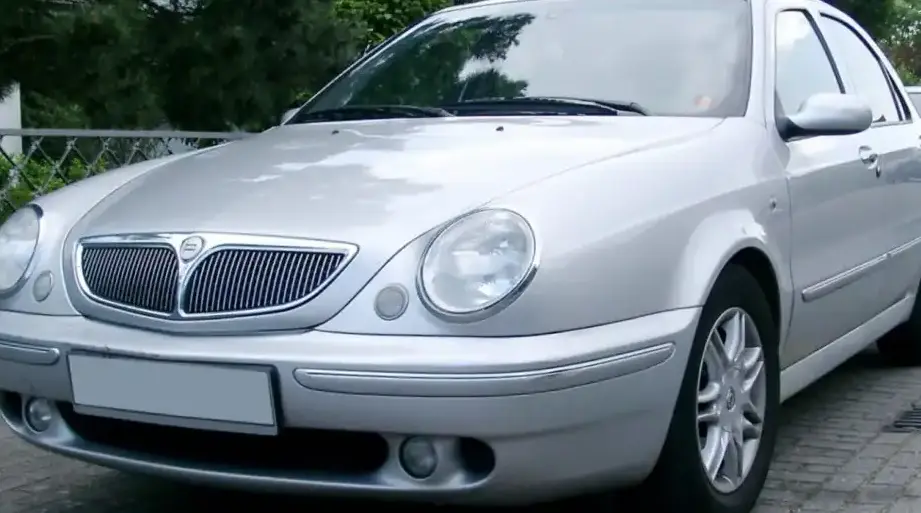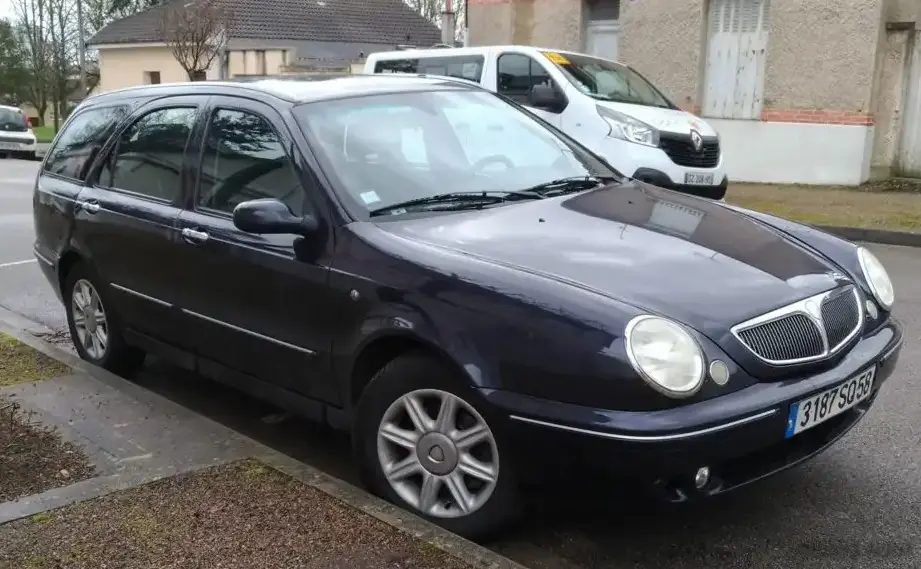
The Lancia Lybra SW 2.0 20V, produced between 2000 and 2005, represents a distinctive offering in the often-overlooked final years of Lancia’s independent operation. As a station wagon (estate) variant of the Lybra (839) series, it aimed to combine Italian styling with practicality, targeting families and those requiring ample cargo space. This particular engine and transmission combination – the 1998cc 20-valve inline-five engine paired with a five-speed manual gearbox – occupied a mid-range position within the Lybra SW lineup, offering a balance between performance and fuel economy. It sat above the lower-powered 1.8L engines and below the more potent, though less common, V6 models.
Technical Specifications
| Brand | Lancia |
| Model | Lybra |
| Generation | Lybra SW (839) |
| Type (Engine) | 2.0 20V (150 Hp) |
| Start of production | 2000 year |
| End of production | 2005 year |
| Powertrain Architecture | Internal Combustion engine |
| Body type | Station wagon (estate) |
| Seats | 5 |
| Doors | 5 |
| Fuel consumption (economy) – urban (NEDC) | 14 l/100 km (16.8 US mpg, 20.2 UK mpg, 7.1 km/l) |
| Fuel consumption (economy) – extra urban (NEDC) | 7.7 l/100 km (30.5 US mpg, 36.7 UK mpg, 13 km/l) |
| Fuel consumption (economy) – combined (NEDC) | 10 l/100 km (23.5 US mpg, 28.2 UK mpg, 10 km/l) |
| CO2 emissions (NEDC) | 238 g/km |
| Fuel Type | Petrol (Gasoline) |
| Acceleration 0 – 100 km/h | 9.9 sec |
| Acceleration 0 – 62 mph | 9.9 sec |
| Acceleration 0 – 60 mph | 9.4 sec |
| Maximum speed | 210 km/h (130.49 mph) |
| Emission standard | Euro 3 |
| Weight-to-power ratio | 8.8 kg/Hp, 114.1 Hp/tonne |
| Weight-to-torque ratio | 7.3 kg/Nm, 137.6 Nm/tonne |
| Power | 150 Hp @ 6500 rpm |
| Power per litre | 75.1 Hp/l |
| Torque | 181 Nm @ 3750 rpm (133.5 lb.-ft. @ 3750 rpm) |
| Engine layout | Front, Transverse |
| Engine Model/Code | 185B8000 |
| Engine displacement | 1998 cm3 (121.93 cu. in.) |
| Number of cylinders | 5 |
| Engine configuration | Inline |
| Cylinder Bore | 82 mm (3.23 in.) |
| Piston Stroke | 75.65 mm (2.98 in.) |
| Number of valves per cylinder | 4 |
| Fuel injection system | Multi-port manifold injection |
| Engine aspiration | Naturally aspirated engine |
| Valvetrain | DOHC |
| Engine oil capacity | 5 l (5.28 US qt | 4.4 UK qt) |
| Coolant | 8.6 l (9.09 US qt | 7.57 UK qt) |
| Kerb Weight | 1315 kg (2899.08 lbs.) |
| Max. weight | 1915 kg (4221.85 lbs.) |
| Max load | 600 kg (1322.77 lbs.) |
| Trunk (boot) space – minimum | 420 l (14.83 cu. ft.) |
| Trunk (boot) space – maximum | 1300 l (45.91 cu. ft.) |
| Fuel tank capacity | 60 l (15.85 US gal | 13.2 UK gal) |
| Permitted trailer load with brakes (8%) | 1500 kg (3306.93 lbs.) |
| Permitted trailer load with brakes (12%) | 1400 kg (3086.47 lbs.) |
| Permitted trailer load without brakes | 400 kg (881.85 lbs.) |
| Permitted towbar download | 75 kg (165.35 lbs.) |
| Length | 4466 mm (175.83 in.) |
| Width | 1743 mm (68.62 in.) |
| Height | 1470 mm (57.87 in.) |
| Wheelbase | 2593 mm (102.09 in.) |
| Front track | 1517 mm (59.72 in.) |
| Rear (Back) track | 1476 mm (58.11 in.) |
| Front overhang | 926 mm (36.46 in.) |
| Rear overhang | 947 mm (37.28 in.) |
| Minimum turning circle (turning diameter) | 10.9 m (35.76 ft.) |
| Drivetrain Architecture | The Internal combustion engine (ICE) drives the front wheels of the vehicle. |
| Drive wheel | Front wheel drive |
| Number of gears and type of gearbox | 5 gears, manual transmission |
| Front suspension | Independent type McPherson, Transverse stabilizer |
| Rear suspension | Wishbone, Transverse stabilizer, Trailing arm |
| Front brakes | Ventilated discs, 284 mm |
| Rear brakes | Disc, 251 mm |
| Assisting systems | ABS (Anti-lock braking system) |
| Steering type | Steering rack and pinion |
| Power steering | Hydraulic Steering |
| Tires size | 195/65 R15 |
| Wheel rims size | 6J x 15 |
INTRODUCTION
The Lancia Lybra SW 2.0 20V, launched in 2000, was a key component of Lancia’s attempt to modernize its image and appeal to a broader European audience. Built on the 1HX0/A3 platform shared with Alfa Romeo and Fiat models, the Lybra SW offered a more practical alternative to the sedan, capitalizing on the growing popularity of station wagons. The 2.0-liter 20-valve engine was a significant upgrade over the base 1.8L options, providing a noticeable increase in performance without the added cost and complexity of the V6. It was positioned as a sensible choice for buyers seeking a comfortable, well-equipped, and reasonably powerful family vehicle.
Powertrain & Engine Architecture
The heart of the Lybra SW 2.0 20V is the 185B8000 engine, a 1998cc inline-five cylinder gasoline engine. This engine is notable for its unusual configuration, offering a smoother power delivery than a typical inline-four. It features a double overhead camshaft (DOHC) valvetrain operating four valves per cylinder, contributing to its relatively high specific output. Fuel delivery is managed by a multi-port fuel injection system, ensuring precise fuel metering for optimal combustion. The engine’s five-speed manual transmission provides a good balance between acceleration and fuel efficiency. The gear ratios are tuned for everyday driving, with a relatively tall fifth gear for highway cruising. The engine code ‘185B8000’ is crucial for identifying specific parts and service information.
Driving Characteristics
The 2.0 20V Lybra SW offered a noticeable improvement in driving experience compared to the lower-powered variants. While not a sports car, the 150 horsepower and 181 Nm (133.5 lb-ft) of torque provided adequate acceleration for most situations. The 0-60 mph sprint took around 9.4 seconds, and the top speed was approximately 130 mph. The inline-five engine delivered a smooth and refined power delivery, making it a comfortable cruiser. The five-speed manual transmission allowed for precise control, although the shift action could feel slightly notchy compared to some contemporary gearboxes. Compared to the V6 models, the 2.0 20V offered a more engaging driving experience due to the need to work the engine more, while the fuel economy was significantly better.
Equipment & Trim Levels
The Lybra SW 2.0 20V typically came equipped with a generous level of standard features. These included power windows, central locking, air conditioning, and an integrated audio system. Interior upholstery was usually cloth, although leather options were available. Dashboard configuration featured a typically Italian-styled layout with a focus on ergonomics. Optional extras included alloy wheels, a sunroof, and upgraded audio systems. Higher trim levels added features like automatic climate control, heated seats, and parking sensors.
Chassis & Braking
The Lybra SW 2.0 20V utilized an independent McPherson strut suspension at the front and a wishbone, trailing arm setup at the rear. This configuration provided a comfortable ride and decent handling characteristics. Stabilizer bars were fitted to both axles to reduce body roll during cornering. The braking system consisted of ventilated discs at the front and solid discs at the rear, providing adequate stopping power for the vehicle’s weight. Anti-lock Braking System (ABS) was standard, enhancing safety in emergency braking situations.
Market Reception & Comparison
The Lancia Lybra SW 2.0 20V received generally positive reviews from automotive critics. It was praised for its stylish design, comfortable interior, and refined engine. However, some critics noted the slightly dated interior design and the occasionally notchy gearbox. Compared to rivals like the Ford Mondeo Estate and Volkswagen Passat Variant, the Lybra SW offered a more distinctive and characterful driving experience, but lacked the brand recognition and widespread dealer network of its competitors. Fuel economy was respectable for its class, and reliability was generally considered average, although the inline-five engine could be more complex to service than a traditional four-cylinder unit.
Legacy
The Lancia Lybra SW 2.0 20V, while not a commercial blockbuster, remains a fondly remembered vehicle among Lancia enthusiasts. The inline-five engine is particularly appreciated for its unique sound and smooth power delivery. Today, finding a well-maintained example can be challenging, but they represent a unique and stylish alternative to more common estate cars. The 185B8000 engine, while not without its quirks, is generally considered reliable if properly maintained. Parts availability can be an issue, but a dedicated community of Lancia owners helps to keep these cars on the road. The Lybra SW 2.0 20V stands as a testament to Lancia’s commitment to design and engineering during a period of significant change for the brand.