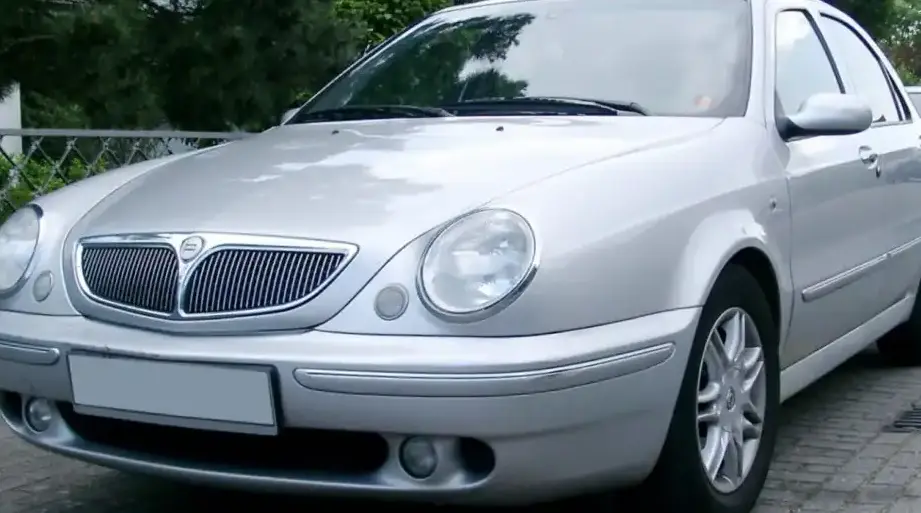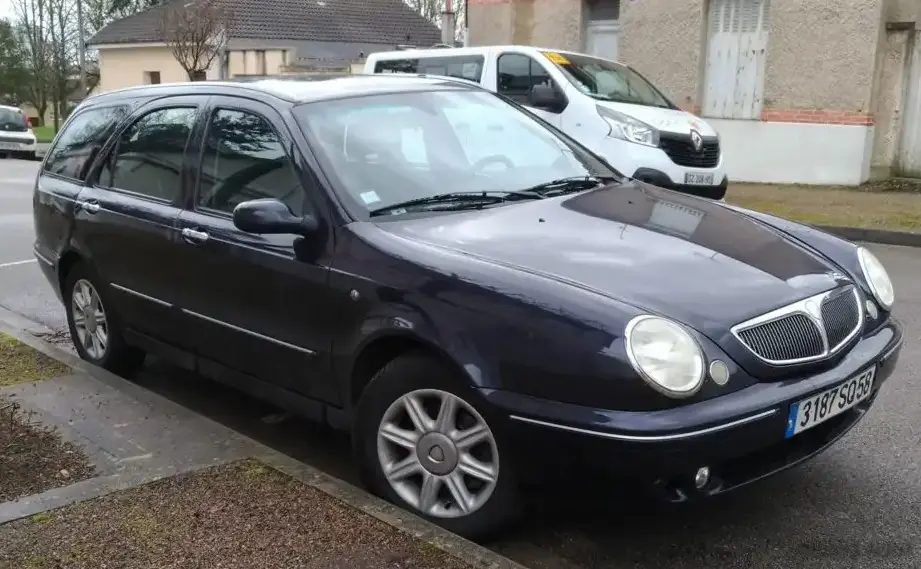
The Lancia Lybra SW (839) 2.0 20V Comfortronic, produced between 1999 and 2000, represents a refined iteration of Lancia’s mid-size offering. Positioned as a premium station wagon (estate) within the Lybra range, it aimed to combine Italian styling with practicality and a degree of performance. The Lybra SW, built on the 198 platform shared with Alfa Romeo 166 and Fiat Marea, was Lancia’s attempt to recapture a segment of the European market seeking a more sophisticated alternative to mainstream family cars. The 2.0 20V Comfortronic trim specifically targeted buyers desiring a balance of power, comfort, and the convenience of an automatic transmission.
Technical Specifications
| Brand | Lancia |
| Model | Lybra |
| Generation | Lybra SW (839) |
| Type (Engine) | 2.0 20V (154 Hp) Comfortronic |
| Start of production | 1999 |
| End of production | 2000 |
| Powertrain Architecture | Internal Combustion engine |
| Body type | Station wagon (estate) |
| Seats | 5 |
| Doors | 5 |
| Fuel consumption (economy) – urban (NEDC) | 14.2 l/100 km (16.6 US mpg, 19.9 UK mpg, 7 km/l) |
| Fuel consumption (economy) – extra urban (NEDC) | 8.4 l/100 km (28 US mpg, 33.6 UK mpg, 11.9 km/l) |
| Fuel consumption (economy) – combined (NEDC) | 10.5 l/100 km (22.4 US mpg, 26.9 UK mpg, 9.5 km/l) |
| CO2 emissions (NEDC) | 251 g/km |
| Fuel Type | Petrol (Gasoline) |
| Acceleration 0 – 100 km/h | 12 sec |
| Acceleration 0 – 62 mph | 12 sec |
| Acceleration 0 – 60 mph | 11.4 sec |
| Maximum speed | 205 km/h (127.38 mph) |
| Emission standard | Euro 2 |
| Weight-to-power ratio | 8.7 kg/Hp, 114.5 Hp/tonne |
| Weight-to-torque ratio | 7.2 kg/Nm, 138.3 Nm/tonne |
| Power | 154 Hp @ 6500 rpm |
| Power per litre | 77.1 Hp/l |
| Torque | 186 Nm @ 3750 rpm (137.19 lb.-ft. @ 3750 rpm) |
| Engine layout | Front, Transverse |
| Engine Model/Code | 182B7000 |
| Engine displacement | 1998 cm3 (121.93 cu. in.) |
| Number of cylinders | 5 |
| Engine configuration | Inline |
| Cylinder Bore | 82 mm (3.23 in.) |
| Piston Stroke | 75.65 mm (2.98 in.) |
| Compression ratio | 10.7:1 |
| Number of valves per cylinder | 4 |
| Fuel injection system | Multi-port manifold injection |
| Engine aspiration | Naturally aspirated engine |
| Valvetrain | DOHC |
| Engine oil capacity | 5 l (5.28 US qt | 4.4 UK qt) |
| Coolant | 8.6 l (9.09 US qt | 7.57 UK qt) |
| Kerb Weight | 1345 kg (2965.22 lbs.) |
| Max. weight | 1945 kg (4287.99 lbs.) |
| Max load | 600 kg (1322.77 lbs.) |
| Trunk (boot) space – minimum | 420 l (14.83 cu. ft.) |
| Trunk (boot) space – maximum | 1300 l (45.91 cu. ft.) |
| Fuel tank capacity | 60 l (15.85 US gal | 13.2 UK gal) |
| Permitted trailer load with brakes (12%) | 1400 kg (3086.47 lbs.) |
| Permitted trailer load without brakes | 400 kg (881.85 lbs.) |
| Permitted towbar download | 75 kg (165.35 lbs.) |
| Length | 4466 mm (175.83 in.) |
| Width | 1743 mm (68.62 in.) |
| Height | 1470 mm (57.87 in.) |
| Wheelbase | 2593 mm (102.09 in.) |
| Front track | 1517 mm (59.72 in.) |
| Rear (Back) track | 1476 mm (58.11 in.) |
| Front overhang | 926 mm (36.46 in.) |
| Rear overhang | 947 mm (37.28 in.) |
| Minimum turning circle (turning diameter) | 10.9 m (35.76 ft.) |
| Drivetrain Architecture | The Internal combustion engine (ICE) drives the front wheels of the vehicle. |
| Drive wheel | Front wheel drive |
| Number of gears and type of gearbox | 4 gears, automatic transmission Comfortronic |
| Front suspension | Independent type McPherson, Transverse stabilizer |
| Rear suspension | Wishbone, Transverse stabilizer, Trailing arm |
| Front brakes | Ventilated discs, 284×22 mm |
| Rear brakes | Disc, 251×10 mm |
| Assisting systems | ABS (Anti-lock braking system) |
| Steering type | Steering rack and pinion |
| Power steering | Hydraulic Steering |
| Tires size | 195/60 R15 |
| Wheel rims size | 6J x 15 |
Powertrain & Engine Architecture
The Lybra SW 2.0 20V Comfortronic is powered by the 182B7000 engine, a 1998cc inline-five cylinder gasoline engine. This engine is notable for its five-cylinder configuration, a relatively uncommon layout that Lancia employed to deliver a smoother power delivery and a distinctive engine note. The “20V” designation indicates the engine features four valves per cylinder, enhancing breathing and contributing to its 154 horsepower output at 6500 rpm and 186 Nm (137 lb-ft) of torque at 3750 rpm. The engine utilizes multi-port fuel injection for precise fuel delivery. The Comfortronic transmission is a four-speed automatic, designed to provide smooth shifts and ease of driving. While not known for blistering acceleration, the combination aimed for relaxed cruising and adequate performance for everyday use.
Driving Characteristics
The 2.0 20V automatic Lybra SW offered a comfortable, if not particularly sporty, driving experience. The automatic transmission, while convenient, did detract from the engine’s potential. Acceleration from 0-60 mph took around 11.4 seconds, and top speed was approximately 127 mph. Compared to the manual transmission versions of the same engine, the automatic suffered a slight performance penalty. The gear ratios were tuned for fuel efficiency and smooth operation rather than outright speed. The inline-five engine provided a reasonably refined power delivery, but the automatic transmission could sometimes feel hesitant during quick overtaking maneuvers. The Lybra SW prioritized ride comfort over sharp handling, making it a suitable choice for long journeys.
Equipment & Trim Levels
The Comfortronic trim level placed the Lybra SW in a mid-range position within the lineup. Standard equipment typically included air conditioning, power windows, central locking, and an RDS radio. Interior upholstery was generally cloth, though leather options were available. The dashboard featured a wood trim and a relatively straightforward layout. Optional extras included a sunroof, upgraded audio system, and alloy wheels. Safety features included ABS brakes and dual airbags.
Chassis & Braking
The Lybra SW utilized an independent McPherson strut suspension at the front and a wishbone/trailing arm setup at the rear. This configuration aimed to provide a balance of comfort and handling. The front brakes were ventilated discs, while the rear brakes were solid discs. The suspension was tuned for a comfortable ride, prioritizing absorbing bumps and providing a stable platform for passengers. Stabilizer bars were fitted to both the front and rear axles to reduce body roll during cornering.
Market Reception & Comparison
The Lancia Lybra SW 2.0 20V Comfortronic received mixed reviews. Critics praised its stylish design, comfortable interior, and refined engine. However, the automatic transmission was often criticized for being somewhat sluggish and detracting from the engine’s potential. Fuel economy, at around 22.4 mpg combined, was considered average for its class. Compared to other station wagons of the time, such as the Ford Mondeo Estate or Volkswagen Passat Variant, the Lybra SW offered a more distinctive and luxurious experience, but at a slightly higher price point. The 1.8L versions were more popular due to lower running costs, while the higher-output 2.4L V6 models appealed to those prioritizing performance.
Legacy
The Lancia Lybra SW, while not a commercial blockbuster, remains a fondly remembered car among enthusiasts. The 2.0 20V engine, when well-maintained, is generally considered reliable. However, like many Italian cars of the era, it can be prone to electrical issues and requires regular servicing. The Comfortronic automatic transmission, while comfortable, is a potential weak point and can be expensive to repair. Today, the Lybra SW 2.0 20V Comfortronic is a relatively rare sight on the roads, and well-preserved examples are becoming increasingly sought after by collectors and Lancia aficionados. Its unique blend of style, comfort, and the distinctive five-cylinder engine ensures its place as a memorable vehicle from a bygone era.