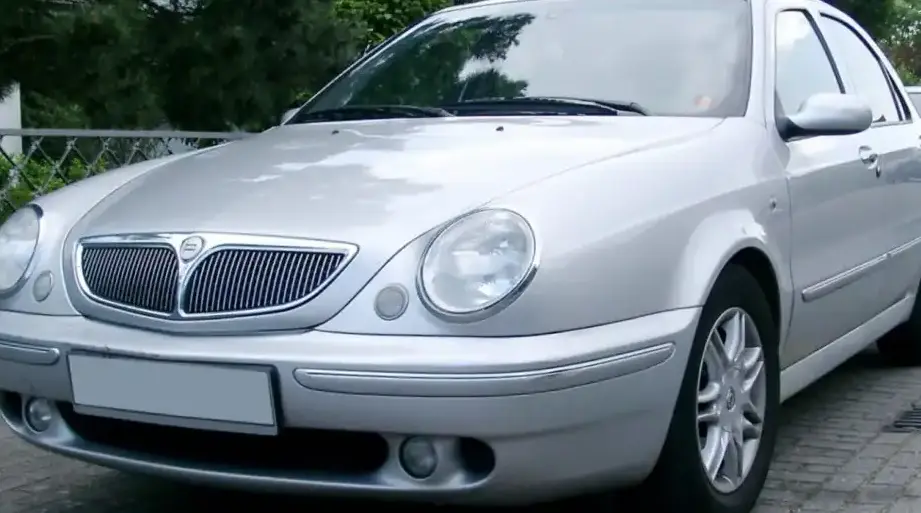
The Lancia Lybra SW 2.4 JTD, produced from October 1999 to September 2000, represents a compelling blend of Italian styling and diesel efficiency within the mid-size station wagon segment. Part of the 839 series Lybra SW (Station Wagon) range, this variant was positioned as a practical and relatively high-performance option, appealing to buyers seeking a spacious vehicle with good fuel economy and respectable power. It sat within the second generation of the Lybra, which utilized the Tipo-derived 839 platform, also shared with the Alfa Romeo 156. The 2.4 JTD offered a step up in performance compared to the lower-powered gasoline engines available in the Lybra SW lineup, while remaining more economical than the larger displacement petrol options.
Technical Specifications
| Brand | Lancia |
| Model | Lybra |
| Generation | Lybra SW (839) |
| Type (Engine) | 2.4 JTD (135 Hp) |
| Start of production | October, 1999 |
| End of production | September, 2000 |
| Powertrain Architecture | Internal Combustion engine |
| Body type | Station wagon (estate) |
| Seats | 5 |
| Doors | 5 |
| Fuel consumption (urban) | 9.2 l/100 km (25.6 US mpg) |
| Fuel consumption (extra urban) | 5.5 l/100 km (42.8 US mpg) |
| Fuel consumption (combined) | 6.9 l/100 km (34.1 US mpg) |
| Fuel Type | Diesel |
| Acceleration 0 – 100 km/h | 10.3 sec |
| Acceleration 0 – 62 mph | 10.3 sec |
| Acceleration 0 – 60 mph | 9.8 sec |
| Maximum speed | 200 km/h (124.27 mph) |
| Weight-to-power ratio | 10.4 kg/Hp |
| Weight-to-torque ratio | 4.6 kg/Nm |
| Power | 135 Hp @ 4000 rpm |
| Torque | 304 Nm @ 2000 rpm (224.22 lb.-ft. @ 2000 rpm) |
| Engine layout | Front, Transverse |
| Engine Model/Code | 839A5.000 |
| Engine displacement | 2387 cm3 (145.66 cu. in.) |
| Number of cylinders | 5 |
| Engine configuration | Inline |
| Cylinder Bore | 82 mm (3.23 in.) |
| Piston Stroke | 90.4 mm (3.56 in.) |
| Compression ratio | 18.45:1 |
| Number of valves per cylinder | 2 |
| Fuel injection system | Diesel Commonrail |
| Engine aspiration | Turbocharger |
| Valvetrain | OHC |
| Engine oil capacity | 5.5 l (5.81 US qt | 4.84 UK qt) |
| Coolant capacity | 8.5 l (8.98 US qt | 7.48 UK qt) |
| Kerb Weight | 1410 kg (3108.52 lbs.) |
| Max. weight | 1935 kg (4265.94 lbs.) |
| Max load | 525 kg (1157.43 lbs.) |
| Trunk (boot) space – minimum | 420 l (14.83 cu. ft.) |
| Fuel tank capacity | 60 l (15.85 US gal | 13.2 UK gal) |
| Length | 4466 mm (175.83 in.) |
| Width | 1743 mm (68.62 in.) |
| Height | 1470 mm (57.87 in.) |
| Wheelbase | 2593 mm (102.09 in.) |
| Front track | 1497 mm (58.94 in.) |
| Rear track | 1459 mm (57.44 in.) |
| Drivetrain Architecture | Front wheel drive |
| Number of gears | 5 |
| Gearbox type | Manual transmission |
| Front suspension | Spring Strut |
| Rear suspension | Coil spring |
| Front brakes | Disc |
| Rear brakes | Disc |
| Assisting systems | ABS (Anti-lock braking system) |
| Steering type | Steering rack and pinion |
| Power steering | Hydraulic Steering |
| Tires size | 205/60R15V |
Powertrain & Engine Architecture
The heart of the Lybra SW 2.4 JTD is the 839A5.000 engine, a 2.4-liter inline-five cylinder diesel. This engine utilizes a common rail direct injection system, a relatively advanced technology for its time, allowing for precise fuel delivery and improved combustion efficiency. The engine produces 135 horsepower at 4000 rpm and a substantial 304 Nm (224 lb-ft) of torque at just 2000 rpm. This torque output is a key characteristic of the engine, providing strong pulling power for a station wagon. The engine features an overhead camshaft (OHC) valvetrain with two valves per cylinder. A turbocharger is employed to boost power and improve responsiveness. The five-speed manual transmission was the standard offering for this variant, providing a good balance between performance and fuel economy. The engine’s design prioritized durability and low-end torque, making it well-suited for long-distance driving and hauling loads.
Driving Characteristics
The 2.4 JTD engine delivers a distinctly different driving experience compared to the gasoline-powered Lybra SW models. While not a sports car, the 2.4 JTD offers brisk acceleration, achieving 0-60 mph in approximately 9.8 seconds. The abundant torque makes overtaking at highway speeds effortless. The five-speed manual transmission is well-matched to the engine’s characteristics, with gear ratios optimized for both fuel efficiency and usable power. Compared to the 1.8-liter gasoline engine, the 2.4 JTD provides significantly more torque, resulting in a more relaxed and confident driving experience, especially when fully loaded. The manual transmission allows for greater driver control, but the diesel engine’s narrower power band requires more frequent gear changes than the higher-revving gasoline alternatives.
Equipment & Trim Levels
The Lybra SW 2.4 JTD typically came equipped with a reasonable level of standard features. Interior appointments included cloth upholstery, although leather was available as an option. Standard equipment generally included power windows, central locking, and an AM/FM radio. Higher trim levels offered options such as climate control, alloy wheels, and a more sophisticated audio system. The Lybra SW was designed with practicality in mind, offering a spacious interior and a generous cargo area. The station wagon body style provided ample room for passengers and luggage, making it a popular choice for families.
Chassis & Braking
The Lybra SW 2.4 JTD utilizes a front-engine, front-wheel-drive layout. Suspension consists of a spring strut setup at the front and a coil spring arrangement at the rear. The braking system features disc brakes on all four wheels, providing adequate stopping power. Anti-lock Braking System (ABS) was standard, enhancing safety and control during emergency braking situations. The chassis was tuned to provide a comfortable ride, prioritizing passenger comfort over sporty handling. Stabilizer bars were fitted to both the front and rear axles to reduce body roll during cornering.
Market Reception & Comparison
The Lancia Lybra SW 2.4 JTD was generally well-received by automotive critics for its blend of practicality, fuel efficiency, and performance. It was seen as a strong competitor to other mid-size station wagons, such as the Ford Mondeo Estate and the Volkswagen Passat Variant. The 2.4 JTD offered a compelling alternative to the gasoline-powered Lybra SW models, providing better fuel economy and more torque. However, some critics noted that the diesel engine was somewhat noisy compared to its gasoline counterparts. Compared to the 1.8-liter gasoline engine, the 2.4 JTD offered superior fuel economy and torque, but at the expense of some refinement.
Legacy
The Lancia Lybra SW 2.4 JTD has proven to be a relatively reliable vehicle, with the 2.4 JTD engine known for its durability. Common rail diesel engines, when properly maintained, can accumulate high mileage. Today, the Lybra SW 2.4 JTD is a relatively rare sight on the roads, but it remains a popular choice among enthusiasts who appreciate its unique blend of Italian style and diesel practicality. Parts availability can be a challenge, but the engine itself is generally robust and relatively easy to maintain. The Lybra SW 2.4 JTD represents a unique chapter in Lancia’s history, showcasing the brand’s commitment to innovation and design.