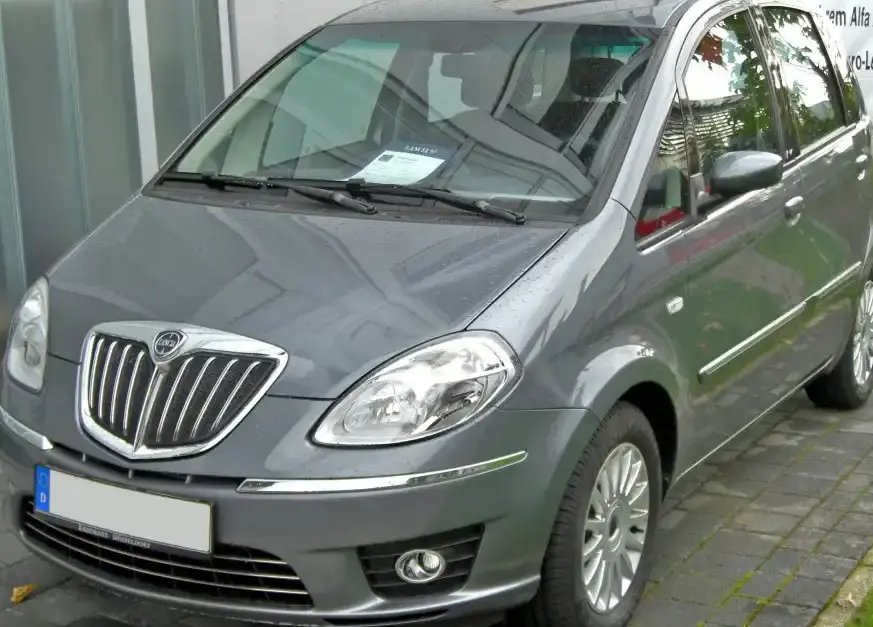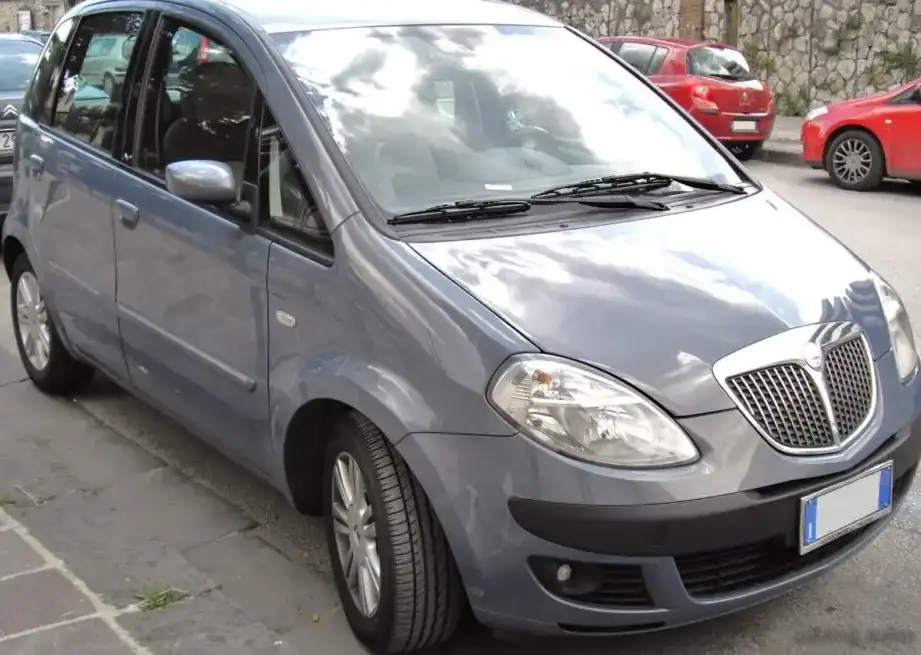
The Lancia Musa 1.3 Multijet, producing 70 horsepower, was a compact Multi-Purpose Vehicle (MPV) marketed primarily in Europe from 2004 to 2007. Positioned as the entry-level engine option within the Musa range, it aimed to provide economical transportation for families and urban drivers. The Musa itself was based on the Fiat Idea platform (Project 188), sharing its underpinnings and many mechanical components. This variant represented Lancia’s attempt to blend practicality with a touch of Italian style in a burgeoning segment of the European car market.
Technical Specifications
| Brand | Lancia |
| Model | Musa |
| Generation | Musa |
| Type (Engine) | 1.3 Multijet (70 Hp) |
| Start of production | 2004 |
| End of production | 2007 |
| Powertrain Architecture | Internal Combustion engine |
| Body type | MPV |
| Seats | 5 |
| Doors | 5 |
| Fuel consumption (urban) | 6.2 l/100 km (37.9 US mpg, 45.6 UK mpg, 16.1 km/l) |
| Fuel consumption (extra urban) | 4.5 l/100 km (52.3 US mpg, 62.8 UK mpg, 22.2 km/l) |
| Fuel consumption (combined) | 5.1 l/100 km (46.1 US mpg, 55.4 UK mpg, 19.6 km/l) |
| Fuel Type | Diesel |
| Acceleration 0 – 100 km/h | 15.4 sec |
| Acceleration 0 – 62 mph | 15.4 sec |
| Acceleration 0 – 60 mph | 14.6 sec |
| Maximum speed | 159 km/h (98.8 mph) |
| Emission standard | Euro 4 |
| Weight-to-power ratio | 17.1 kg/Hp, 58.3 Hp/tonne |
| Weight-to-torque ratio | 6.7 kg/Nm, 150 Nm/tonne |
| Power | 70 Hp @ 4000 rpm |
| Power per litre | 56.1 Hp/l |
| Torque | 180 Nm @ 1750 rpm (132.76 lb.-ft. @ 1750 rpm) |
| Engine layout | Front, Transverse |
| Engine Model/Code | 188 A9.000 |
| Engine displacement | 1248 cm3 (76.16 cu. in.) |
| Number of cylinders | 4 |
| Engine configuration | Inline |
| Cylinder Bore | 69.6 mm (2.74 in.) |
| Piston Stroke | 82 mm (3.23 in.) |
| Compression ratio | 18.1:1 |
| Number of valves per cylinder | 4 |
| Fuel injection system | Diesel Commonrail |
| Engine aspiration | Turbocharger, Intercooler |
| Valvetrain | DOHC |
| Engine oil capacity | 3 l (3.17 US qt | 2.64 UK qt) |
| Coolant | 6 l (6.34 US qt | 5.28 UK qt) |
| Kerb Weight | 1200 kg (2645.55 lbs.) |
| Max. weight | 1700 kg (3747.86 lbs.) |
| Max load | 500 kg (1102.31 lbs.) |
| Trunk (boot) space – minimum | 320 l (11.3 cu. ft.) |
| Trunk (boot) space – maximum | 1420 l (50.15 cu. ft.) |
| Fuel tank capacity | 47 l (12.42 US gal | 10.34 UK gal) |
| Length | 3985 mm (156.89 in.) |
| Width | 1698 mm (66.85 in.) |
| Height | 1688 mm (66.46 in.) |
| Wheelbase | 2508 mm (98.74 in.) |
| Front track | 1444 mm (56.85 in.) |
| Rear (Back) track | 1431 mm (56.34 in.) |
| Drag coefficient (Cd) | 0.31 |
| Minimum turning circle | 10.4 m (34.12 ft.) |
| Drivetrain Architecture | The Internal combustion engine (ICE) drives the front wheels of the vehicle. |
| Drive wheel | Front wheel drive |
| Number of gears | 5 gears, manual transmission |
| Front suspension | Independent coil spring |
| Rear suspension | Semi-independent, coil spring |
| Front brakes | Disc |
| Rear brakes | Drum |
| Tires size | 185/65 R14; 195/60 R15 |
| Wheel rims size | 14; 15 |
Powertrain & Engine Architecture
The heart of the Musa 1.3 Multijet was the 188A9.000 engine, a 1.3-liter inline-four cylinder diesel. This engine was a product of Fiat’s Multijet technology, a second-generation common rail direct injection system. Multijet allowed for multiple injection events per combustion cycle, resulting in smoother operation, reduced noise, and improved fuel efficiency. The engine featured a turbocharger with an intercooler to boost power output. The 70 horsepower version utilized a smaller turbocharger and less aggressive fuel mapping compared to higher-output variants of the 1.3 Multijet. The engine employed a double overhead camshaft (DOHC) valvetrain with four valves per cylinder. The transmission was a standard five-speed manual gearbox, chosen for its simplicity and cost-effectiveness in this entry-level trim. The engine’s relatively high compression ratio of 18.1:1 was typical for diesel engines, contributing to its thermal efficiency.
Driving Characteristics
The 1.3 Multijet 70 hp engine in the Musa provided adequate, but not exhilarating, performance. Acceleration was leisurely, taking approximately 15.4 seconds to reach 62 mph (100 km/h). The engine’s strength lay in its low-end torque of 180 Nm (132.76 lb-ft) available from 1750 rpm, making it reasonably drivable in urban environments and during overtaking maneuvers. However, the engine felt strained at higher speeds or when fully loaded. Compared to the more powerful 1.9 JTD versions, the 1.3 Multijet lacked the punch needed for sustained highway cruising. The five-speed manual transmission was well-matched to the engine’s characteristics, with gear ratios optimized for fuel economy rather than outright performance. The gear ratios were relatively long, further emphasizing the engine’s focus on efficiency.
Equipment & Trim Levels
The 1.3 Multijet trim of the Lancia Musa was generally considered the base model. Standard equipment typically included power steering, central locking, electric front windows, and an adjustable steering column. Interior upholstery was usually a basic cloth material. Air conditioning was often an optional extra, as were alloy wheels and a radio/CD player. Safety features included driver and passenger airbags, and ABS brakes. Higher trim levels, such as the Eleganza, offered more luxurious appointments like upgraded upholstery, climate control, and rear electric windows. The Musa’s interior design aimed for a stylish and comfortable feel, reflecting Lancia’s brand image, even in the base trim.
Chassis & Braking
The Musa’s chassis featured independent coil spring suspension at the front and a semi-independent coil spring setup at the rear. This configuration provided a reasonable balance between ride comfort and handling. The front brakes were ventilated discs, while the rear brakes were drums – a cost-saving measure common in this segment. Stabilizer bars were fitted to both the front and rear axles to reduce body roll during cornering. The steering was hydraulic power-assisted, providing light and easy steering feel. Tire sizes typically ranged from 185/65 R14 to 195/60 R15, depending on the trim level.
Market Reception & Comparison
The Lancia Musa 1.3 Multijet was generally well-received for its fuel economy and practicality. Critics praised its spacious interior and comfortable ride. However, the engine’s lack of power was a common criticism. Compared to competitors like the Renault Scenic and Citroën Xsara Picasso, the Musa offered a more stylish interior but lacked the performance of some of its rivals. The 1.9 JTD versions of the Musa offered significantly better performance but came at a higher price point. The 1.3 Multijet appealed to buyers prioritizing fuel efficiency and low running costs over outright performance.
Legacy
The 1.3 Multijet engine proved to be relatively reliable, although regular servicing is crucial for diesel engines. Common issues included turbocharger wear and potential problems with the fuel injectors. In the used car market, the Musa 1.3 Multijet remains an affordable option for those seeking a practical and economical MPV. Its simple mechanicals and readily available parts make it relatively easy to maintain. However, potential buyers should be aware of the engine’s limited power output and the possibility of age-related wear and tear. The Musa, while not a sales blockbuster, represents a unique chapter in Lancia’s history, showcasing the brand’s attempt to compete in the increasingly popular MPV segment.