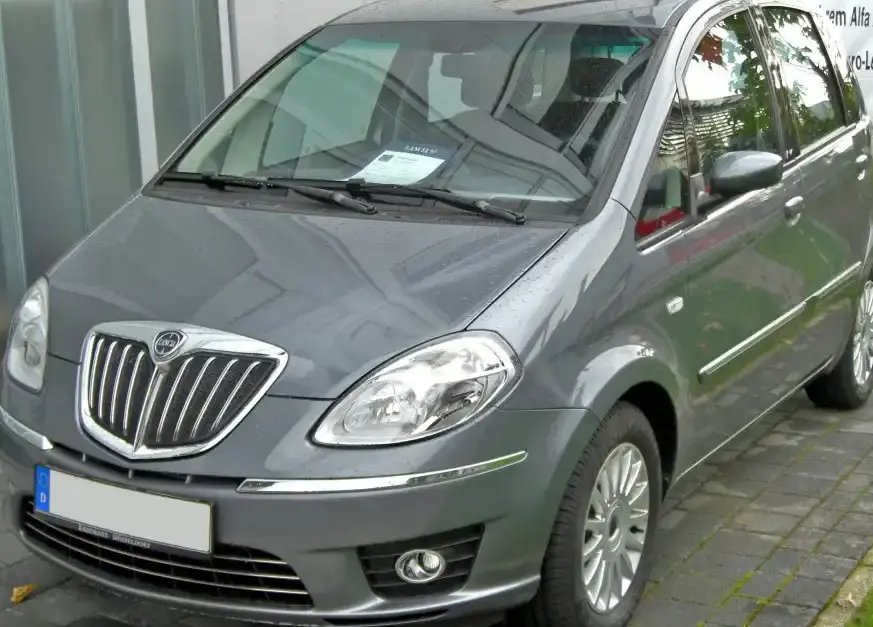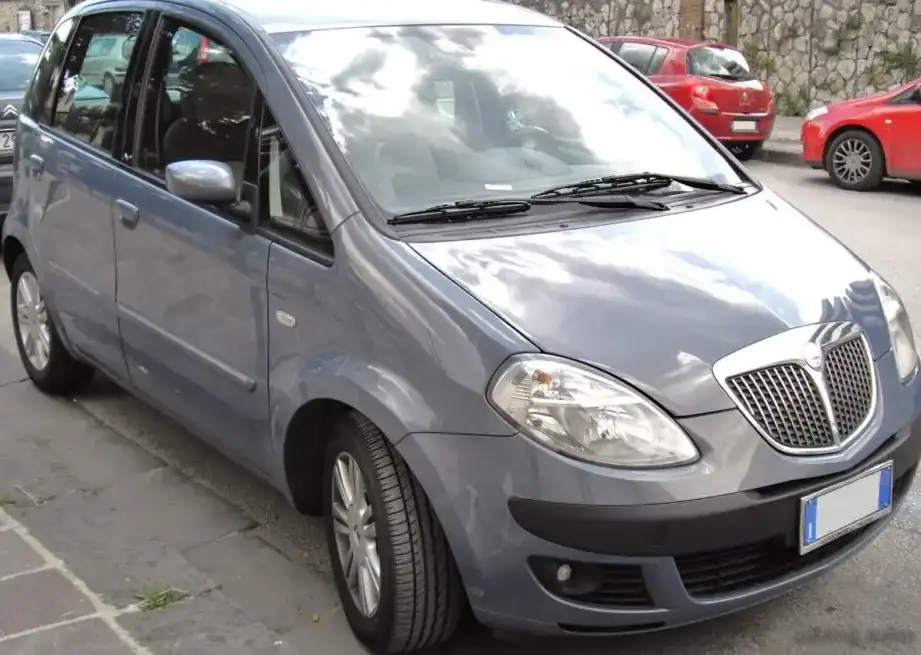
The Lancia Musa 1.3 Multijet 90 HP Automatic, produced between 2004 and 2007, represents a specific configuration within the second generation of the Musa (also known as the Chrysler PT Cruiser in some markets due to the shared platform). Positioned as an entry-level to mid-range offering, this variant aimed to provide economical and practical transportation within the compact MPV segment, primarily targeting European buyers. It utilized a diesel engine paired with an automated manual transmission, a combination designed for fuel efficiency and ease of use in urban environments. The Musa, built on the Fiat/Chrysler 1HX0/A3 platform, was Lancia’s attempt to offer a stylish and sophisticated alternative to more utilitarian MPVs.
Technical Specifications
| Brand | Lancia |
| Model | Musa |
| Type (Engine) | 1.3 Multijet (90 Hp) Automatic |
| Start of production | 2004 |
| End of production | 2007 |
| Powertrain Architecture | Internal Combustion engine |
| Body type | MPV |
| Seats | 5 |
| Doors | 5 |
| Fuel consumption (urban) | 5.9 l/100 km (39.9 US mpg, 47.9 UK mpg, 16.9 km/l) |
| Fuel consumption (extra urban) | 4 l/100 km (58.8 US mpg, 70.6 UK mpg, 25 km/l) |
| Fuel consumption (combined) | 4.7 l/100 km (50 US mpg, 60.1 UK mpg, 21.3 km/l) |
| Fuel Type | Diesel |
| Acceleration 0 – 100 km/h | 12.5 sec |
| Acceleration 0 – 62 mph | 12.5 sec |
| Acceleration 0 – 60 mph | 11.9 sec |
| Maximum speed | 173 km/h (107.5 mph) |
| Emission standard | Euro 4 |
| Weight-to-power ratio | 13.4 kg/Hp, 74.7 Hp/tonne |
| Weight-to-torque ratio | 6 kg/Nm, 166 Nm/tonne |
| Power | 90 Hp @ 4000 rpm |
| Power per litre | 72.1 Hp/l |
| Torque | 200 Nm @ 1750 rpm (147.51 lb.-ft. @ 1750 rpm) |
| Engine layout | Front, Transverse |
| Engine Model/Code | 199 A3.000 |
| Engine displacement | 1248 cm3 (76.16 cu. in.) |
| Number of cylinders | 4 |
| Engine configuration | Inline |
| Cylinder Bore | 69.6 mm (2.74 in.) |
| Piston Stroke | 82 mm (3.23 in.) |
| Compression ratio | 18.1:1 |
| Number of valves per cylinder | 4 |
| Fuel injection system | Diesel Commonrail |
| Engine aspiration | Turbocharger, Intercooler |
| Valvetrain | DOHC |
| Engine oil capacity | 3 l (3.17 US qt | 2.64 UK qt) |
| Coolant | 6 l (6.34 US qt | 5.28 UK qt) |
| Kerb Weight | 1205 kg (2656.57 lbs.) |
| Max. weight | 1705 kg (3758.88 lbs.) |
| Max load | 500 kg (1102.31 lbs.) |
| Trunk (boot) space – minimum | 320 l (11.3 cu. ft.) |
| Trunk (boot) space – maximum | 1420 l (50.15 cu. ft.) |
| Fuel tank capacity | 47 l (12.42 US gal | 10.34 UK gal) |
| Length | 3985 mm (156.89 in.) |
| Width | 1698 mm (66.85 in.) |
| Height | 1688 mm (66.46 in.) |
| Wheelbase | 2508 mm (98.74 in.) |
| Front track | 1444 mm (56.85 in.) |
| Rear (Back) track | 1431 mm (56.34 in.) |
| Drag coefficient (Cd) | 0.31 |
| Minimum turning circle | 10.4 m (34.12 ft.) |
| Drivetrain Architecture | The Internal combustion engine (ICE) drives the front wheels of the vehicle. |
| Drive wheel | Front wheel drive |
| Number of gears and type of gearbox | 5 gears, automatic transmission Dualogic |
| Front suspension | Independent coil spring |
| Rear suspension | Semi-independent, coil spring |
| Front brakes | Disc |
| Rear brakes | Drum |
| Tires size | 195/60 R15 |
| Wheel rims size | 15 |
Powertrain & Engine Architecture
The heart of the Musa 1.3 Multijet 90 HP Automatic is the 199A3.000 engine, a 1.3-liter inline-four cylinder diesel. This engine is a member of Fiat’s Multijet family, known for its common-rail direct injection system. The Multijet technology allows for multiple injections per combustion cycle, improving efficiency, reducing noise, and enhancing driveability. The engine utilizes a turbocharger with an intercooler to boost power output. The 18.1:1 compression ratio is typical for a diesel engine, contributing to its thermal efficiency. The Dualogic automated manual transmission, a five-speed unit, was a key feature. It’s essentially a conventional manual gearbox with electronically controlled actuators for clutch operation and gear changes. While offering some of the convenience of a traditional automatic, it could sometimes exhibit slower and less smooth shifts compared to a torque converter automatic.
Driving Characteristics
The 90 horsepower output and 200 Nm (147 lb-ft) of torque delivered by the 1.3 Multijet engine, when coupled with the Dualogic transmission, resulted in a driving experience focused on economy rather than outright performance. Acceleration from 0-60 mph took around 11.9 seconds, and top speed was approximately 107.5 mph. The Dualogic transmission, while offering automatic operation, didn’t always provide the smoothest gear changes, and could sometimes feel hesitant during quick acceleration. Compared to the more powerful 1.9 JTD versions of the Musa, this variant felt noticeably slower. However, the lower power output also contributed to better fuel economy, making it a practical choice for city driving and longer journeys where efficiency was prioritized. The gear ratios were tuned for maximizing fuel efficiency, meaning the engine often operated at lower RPMs during cruising.
Equipment & Trim Levels
The 1.3 Multijet 90 HP Automatic trim typically included standard features such as air conditioning, power steering, electric front windows, and a basic audio system. Interior upholstery was generally cloth, with a functional but not luxurious design. Optional extras included alloy wheels, a sunroof, upgraded audio systems, and parking sensors. The Musa aimed for a slightly more upscale feel than some of its competitors, with attention paid to interior design and material quality, although it didn’t reach the levels of premium brands. Safety features included ABS brakes and driver/passenger airbags.
Chassis & Braking
The Musa’s chassis featured independent coil spring suspension at the front and a semi-independent coil spring setup at the rear. This configuration provided a reasonable balance between ride comfort and handling. The front brakes were discs, while the rear brakes were drums – a cost-saving measure common in this segment. The 195/60 R15 tires offered adequate grip for everyday driving. Stabilizer bars were fitted to both the front and rear axles to reduce body roll during cornering.
Market Reception & Comparison
The Lancia Musa 1.3 Multijet 90 HP Automatic was generally well-received for its fuel efficiency and practicality. Critics praised its spacious interior and comfortable ride. However, the Dualogic transmission received mixed reviews, with some finding it jerky and slow to respond. Compared to the higher-powered versions of the Musa, this variant offered a more affordable entry point but at the expense of performance. The 1.9 JTD models were favored by drivers who prioritized power and driving enjoyment, while the 1.3 Multijet appealed to those seeking economy and ease of use. Fuel economy figures of around 50 US mpg combined made it a competitive option in its class.
Legacy
The 1.3 Multijet engine proved to be a reliable unit when properly maintained. The Dualogic transmission, however, could be prone to issues if not serviced regularly. Today, the Musa 1.3 Multijet 90 HP Automatic can be found on the used car market at relatively affordable prices. Its fuel efficiency and practicality continue to make it an appealing option for budget-conscious buyers. While not a performance car, it offers a comfortable and economical way to transport a small family or navigate urban environments. Parts availability is generally good, thanks to the widespread use of Fiat components. However, potential buyers should be aware of the potential for issues with the Dualogic transmission and ensure it has been well-maintained.