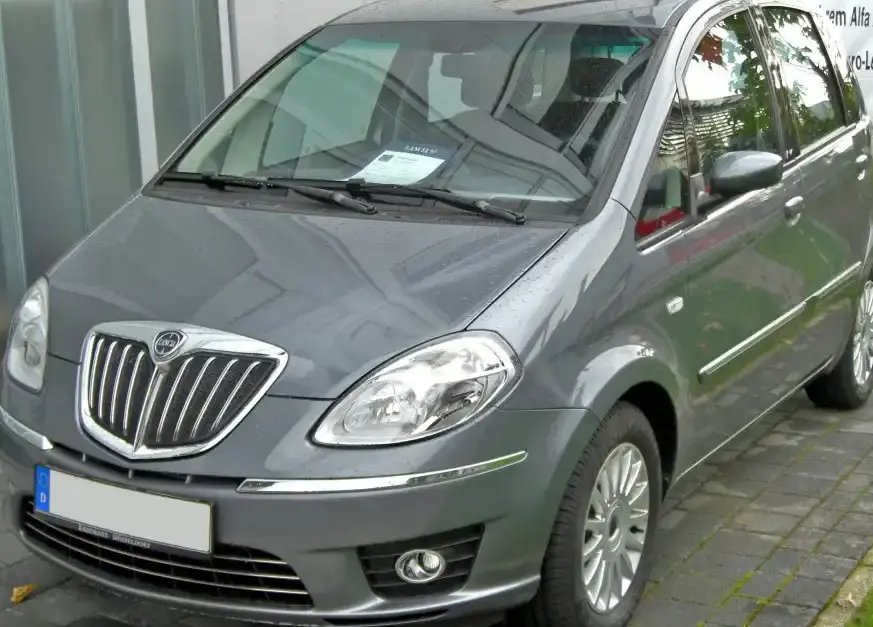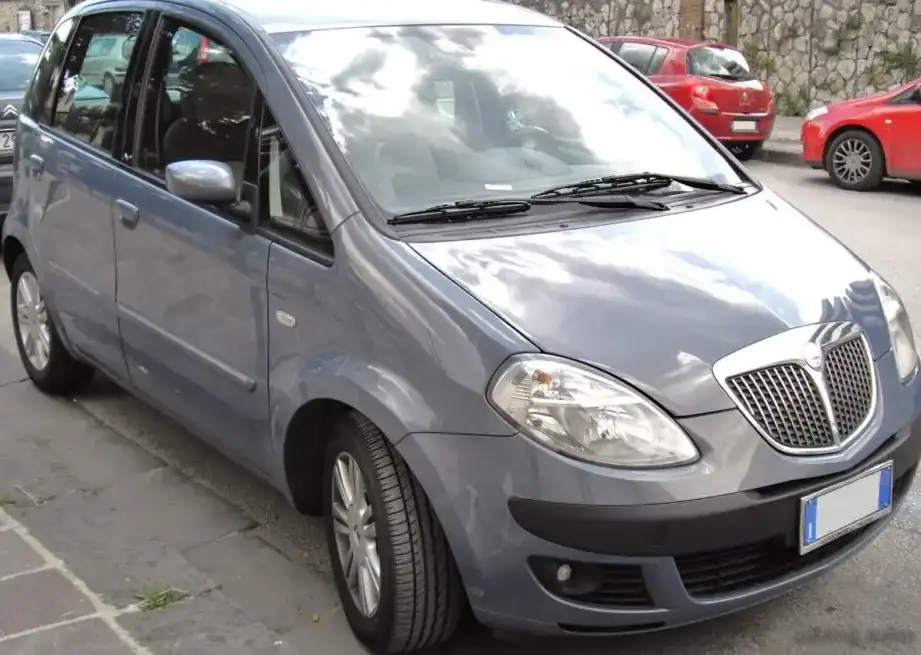
The Lancia Musa 1.4, producing 95 horsepower, was a compact Multi-Purpose Vehicle (MPV) marketed primarily in Europe from 2004 to 2007. Positioned as an entry-level offering within the Musa range, it aimed to provide affordable and practical transportation with a touch of Italian style. The Musa, based on the Fiat Idea platform (Project 1HX0/A3), represented Lancia’s attempt to capture a segment of the growing small MPV market, offering a more premium alternative to mainstream competitors. This particular 1.4-liter variant served as the gateway to the Musa lineup, appealing to buyers prioritizing fuel efficiency and ease of driving over outright performance.
Technical Specifications
| Brand | Lancia |
| Model | Musa |
| Generation | Musa |
| Type (Engine) | 1.4 (95 Hp) |
| Start of production | 2004 |
| End of production | 2007 |
| Powertrain Architecture | Internal Combustion engine |
| Body type | MPV |
| Seats | 5 |
| Doors | 5 |
| Fuel consumption (urban) | 8.7 l/100 km (27 US mpg, 32.5 UK mpg, 11.5 km/l) |
| Fuel consumption (extra urban) | 5.4 l/100 km (43.6 US mpg, 52.3 UK mpg, 18.5 km/l) |
| Fuel consumption (combined) | 6.6 l/100 km (35.6 US mpg, 42.8 UK mpg, 15.2 km/l) |
| Fuel Type | Petrol (Gasoline) |
| Acceleration 0 – 100 km/h | 11.5 sec |
| Acceleration 0 – 62 mph | 11.5 sec |
| Acceleration 0 – 60 mph | 10.9 sec |
| Maximum speed | 175 km/h (108.74 mph) |
| Emission standard | Euro 4 |
| Weight-to-power ratio | 12.2 kg/Hp, 81.9 Hp/tonne |
| Weight-to-torque ratio | 9.1 kg/Nm, 110.3 Nm/tonne |
| Power | 95 Hp @ 5800 rpm |
| Power per litre | 69.4 Hp/l |
| Torque | 128 Nm @ 4500 rpm (94.41 lb.-ft. @ 4500 rpm) |
| Engine layout | Front, Transverse |
| Engine Model/Code | 843 A1.000 |
| Engine displacement | 1368 cm3 (83.48 cu. in.) |
| Number of cylinders | 4 |
| Engine configuration | Inline |
| Cylinder Bore | 72 mm (2.83 in.) |
| Piston Stroke | 84 mm (3.31 in.) |
| Compression ratio | 11:1 |
| Number of valves per cylinder | 4 |
| Fuel injection system | Multi-port manifold injection |
| Engine aspiration | Naturally aspirated engine |
| Valvetrain | DOHC |
| Engine oil capacity | 2.7 l (2.85 US qt | 2.38 UK qt) |
| Coolant | 4.5 l (4.76 US qt | 3.96 UK qt) |
| Kerb Weight | 1160 kg (2557.36 lbs.) |
| Max. weight | 1660 kg (3659.67 lbs.) |
| Max load | 500 kg (1102.31 lbs.) |
| Trunk (boot) space – minimum | 320 l (11.3 cu. ft.) |
| Trunk (boot) space – maximum | 1420 l (50.15 cu. ft.) |
| Fuel tank capacity | 47 l (12.42 US gal | 10.34 UK gal) |
| Length | 3985 mm (156.89 in.) |
| Width | 1698 mm (66.85 in.) |
| Height | 1688 mm (66.46 in.) |
| Wheelbase | 2508 mm (98.74 in.) |
| Front track | 1444 mm (56.85 in.) |
| Rear (Back) track | 1431 mm (56.34 in.) |
| Drag coefficient (Cd) | 0.31 |
| Minimum turning circle | 10.4 m (34.12 ft.) |
| Drivetrain Architecture | The Internal combustion engine (ICE) drives the front wheels of the vehicle. |
| Drive wheel | Front wheel drive |
| Number of gears and type of gearbox | 6 gears, manual transmission |
| Front suspension | Independent coil spring |
| Rear suspension | Semi-independent, coil spring |
| Front brakes | Disc |
| Rear brakes | Drum |
| Tires size | 195/60 R15 |
| Wheel rims size | 15 |
Powertrain & Engine Architecture
The Lancia Musa 1.4 utilized the Fiat 843 A1.000 engine, a 1.4-liter inline-four cylinder gasoline engine. This engine featured a double overhead camshaft (DOHC) valvetrain with four valves per cylinder, and a multi-point fuel injection system. The engine produced 95 horsepower at 5800 rpm and 128 Nm (94.41 lb-ft) of torque at 4500 rpm. The engine’s design prioritized fuel efficiency and smooth operation over high performance. The 6-speed manual transmission was standard, offering a wider range of gear ratios to optimize fuel economy and maintain reasonable acceleration. This transmission was chosen to complement the engine’s characteristics, providing adequate performance without sacrificing efficiency.
Driving Characteristics
The Musa 1.4 Automatic offered a comfortable, if not particularly exciting, driving experience. Acceleration from 0-60 mph took approximately 10.9 seconds, and top speed was around 108.74 mph. The engine felt adequate for everyday driving, providing sufficient power for city commutes and highway cruising. However, when fully loaded with passengers and luggage, the engine could feel strained, especially when attempting to overtake or climb hills. Compared to the more powerful 1.9 JTD diesel or the sportier 1.4 Turbo Jet engines available in the Musa range, the 1.4 naturally aspirated engine lacked the responsiveness and outright performance of its siblings. The 6-speed manual transmission helped to mitigate some of the engine’s shortcomings, allowing the driver to keep the engine in its optimal power band.
Equipment & Trim Levels
The base Musa 1.4 typically came equipped with features such as air conditioning, power steering, electric front windows, and a basic audio system. Safety features included ABS brakes, driver and passenger airbags, and seatbelt pretensioners. Higher trim levels, such as the “Argenta” or “Platino” offered additional features like alloy wheels, rear electric windows, a more advanced audio system, and upgraded interior trim. Interior upholstery was typically cloth, with options for different colors and patterns. Optional extras included a sunroof, parking sensors, and a navigation system.
Chassis & Braking
The Musa 1.4 featured an independent coil spring suspension at the front and a semi-independent coil spring suspension at the rear. This setup provided a comfortable ride, absorbing bumps and imperfections in the road surface effectively. The front brakes were disc brakes, while the rear brakes were drum brakes. This configuration was typical for vehicles in this weight class and price range. The Musa 1.4’s chassis was designed to prioritize comfort and practicality over sporty handling. The steering was light and easy to use, making it well-suited for urban driving.
Market Reception & Comparison
The Lancia Musa 1.4 was generally well-received by critics as a practical and stylish small MPV. However, the 1.4-liter engine was often criticized for being underpowered, particularly when compared to the diesel and turbocharged gasoline engines available in the range. Fuel economy was a strong point, with the Musa 1.4 achieving around 35.6 US mpg on the combined cycle. Reliability was generally good, although some owners reported minor issues with the electrical system. Compared to competitors like the Renault Scenic and Citroën C3 Picasso, the Musa 1.4 offered a more premium interior and a more distinctive Italian design, but it lacked the performance and practicality of some of its rivals.
Legacy
The Lancia Musa 1.4, while not the most powerful or dynamic version of the Musa, remains a popular choice among used car buyers looking for an affordable and practical MPV. The 1.4-liter engine is known for its reliability and relatively low running costs. Parts availability is generally good, as the engine and many other components are shared with other Fiat and Lancia models. Today, the Musa 1.4 represents a unique blend of Italian style, practicality, and affordability, making it a compelling option for those seeking a small MPV with a touch of character.