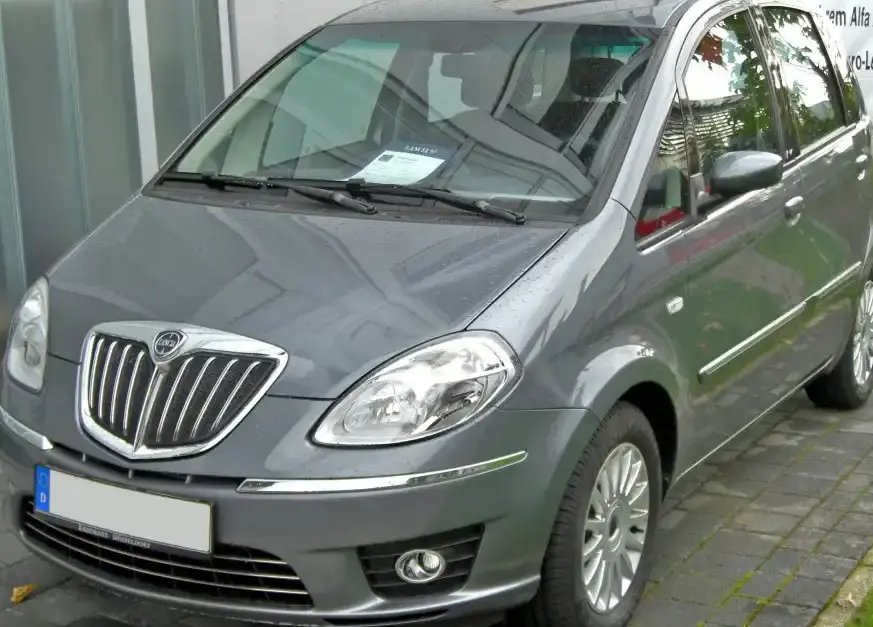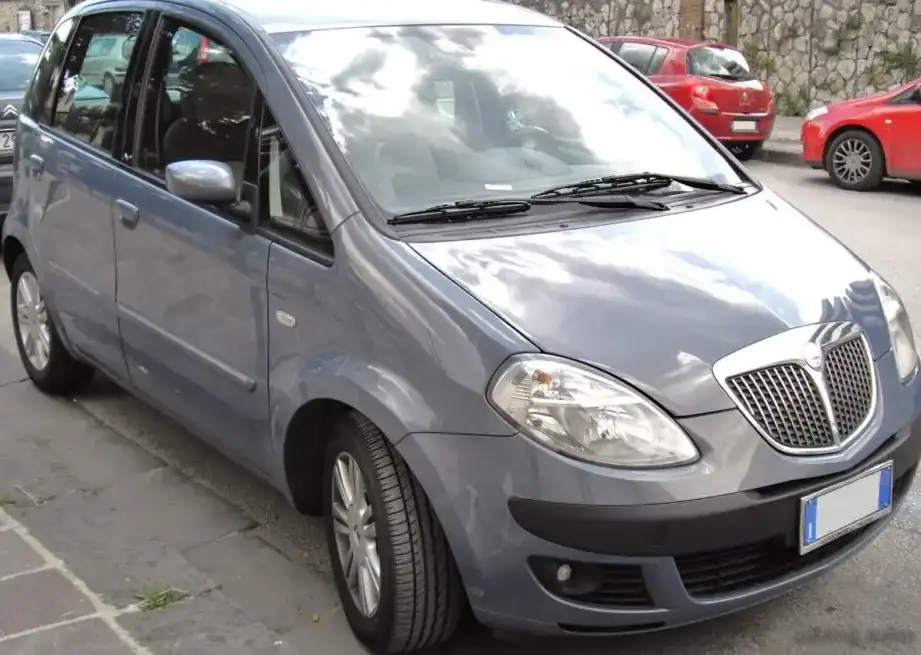
The Lancia Musa 1.9 Multijet, producing 100 horsepower, was a compact Multi-Purpose Vehicle (MPV) marketed by Lancia from 2004 to 2007. Positioned as a mid-range offering within the Musa lineup, it aimed to provide a balance between fuel efficiency, practicality, and a relatively affordable price point. The Musa itself was based on the Fiat-developed ‘188’ platform, shared with the Fiat Idea and later the Lancia Ypsilon. This variant played a significant role in Lancia’s attempt to appeal to a broader European audience seeking a stylish and versatile small family vehicle.
Technical Specifications
| Brand | Lancia |
| Model | Musa |
| Generation | Musa |
| Type (Engine) | 1.9 Multijet (100 Hp) |
| Start of production | 2004 |
| End of production | 2007 |
| Powertrain Architecture | Internal Combustion engine |
| Body type | MPV |
| Seats | 5 |
| Doors | 5 |
| Fuel consumption (urban) | 7 l/100 km (33.6 US mpg, 40.4 UK mpg, 14.3 km/l) |
| Fuel consumption (extra urban) | 4.7 l/100 km (50 US mpg, 60.1 UK mpg, 21.3 km/l) |
| Fuel consumption (combined) | 5.5 l/100 km (42.8 US mpg, 51.4 UK mpg, 18.2 km/l) |
| Fuel Type | Diesel |
| Acceleration 0 – 100 km/h | 11.5 sec |
| Acceleration 0 – 62 mph | 11.5 sec |
| Acceleration 0 – 60 mph | 10.9 sec |
| Maximum speed | 179 km/h (111.23 mph) |
| Emission standard | Euro 4 |
| Weight-to-power ratio | 12.8 kg/Hp, 78.4 Hp/tonne |
| Weight-to-torque ratio | 4.9 kg/Nm, 203.9 Nm/tonne |
| Power | 100 Hp @ 4000 rpm |
| Power per litre | 52.4 Hp/l |
| Torque | 260 Nm @ 1750 rpm (191.77 lb.-ft. @ 1750 rpm) |
| Engine layout | Front, Transverse |
| Engine Model/Code | 188 B2.000 |
| Engine displacement | 1910 cm3 (116.56 cu. in.) |
| Number of cylinders | 4 |
| Engine configuration | Inline |
| Cylinder Bore | 82 mm (3.23 in.) |
| Piston Stroke | 90.4 mm (3.56 in.) |
| Compression ratio | 18:1 |
| Number of valves per cylinder | 2 |
| Fuel injection system | Diesel Commonrail |
| Engine aspiration | Turbocharger, Intercooler |
| Valvetrain | OHC |
| Engine oil capacity | 4.4 l (4.65 US qt | 3.87 UK qt) |
| Coolant | 6.5 l (6.87 US qt | 5.72 UK qt) |
| Kerb Weight | 1275 kg (2810.89 lbs.) |
| Max. weight | 1775 kg (3913.21 lbs.) |
| Max load | 500 kg (1102.31 lbs.) |
| Trunk (boot) space – minimum | 320 l (11.3 cu. ft.) |
| Trunk (boot) space – maximum | 1420 l (50.15 cu. ft.) |
| Fuel tank capacity | 47 l (12.42 US gal | 10.34 UK gal) |
| Permitted trailer load with brakes (12%) | 1000 kg (2204.62 lbs.) |
| Permitted trailer load without brakes | 400 kg (881.85 lbs.) |
| Length | 3985 mm (156.89 in.) |
| Width | 1698 mm (66.85 in.) |
| Height | 1688 mm (66.46 in.) |
| Wheelbase | 2508 mm (98.74 in.) |
| Front track | 1444 mm (56.85 in.) |
| Rear (Back) track | 1431 mm (56.34 in.) |
| Drag coefficient (Cd) | 0.31 |
| Minimum turning circle | 10.4 m (34.12 ft.) |
| Drivetrain Architecture | ICE, Front wheel drive |
| Drive wheel | Front wheel drive |
| Number of gears | 5 |
| Gearbox type | Manual transmission |
| Front suspension | Independent coil spring |
| Rear suspension | Semi-independent, coil spring |
| Front brakes | Disc |
| Rear brakes | Drum |
| Tires size | 195/60 R15 |
| Wheel rims size | 15 |
Powertrain & Engine Architecture
The heart of the Musa 1.9 Multijet was the 188 B2.000 engine, a 1.9-liter inline-four cylinder diesel. This engine was a product of Fiat’s expertise in diesel technology, utilizing a second-generation common rail direct injection system. This system allowed for precise fuel delivery, contributing to both improved fuel economy and reduced emissions. The engine featured a single overhead camshaft (OHC) design operating two valves per cylinder. A turbocharger with an intercooler was employed to boost power output and improve throttle response. The 1.9 Multijet produced 100 horsepower at 4000 rpm and a respectable 260 Nm (191.77 lb-ft) of torque at 1750 rpm. The engine was transversely mounted in the front of the vehicle. The Musa 1.9 Multijet was typically equipped with a five-speed manual transmission, although an automated manual transmission (Dualogic) was also offered as an option.
Driving Characteristics
The 1.9 Multijet engine in the Musa provided adequate, though not exhilarating, performance. The 0-60 mph acceleration time of around 10.9 seconds reflects its focus on efficiency rather than outright speed. The engine’s strong low-end torque made it well-suited for everyday driving, providing sufficient power for overtaking and navigating city streets. The five-speed manual transmission offered a reasonable spread of gears, but the relatively long gearing emphasized fuel economy over spirited acceleration. Compared to the more powerful 1.9 Multijet variants (typically around 120-130 hp), the 100 hp version felt noticeably less responsive, particularly at higher speeds. However, it offered a smoother and more relaxed driving experience, making it a good choice for drivers prioritizing comfort and fuel savings.
Equipment & Trim Levels
The 1.9 Multijet trim typically included air conditioning, power steering, electric front windows, and a basic audio system. Safety features included ABS brakes and driver/passenger airbags. Higher trim levels, such as the ‘Eleganza’ or ‘Platinum’ offered additional features like alloy wheels, rear parking sensors, climate control, and upgraded interior trim. Interior upholstery was typically cloth, with options for leather available on higher-spec models. The dashboard layout was functional and relatively simple, with a focus on ease of use. Optional extras included a sunroof, navigation system, and upgraded audio systems.
Chassis & Braking
The Musa featured an independent coil spring suspension at the front and a semi-independent coil spring suspension at the rear. This setup provided a comfortable ride, although it wasn’t particularly sporty. The front brakes were discs, while the rear brakes were drums – a cost-saving measure common in this segment. The steering was hydraulic power-assisted, providing a light and easy driving experience. The vehicle’s relatively low weight (around 1275 kg or 2810.89 lbs) helped to compensate for the modest engine output.
Market Reception & Comparison
The Lancia Musa 1.9 Multijet was generally well-received by European automotive critics as a practical and stylish MPV. The engine was praised for its fuel efficiency and torque, but some reviewers noted its lack of outright power. Compared to other MPVs in its class, such as the Renault Scenic or Citroën Xsara Picasso, the Musa offered a more distinctive Italian design and a more premium feel. However, it often came at a slightly higher price point. The 1.9 Multijet variant was seen as a good compromise for buyers seeking a balance between performance and economy, but those prioritizing performance often opted for the higher-powered versions.
Legacy
The 1.9 Multijet engine proved to be a reliable and durable unit, and many examples are still on the road today. While not without its potential issues (such as occasional turbocharger problems or injector wear), the engine is generally considered to be relatively robust with proper maintenance. The Lancia Musa, while not a huge sales success, remains a popular choice among those seeking a small, stylish, and practical MPV. The 1.9 Multijet variant, in particular, is valued for its fuel efficiency and relatively low running costs, making it a viable option in the used car market.