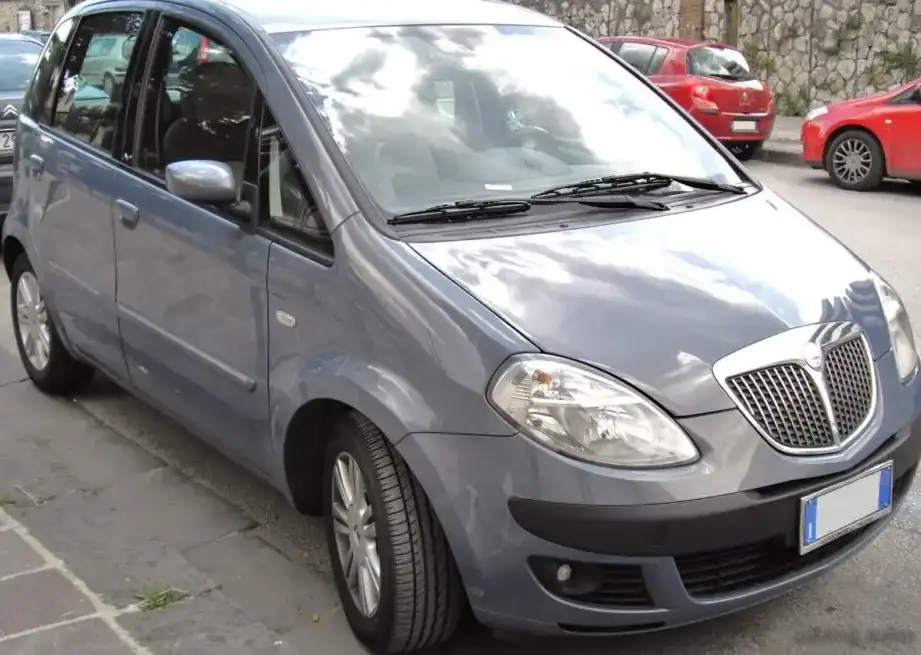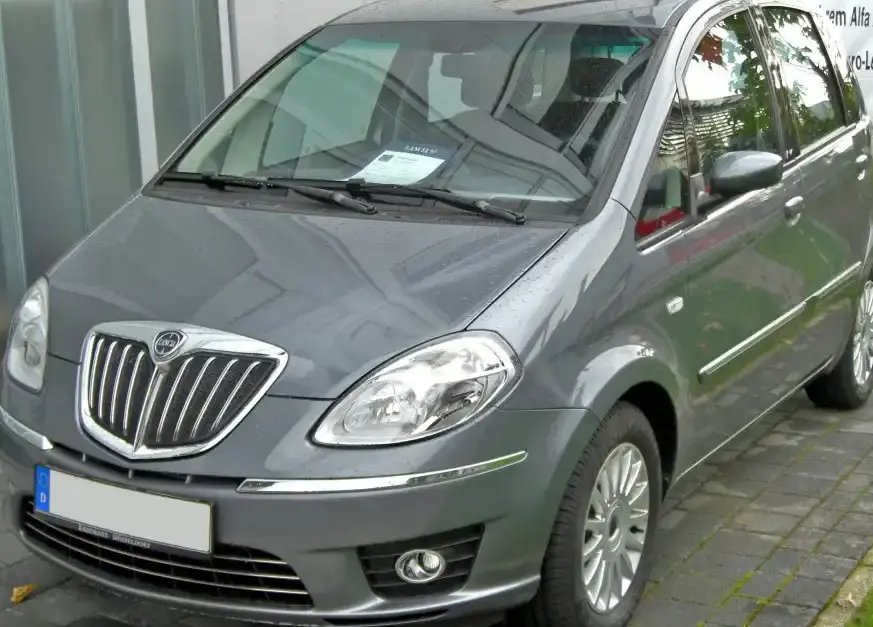
The Lancia Musa, particularly the facelifted version introduced in 2007, represented a unique offering in the European micro-MPV segment. This iteration, powered by the 1.3 Multijet diesel engine producing 90 horsepower, aimed to provide an economical and practical vehicle for urban families. Production of this specific variant ran from 2007 to 2012, falling within the broader Musa (second generation) lifecycle, which utilized the Fiat-derived 1HX0/A3 platform. The 1.3 Multijet 90 hp model occupied the entry-level position in the Musa lineup, offering a more affordable alternative to the higher-powered diesel and petrol options.
Technical Specifications
| Brand | Lancia |
| Model | Musa |
| Generation | Musa (facelift 2007) |
| Type (Engine) | 1.3 Multijet (90 Hp) |
| Start of production | 2007 |
| End of production | 2012 |
| Powertrain Architecture | Internal Combustion engine |
| Body type | MPV |
| Seats | 5 |
| Doors | 5 |
| Fuel consumption (urban) | 5.8 l/100 km (40.6 US mpg, 48.7 UK mpg, 17.2 km/l) |
| Fuel consumption (extra urban) | 3.9 l/100 km (60.3 US mpg, 72.4 UK mpg, 25.6 km/l) |
| Fuel consumption (combined) | 4.6 l/100 km (51.1 US mpg, 61.4 UK mpg, 21.7 km/l) |
| CO2 emissions | 120 g/km |
| Fuel Type | Diesel |
| Acceleration 0 – 100 km/h | 12.5 sec |
| Acceleration 0 – 62 mph | 12.5 sec |
| Acceleration 0 – 60 mph | 11.9 sec |
| Maximum speed | 173 km/h (107.5 mph) |
| Emission standard | Euro 4 |
| Weight-to-power ratio | 13.3 kg/Hp, 75 Hp/tonne |
| Weight-to-torque ratio | 6 kg/Nm, 166.7 Nm/tonne |
| Power | 90 Hp @ 4000 rpm |
| Power per litre | 72.1 Hp/l |
| Torque | 200 Nm @ 1750 rpm (147.51 lb.-ft. @ 1750 rpm) |
| Engine layout | Front, Transverse |
| Engine Model/Code | 199 A3.000 |
| Engine displacement | 1248 cm3 (76.16 cu. in.) |
| Number of cylinders | 4 |
| Engine configuration | Inline |
| Cylinder Bore | 69.6 mm (2.74 in.) |
| Piston Stroke | 82 mm (3.23 in.) |
| Compression ratio | 17.6:1 |
| Number of valves per cylinder | 4 |
| Fuel injection system | Diesel Commonrail |
| Engine aspiration | Turbocharger, Intercooler |
| Valvetrain | DOHC |
| Engine oil capacity | 3 l (3.17 US qt | 2.64 UK qt) |
| Coolant | 6 l (6.34 US qt | 5.28 UK qt) |
| Kerb Weight | 1200 kg (2645.55 lbs.) |
| Max. weight | 1705 kg (3758.88 lbs.) |
| Max load | 505 kg (1113.33 lbs.) |
| Trunk (boot) space – minimum | 390 l (13.77 cu. ft.) |
| Trunk (boot) space – maximum | 1488 l (52.55 cu. ft.) |
| Fuel tank capacity | 47 l (12.42 US gal | 10.34 UK gal) |
| Permitted trailer load with brakes (12%) | 1000 kg (2204.62 lbs.) |
| Permitted trailer load without brakes | 400 kg (881.85 lbs.) |
| Length | 4035 mm (158.86 in.) |
| Width | 1698 mm (66.85 in.) |
| Height | 1660 mm (65.35 in.) |
| Wheelbase | 2508 mm (98.74 in.) |
| Front track | 1444 mm (56.85 in.) |
| Rear (Back) track | 1431 mm (56.34 in.) |
| Drag coefficient (Cd) | 0.31 |
| Minimum turning circle (turning diameter) | 10.4 m (34.12 ft.) |
| Drivetrain Architecture | The Internal combustion engine (ICE) drives the front wheels of the vehicle. |
| Drive wheel | Front wheel drive |
| Number of gears and type of gearbox | 5 gears, manual transmission |
| Front suspension | Independent, type McPherson with coil spring and anti-roll bar |
| Rear suspension | Semi-independent, coil spring |
| Front brakes | Ventilated discs |
| Rear brakes | Drum |
| Tires size | 195/60 R15 |
| Wheel rims size | 15 |
Powertrain & Engine Architecture
The heart of this Musa variant is the 1.3 Multijet engine, specifically the 199 A3.000 code. This is a 1.3-liter, inline-four cylinder diesel engine utilizing common rail direct injection and a turbocharger with intercooler. The Multijet technology, developed by Fiat, allows for multiple injections per combustion cycle, improving efficiency and reducing noise. The engine features a double overhead camshaft (DOHC) valvetrain with four valves per cylinder. The 90 horsepower output is achieved at 4000 rpm, while peak torque of 200 Nm (147.51 lb-ft) is delivered at a low 1750 rpm. This engine was paired with a five-speed manual transmission, optimized for fuel economy rather than outright performance. The transmission’s gear ratios were relatively tall, prioritizing higher gears for cruising and minimizing engine revolutions.
Driving Characteristics
The 1.3 Multijet 90 hp Musa offered a practical, if not particularly exhilarating, driving experience. Acceleration from 0-100 km/h (0-62 mph) took around 12.5 seconds, making it suitable for city driving and occasional highway trips. The low-end torque of the diesel engine provided adequate pulling power for everyday driving situations, but overtaking maneuvers required careful planning. Compared to the more powerful 1.9 JTD versions of the Musa, this variant felt noticeably slower. The manual transmission, while efficient, lacked the refinement of more modern gearboxes. The focus was clearly on fuel economy and usability, rather than sporty handling. The relatively soft suspension setup prioritized ride comfort over sharp cornering.
Equipment & Trim Levels
The 1.3 Multijet 90 hp model typically came with a base level of equipment, focusing on essential features. Standard amenities included air conditioning, power steering, central locking, and electric front windows. Interior upholstery was typically cloth, with a functional, if somewhat basic, dashboard layout. Optional extras included alloy wheels, a CD stereo system, and rear parking sensors. Higher trim levels, available with the more powerful engines, offered features like climate control, leather upholstery, and upgraded audio systems. The 90 hp version was often chosen by buyers prioritizing affordability and fuel efficiency over luxury features.
Chassis & Braking
The Musa’s chassis featured an independent McPherson strut suspension at the front and a semi-independent coil spring suspension at the rear. This setup provided a reasonable balance between ride comfort and handling. The front brakes were ventilated discs, offering adequate stopping power, while the rear brakes were drums, a cost-saving measure common in this segment. The 15-inch wheels were fitted with 195/60 R15 tires. The suspension was tuned for comfort, resulting in a slightly soft and body-roll-prone driving experience. Stabilizer bars were included to reduce body roll during cornering, but their effectiveness was limited by the overall suspension setup.
Market Reception & Comparison
The Lancia Musa 1.3 Multijet 90 hp was generally well-received as an economical and practical city car. Critics praised its fuel efficiency and low running costs, but noted its lack of performance compared to higher-powered alternatives. Compared to the 1.9 JTD models, the 1.3 Multijet offered significantly lower fuel consumption but at the expense of acceleration and overall refinement. The 1.4-liter petrol engine offered a smoother driving experience but lacked the torque and fuel economy of the diesel. The Musa competed with other micro-MPVs like the Renault Modus and Fiat Idea, offering a unique blend of Italian styling and practicality.
Legacy
The 1.3 Multijet engine proved to be a reliable and durable unit, and examples of the Musa powered by this engine continue to be found on the used car market today. While not known for exceptional performance, the engine’s longevity and fuel efficiency make it an attractive option for budget-conscious buyers. Common maintenance issues include turbocharger wear and potential problems with the diesel particulate filter (DPF), particularly on vehicles that have primarily been used for short journeys. Overall, the Lancia Musa 1.3 Multijet 90 hp remains a practical and economical choice for those seeking a small, versatile MPV.