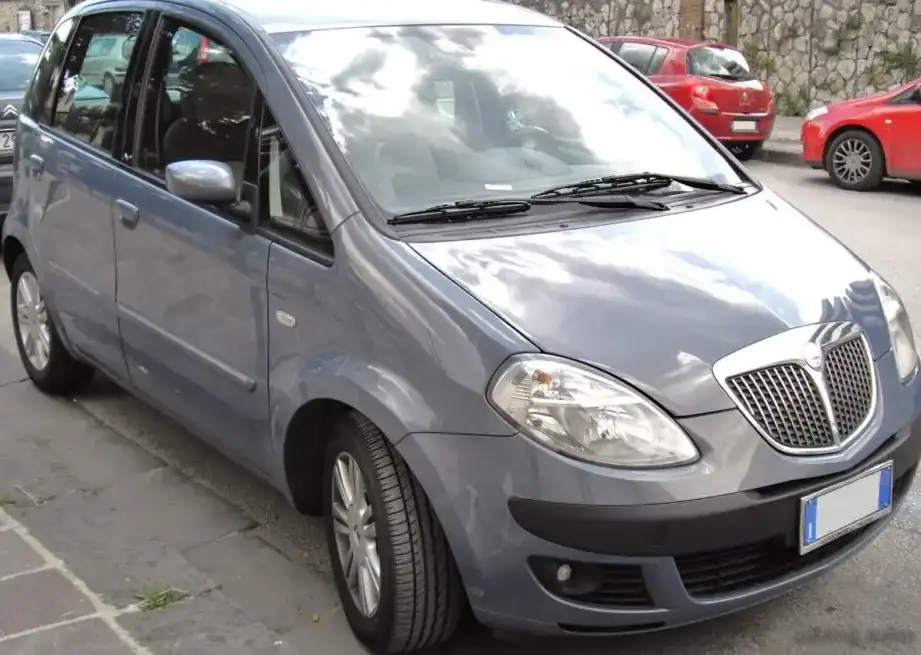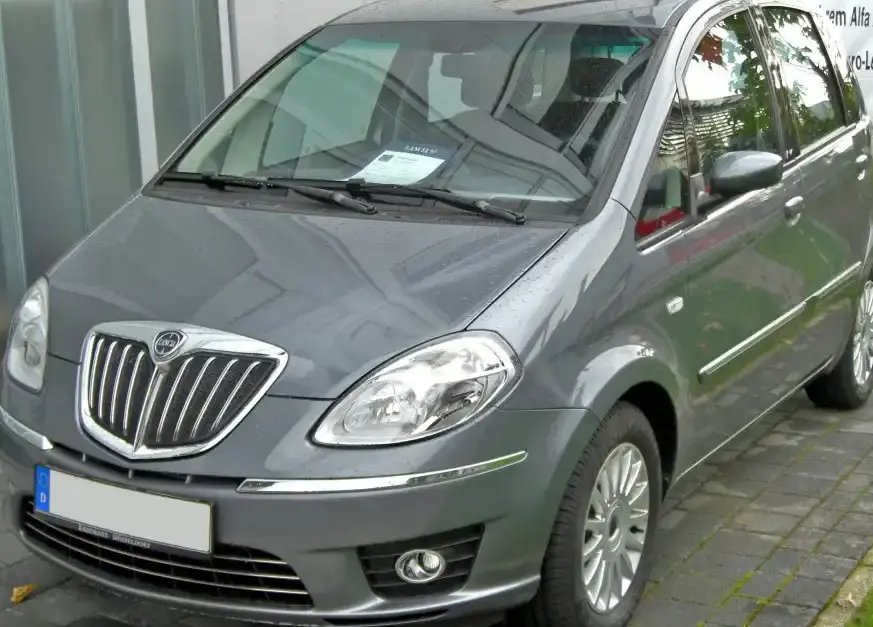
The Lancia Musa, particularly the facelifted version introduced in 2007, represented a unique offering in the European micro-MPV segment. Positioned as a premium compact multi-purpose vehicle, the Musa aimed to blend Italian style with practicality. The 1.4-liter (77 horsepower) variant, produced from 2007 to 2012, served as the entry point to the Musa lineup, targeting buyers prioritizing fuel efficiency and affordability over outright performance. It was built on the Fiat/Lancia ‘B’ platform, shared with models like the Fiat Idea and the later Lancia Ypsilon. This version of the Musa was primarily sold in European markets, where small, versatile vehicles were highly sought after.
Technical Specifications
| Brand | Lancia |
| Model | Musa |
| Generation | Musa (facelift 2007) |
| Type (Engine) | 1.4 (77 Hp) |
| Start of production | 2007 |
| End of production | 2012 |
| Powertrain Architecture | Internal Combustion engine |
| Body type | MPV |
| Seats | 5 |
| Doors | 5 |
| Fuel consumption (urban) | 7.9 l/100 km (29.8 US mpg, 35.8 UK mpg, 12.7 km/l) |
| Fuel consumption (extra urban) | 5.2 l/100 km (45.2 US mpg, 54.3 UK mpg, 19.2 km/l) |
| Fuel consumption (combined) | 6.2 l/100 km (37.9 US mpg, 45.6 UK mpg, 16.1 km/l) |
| Fuel Type | Petrol (Gasoline) |
| Acceleration 0 – 100 km/h | 13.5 sec |
| Acceleration 0 – 62 mph | 13.5 sec |
| Acceleration 0 – 60 mph | 12.8 sec |
| Maximum speed | 163 km/h (101.28 mph) |
| Emission standard | Euro 4 |
| Weight-to-power ratio | 15 kg/Hp, 66.7 Hp/tonne |
| Weight-to-torque ratio | 10 kg/Nm, 99.6 Nm/tonne |
| Power | 77 Hp @ 6000 rpm |
| Power per litre | 56.3 Hp/l |
| Torque | 115 Nm @ 3000 rpm (84.82 lb.-ft. @ 3000 rpm) |
| Engine layout | Front, Transverse |
| Engine Model/Code | 350 A1.000 |
| Engine displacement | 1368 cm3 (83.48 cu. in.) |
| Number of cylinders | 4 |
| Engine configuration | Inline |
| Cylinder Bore | 72 mm (2.83 in.) |
| Piston Stroke | 84 mm (3.31 in.) |
| Compression ratio | 11.1:1 |
| Number of valves per cylinder | 2 |
| Fuel injection system | Multi-port manifold injection |
| Engine aspiration | Naturally aspirated engine |
| Kerb Weight | 1155 kg (2546.34 lbs.) |
| Max. weight | 1655 kg (3648.65 lbs.) |
| Max load | 500 kg (1102.31 lbs.) |
| Trunk (boot) space – minimum | 390 l (13.77 cu. ft.) |
| Trunk (boot) space – maximum | 1488 l (52.55 cu. ft.) |
| Fuel tank capacity | 47 l (12.42 US gal | 10.34 UK gal) |
| Permitted trailer load with brakes (12%) | 1000 kg (2204.62 lbs.) |
| Permitted trailer load without brakes | 400 kg (881.85 lbs.) |
| Length | 4035 mm (158.86 in.) |
| Width | 1698 mm (66.85 in.) |
| Height | 1660 mm (65.35 in.) |
| Wheelbase | 2508 mm (98.74 in.) |
| Front track | 1444 mm (56.85 in.) |
| Rear (Back) track | 1431 mm (56.34 in.) |
| Drag coefficient (Cd) | 0.31 |
| Minimum turning circle | 10.4 m (34.12 ft.) |
| Drivetrain Architecture | ICE, Front wheel drive |
| Drive wheel | Front wheel drive |
| Number of gears and type of gearbox | 5 gears, manual transmission |
| Front suspension | Independent, type McPherson with coil spring and anti-roll bar |
| Rear suspension | Semi-independent, coil spring |
| Front brakes | Ventilated discs |
| Rear brakes | Drum |
| Tires size | 185/65 R14 |
| Wheel rims size | 14 |
Powertrain & Engine Architecture
The 1.4-liter engine, designated as the 350 A1.000, is a naturally aspirated, inline-four cylinder gasoline engine. It features a multi-port fuel injection system and a relatively modest compression ratio of 11.1:1. The engine utilizes a single overhead camshaft (SOHC) design with two valves per cylinder. This configuration prioritized simplicity and cost-effectiveness over high-performance characteristics. The 77 horsepower output was achieved at 6000 rpm, with a peak torque of 115 Nm (84.82 lb-ft) delivered at 3000 rpm. The engine was paired with a five-speed manual transmission, which was the standard offering for this variant. While an automated manual transmission (Dualogic) was available on other Musa trims, it was not offered with the base 1.4-liter engine.
Driving Characteristics
The 1.4-liter Musa offered a comfortable, but unhurried driving experience. Acceleration from 0 to 100 km/h (0-62 mph) took approximately 13.5 seconds, making it one of the slower options in the Musa range. The five-speed manual transmission was geared for fuel efficiency, with relatively long gear ratios. This meant that the engine needed to be revved to extract maximum performance, but it also contributed to the car’s respectable fuel economy figures. Compared to the more powerful 1.9-liter JTD diesel or the 1.4 T-Jet turbocharged petrol variants, the 1.4-liter engine lacked the punch for quick overtaking maneuvers or spirited driving. However, its light weight and predictable handling made it easy to drive in urban environments.
Equipment & Trim Levels
The 1.4-liter Musa typically came with a basic level of equipment, reflecting its position as the entry-level model. Standard features generally included power steering, central locking, electric front windows, and a basic audio system. Air conditioning was often an optional extra. Interior upholstery was typically cloth, and the dashboard featured a functional, if somewhat understated, design. Higher trim levels, such as the ‘Argenta’ or ‘Platino’, added features like alloy wheels, upgraded audio systems, and more luxurious interior trim. Safety features included driver and passenger airbags, and ABS brakes.
Chassis & Braking
The Musa’s chassis featured an independent McPherson strut suspension at the front and a semi-independent twist beam suspension at the rear. This setup provided a reasonable balance between ride comfort and handling. The front brakes were ventilated discs, while the rear brakes were drums. This configuration was typical for vehicles in this weight class and price range. The steering was hydraulic power-assisted, providing light and easy steering feel. The 14-inch wheels were fitted with 185/65 R14 tires.
Market Reception & Comparison
The 1.4-liter Musa was generally well-received as an affordable and practical city car. Critics praised its spacious interior, versatile seating arrangements, and fuel efficiency. However, the engine’s lack of power was a common criticism. Compared to the diesel variants, the 1.4-liter offered lower running costs in terms of fuel, but it lacked the torque and responsiveness of the JTD engine. Against the turbocharged 1.4 T-Jet, the naturally aspirated 1.4 felt significantly underpowered. Despite these drawbacks, the 1.4-liter Musa remained a popular choice for buyers seeking a budget-friendly and practical MPV.
Legacy
The Lancia Musa, including the 1.4-liter variant, has developed a reputation for reasonable reliability, although some owners have reported issues with the electrical system and the Dualogic automated manual transmission (which this trim did not have). The 350 A1.000 engine is generally considered to be a durable unit, provided it is regularly serviced. In the used car market, the 1.4-liter Musa represents an affordable entry point into Lancia ownership. Its simplicity and fuel efficiency make it a practical choice for urban commuting and small families. However, potential buyers should be aware of its limited performance and the availability of spare parts, which can be more challenging to find compared to more mainstream brands.