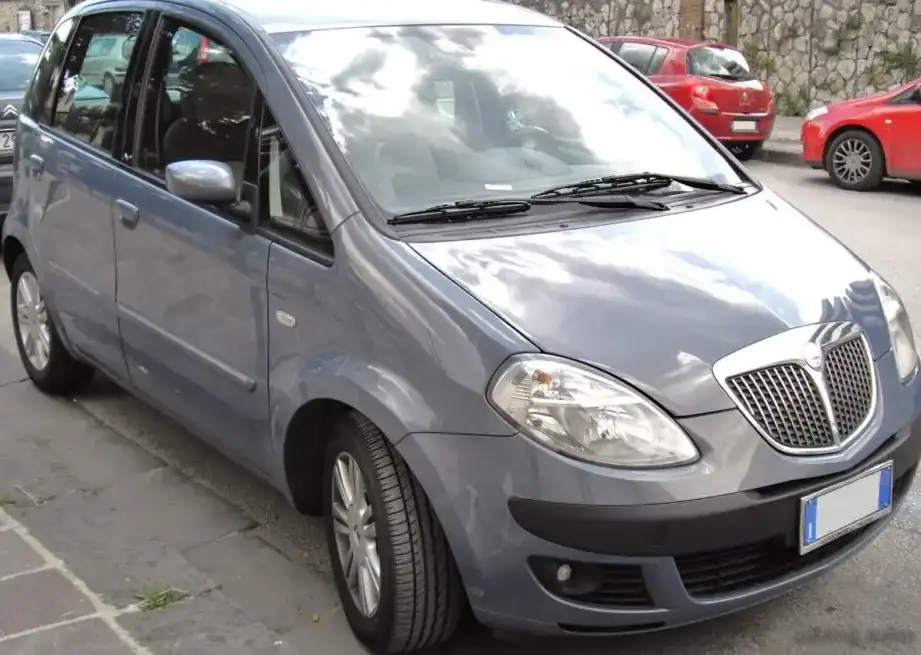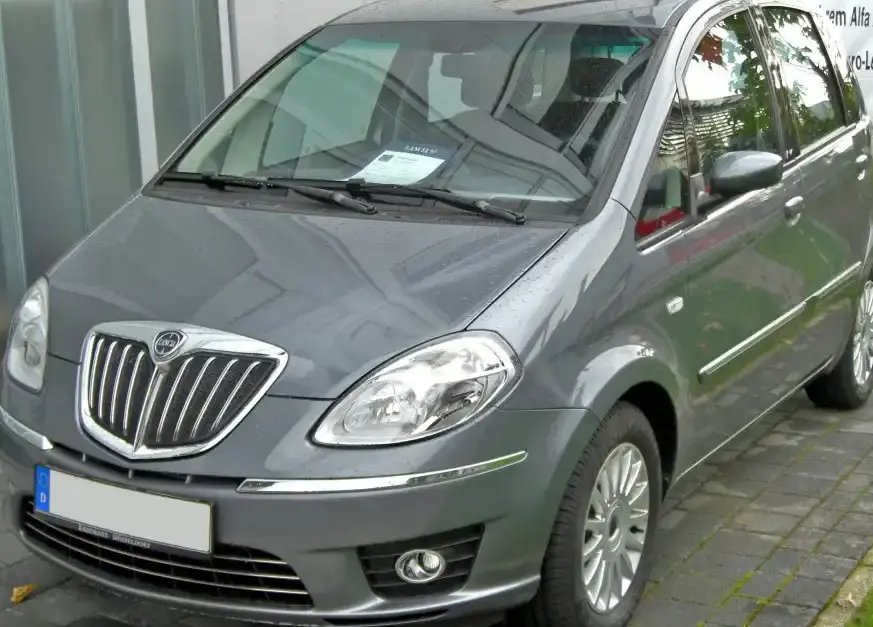
The Lancia Musa, particularly the facelifted version introduced in 2007, represented a unique offering in the compact MPV (Multi-Purpose Vehicle) segment. Positioned as a more premium and stylish alternative to mainstream competitors, the Musa aimed to blend practicality with Italian design flair. The 1.4-liter (95 horsepower) variant, produced from 2007 to 2012, served as the entry point to the Musa range, offering a balance of affordability and usability. It was built upon the Fiat/Lancia ‘B’ platform, shared with models like the Fiat Idea and later the Lancia Ypsilon, and was primarily marketed in Europe.
Technical Specifications
| Brand | Lancia |
| Model | Musa |
| Generation | Musa (facelift 2007) |
| Type (Engine) | 1.4 (95 Hp) |
| Start of production | 2007 |
| End of production | 2012 |
| Powertrain Architecture | Internal Combustion engine |
| Body type | MPV |
| Seats | 5 |
| Doors | 5 |
| Fuel consumption (urban) | 8.5 l/100 km (27.7 US mpg, 33.2 UK mpg, 11.8 km/l) |
| Fuel consumption (extra urban) | 5.5 l/100 km (42.8 US mpg, 51.4 UK mpg, 18.2 km/l) |
| Fuel consumption (combined) | 6.6 l/100 km (35.6 US mpg, 42.8 UK mpg, 15.2 km/l) |
| Fuel Type | Petrol (Gasoline) |
| Acceleration 0 – 100 km/h | 11.5 sec |
| Acceleration 0 – 62 mph | 11.5 sec |
| Acceleration 0 – 60 mph | 10.9 sec |
| Maximum speed | 175 km/h (108.74 mph) |
| Emission standard | Euro 4 |
| Weight-to-power ratio | 12.2 kg/Hp, 82.3 Hp/tonne |
| Weight-to-torque ratio | 9 kg/Nm, 110.8 Nm/tonne |
| Power | 95 Hp @ 5800 rpm |
| Power per litre | 69.4 Hp/l |
| Torque | 128 Nm @ 4500 rpm (94.41 lb.-ft. @ 4500 rpm) |
| Engine layout | Front, Transverse |
| Engine Model/Code | 843 A1.000 |
| Engine displacement | 1368 cm3 (83.48 cu. in.) |
| Number of cylinders | 4 |
| Engine configuration | Inline |
| Cylinder Bore | 72 mm (2.83 in.) |
| Piston Stroke | 84 mm (3.31 in.) |
| Compression ratio | 11:1 |
| Number of valves per cylinder | 4 |
| Fuel injection system | Multi-port manifold injection |
| Engine aspiration | Naturally aspirated engine |
| Valvetrain | DOHC |
| Engine oil capacity | 2.7 l (2.85 US qt | 2.38 UK qt) |
| Coolant | 4.5 l (4.76 US qt | 3.96 UK qt) |
| Kerb Weight | 1155 kg (2546.34 lbs.) |
| Max. weight | 1655 kg (3648.65 lbs.) |
| Max load | 500 kg (1102.31 lbs.) |
| Trunk (boot) space – minimum | 390 l (13.77 cu. ft.) |
| Trunk (boot) space – maximum | 1488 l (52.55 cu. ft.) |
| Fuel tank capacity | 47 l (12.42 US gal | 10.34 UK gal) |
| Permitted trailer load with brakes (12%) | 1000 kg (2204.62 lbs.) |
| Permitted trailer load without brakes | 400 kg (881.85 lbs.) |
| Length | 4035 mm (158.86 in.) |
| Width | 1698 mm (66.85 in.) |
| Height | 1660 mm (65.35 in.) |
| Wheelbase | 2508 mm (98.74 in.) |
| Front track | 1444 mm (56.85 in.) |
| Rear (Back) track | 1431 mm (56.34 in.) |
| Drag coefficient (Cd) | 0.31 |
| Minimum turning circle (turning diameter) | 10.4 m (34.12 ft.) |
| Drivetrain Architecture | The Internal combustion engine (ICE) drives the front wheels of the vehicle. |
| Drive wheel | Front wheel drive |
| Number of gears and type of gearbox | 6 gears, manual transmission |
| Front suspension | Independent, type McPherson with coil spring and anti-roll bar |
| Rear suspension | Semi-independent, coil spring |
| Front brakes | Ventilated discs |
| Rear brakes | Drum |
| Tires size | 195/60 R15 |
| Wheel rims size | 15 |
Powertrain & Engine Architecture
The 1.4-liter engine, designated the 843 A1.000, is a naturally aspirated, inline-four cylinder gasoline engine. It features a double overhead camshaft (DOHC) valvetrain with four valves per cylinder, contributing to its relatively efficient breathing. Fuel delivery is managed by a multi-point fuel injection system. This engine was a common powerplant in various Fiat and Lancia models of the era, known for its reasonable reliability and fuel economy. The 95 horsepower output, while not particularly high, was sufficient for the Musa’s intended purpose as a practical family vehicle. The engine’s torque peak of 128 Nm (94.41 lb-ft) at 4500 rpm provided adequate pulling power for everyday driving. The Musa 1.4 was typically paired with a 6-speed manual transmission, although an automated manual transmission (Dualogic) was also available as an option. The Dualogic, while offering some convenience, was often criticized for its slow and jerky shifts compared to a traditional automatic.
Driving Characteristics
The 1.4-liter Musa offered a comfortable, if not particularly exciting, driving experience. Acceleration from 0-60 mph took around 10.9 seconds, making it suitable for urban and suburban driving but less ideal for frequent highway overtaking. The 6-speed manual transmission helped to keep the engine in its optimal power band, while the optional Dualogic transmission, while convenient, sacrificed some responsiveness. Compared to the more powerful 1.9 JTD diesel variants, the 1.4 felt noticeably slower, but it offered a smoother and quieter ride. The suspension, tuned for comfort, absorbed bumps and imperfections in the road well, contributing to a pleasant ride quality. The steering was light and easy to use, making it maneuverable in tight spaces.
Equipment & Trim Levels
The 1.4-liter Musa typically came with a reasonable level of standard equipment. This included air conditioning, power steering, electric front windows, and a basic audio system. Higher trim levels, such as the ‘Platinum’ or ‘Emotion’ variants, added features like alloy wheels, rear parking sensors, climate control, and upgraded interior trim. Interior upholstery was typically cloth, with options for leather available on higher-spec models. The dashboard layout was functional and user-friendly, with a focus on practicality. Optional extras included a sunroof, navigation system, and upgraded audio systems.
Chassis & Braking
The Musa’s chassis featured an independent McPherson strut suspension at the front and a semi-independent twist beam suspension at the rear. This setup provided a good balance of ride comfort and handling. The front brakes were ventilated discs, offering adequate stopping power, while the rear brakes were drums, a cost-saving measure common in this class of vehicle. The 15-inch wheels were typically fitted with 195/60 R15 tires. The steering was a hydraulic power-assisted system, providing a light and responsive feel.
Market Reception & Comparison
The Lancia Musa 1.4 was generally well-received by critics as a practical and stylish MPV. However, its performance was often criticized as being somewhat underwhelming, particularly when compared to the more powerful diesel variants. Fuel economy was respectable, averaging around 35.6 US mpg in combined driving. Reliability was generally good, although some owners reported minor issues with the Dualogic transmission. Compared to competitors like the Renault Scenic and Citroën C4 Picasso, the Musa offered a more premium feel and distinctive Italian styling, but it often came at a slightly higher price point.
Legacy
The Lancia Musa, including the 1.4-liter variant, has developed a modest following among enthusiasts who appreciate its unique styling and practicality. The 843 A1.000 engine is known for its durability and relatively low maintenance costs. On the used car market, the Musa 1.4 represents an affordable entry point into Lancia ownership. While not a performance car, it offers a comfortable and reliable mode of transportation for families or individuals seeking a stylish and practical MPV. Parts availability is generally good, as many components are shared with other Fiat and Lancia models. However, finding specialist Lancia mechanics can sometimes be a challenge.