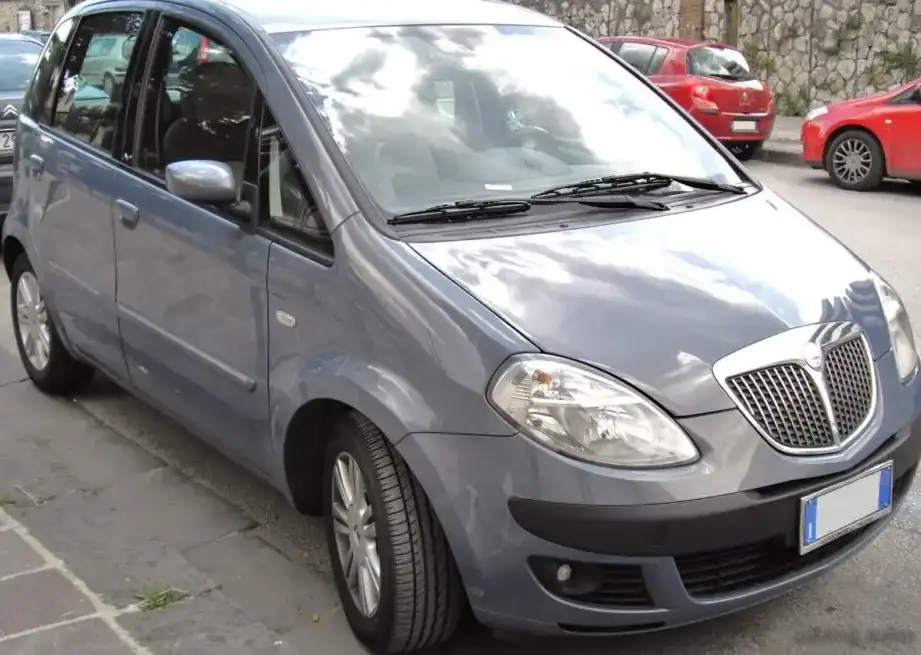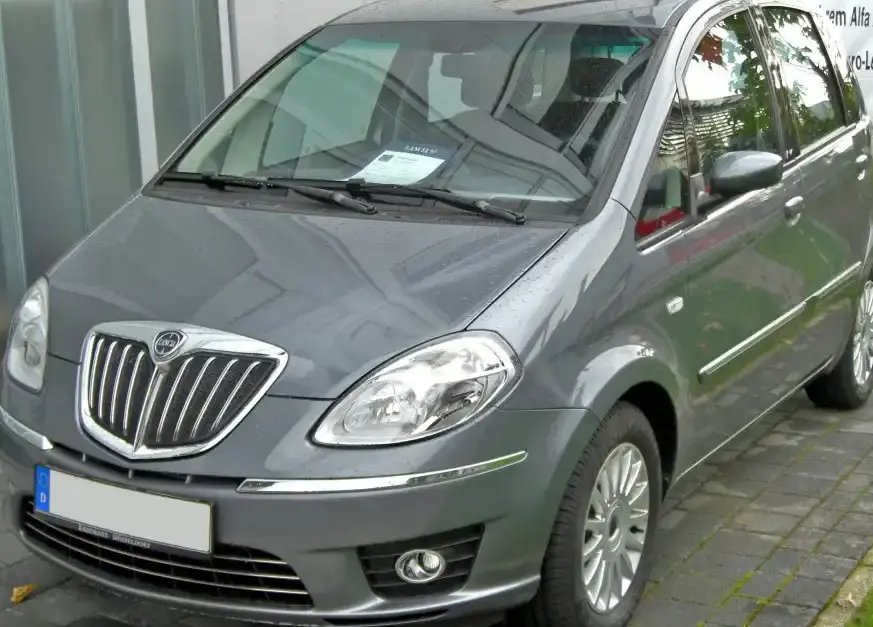
The Lancia Musa, particularly the facelifted version introduced in 2007, represented a unique offering in the European micro-MPV segment. This iteration, powered by the 1.6 Multijet diesel engine producing 120 horsepower, aimed to balance fuel efficiency with reasonable performance for urban and family use. Production of this specific variant ran from 2007 to 2012, falling within the broader Musa (second generation) lifecycle, which was based on the Fiat Idea platform. The Musa, unlike many of its competitors, attempted to blend Italian styling with practicality, targeting a demographic seeking a small, versatile vehicle with a touch of sophistication.
Technical Specifications
| Brand | Lancia |
| Model | Musa |
| Generation | Musa (facelift 2007) |
| Type (Engine) | 1.6 Multijet (120 Hp) |
| Start of production | 2007 |
| End of production | 2012 |
| Powertrain Architecture | Internal Combustion engine |
| Body type | MPV |
| Seats | 5 |
| Doors | 5 |
| Fuel consumption (urban) | 6.2 l/100 km (37.9 US mpg, 45.6 UK mpg, 16.1 km/l) |
| Fuel consumption (extra urban) | 4.2 l/100 km (56 US mpg, 67.3 UK mpg, 23.8 km/l) |
| Fuel consumption (combined) | 4.9 l/100 km (48 US mpg, 57.6 UK mpg, 20.4 km/l) |
| CO2 emissions | 129 g/km |
| Fuel Type | Diesel |
| Acceleration 0 – 100 km/h | 9.9 sec |
| Acceleration 0 – 62 mph | 9.9 sec |
| Acceleration 0 – 60 mph | 9.4 sec |
| Maximum speed | 190 km/h (118.06 mph) |
| Emission standard | Euro 4 |
| Weight-to-power ratio | 10.6 kg/Hp, 94.1 Hp/tonne |
| Weight-to-torque ratio | 4.3 kg/Nm, 235.3 Nm/tonne |
| Power | 120 Hp @ 3500 rpm |
| Power per litre | 75.1 Hp/l |
| Torque | 300 Nm @ 1500 rpm (221.27 lb.-ft. @ 1500 rpm) |
| Engine layout | Front, Transverse |
| Engine Model/Code | 350 A2.000 |
| Engine displacement | 1598 cm3 (97.52 cu. in.) |
| Number of cylinders | 4 |
| Engine configuration | Inline |
| Cylinder Bore | 79.5 mm (3.13 in.) |
| Piston Stroke | 80.5 mm (3.17 in.) |
| Compression ratio | 16.5:1 |
| Number of valves per cylinder | 4 |
| Fuel injection system | Diesel Commonrail |
| Engine aspiration | Turbocharger, Intercooler |
| Valvetrain | DOHC |
| Engine oil capacity | 4.7 l (4.97 US qt | 4.14 UK qt) |
| Coolant | 7.8 l (8.24 US qt | 6.86 UK qt) |
| Kerb Weight | 1275 kg (2810.89 lbs.) |
| Max. weight | 1775 kg (3913.21 lbs.) |
| Max load | 500 kg (1102.31 lbs.) |
| Trunk (boot) space – minimum | 390 l (13.77 cu. ft.) |
| Trunk (boot) space – maximum | 1488 l (52.55 cu. ft.) |
| Fuel tank capacity | 47 l (12.42 US gal | 10.34 UK gal) |
| Length | 4035 mm (158.86 in.) |
| Width | 1698 mm (66.85 in.) |
| Height | 1660 mm (65.35 in.) |
| Wheelbase | 2508 mm (98.74 in.) |
| Front track | 1444 mm (56.85 in.) |
| Rear (Back) track | 1431 mm (56.34 in.) |
| Drag coefficient (Cd) | 0.31 |
| Minimum turning circle | 10.4 m (34.12 ft.) |
| Drivetrain Architecture | The Internal combustion engine (ICE) drives the front wheels of the vehicle. |
| Drive wheel | Front wheel drive |
| Number of gears and type of gearbox | 5 gears, manual transmission |
| Front suspension | Independent, type McPherson with coil spring and anti-roll bar |
| Rear suspension | Semi-independent, coil spring |
| Front brakes | Ventilated discs |
| Rear brakes | Drum |
| Tires size | 195/60 R15 |
| Wheel rims size | 15 |
Powertrain & Engine Architecture
The heart of this Musa variant is the 1.6 Multijet diesel engine, identified by the code 350 A2.000. This engine is a four-cylinder, inline configuration, utilizing a common rail direct injection system. The 16.5:1 compression ratio is typical for a diesel engine, contributing to its efficiency. A turbocharger with an intercooler is employed to boost power output and improve throttle response. The engine features a double overhead camshaft (DOHC) valvetrain with four valves per cylinder, optimizing gas flow for enhanced performance. The 1.6 Multijet was a widely used engine within the Fiat group, known for its relatively quiet operation and good fuel economy. The engine paired with a 5-speed manual transmission, delivering power to the front wheels. This transmission was chosen for its simplicity and cost-effectiveness, aligning with the Musa’s positioning as an affordable MPV.
Driving Characteristics
The 120 horsepower and 300 Nm (221 lb-ft) of torque provided by the 1.6 Multijet engine offered adequate performance for everyday driving. Acceleration from 0 to 60 mph took approximately 9.4 seconds, and the top speed was around 118 mph. While not particularly sporty, the engine delivered sufficient power for overtaking maneuvers and maintaining comfortable cruising speeds on highways. The torque curve was relatively flat, providing good pulling power from low engine speeds, which was beneficial in urban environments. Compared to the more powerful petrol engines available in the Musa range, the 1.6 Multijet prioritized fuel efficiency over outright performance. The manual transmission, while not offering the convenience of an automatic, allowed for greater driver control and contributed to the vehicle’s fuel economy.
Equipment & Trim Levels
The 1.6 Multijet variant of the Musa typically came with a reasonable level of standard equipment. This included air conditioning, power steering, electric front windows, and a basic audio system. Safety features such as ABS brakes and driver/passenger airbags were also standard. Higher trim levels offered additional features like alloy wheels, rear parking sensors, a more advanced audio system, and upgraded interior trim. Interior upholstery was typically cloth, with options for different colors and patterns. The dashboard layout was functional and straightforward, prioritizing usability over elaborate design.
Chassis & Braking
The Musa’s chassis featured an independent McPherson strut suspension at the front and a semi-independent coil spring suspension at the rear. This setup provided a comfortable ride quality, absorbing bumps and imperfections in the road surface effectively. The front brakes were ventilated discs, offering good stopping power, while the rear brakes were drums, a cost-saving measure common in this segment. The steering was light and easy to use, making it well-suited for urban driving. The vehicle’s relatively low weight (1275 kg) helped to contribute to its fuel efficiency and handling.
Market Reception & Comparison
The Lancia Musa 1.6 Multijet was generally well-received by critics for its fuel efficiency, practicality, and distinctive Italian styling. However, it faced competition from established players in the micro-MPV segment, such as the Renault Modus and the Fiat Idea (upon which it was based). Compared to the petrol-powered Musa variants, the 1.6 Multijet offered significantly better fuel economy, making it a popular choice for drivers covering long distances. Reliability was generally good, although some owners reported minor issues with the diesel particulate filter (DPF) system, a common concern with modern diesel engines.
Legacy
The Lancia Musa, while not a massive sales success, carved out a niche for itself as a stylish and practical micro-MPV. The 1.6 Multijet engine proved to be a reliable and fuel-efficient powerplant, and examples of this variant continue to be found on the used car market today. While maintenance costs for diesel engines can sometimes be higher than for petrol engines, the 1.6 Multijet’s robust design and widespread use within the Fiat group mean that parts availability is generally good. The Musa remains a distinctive and appealing option for those seeking a small, versatile vehicle with a touch of Italian flair.