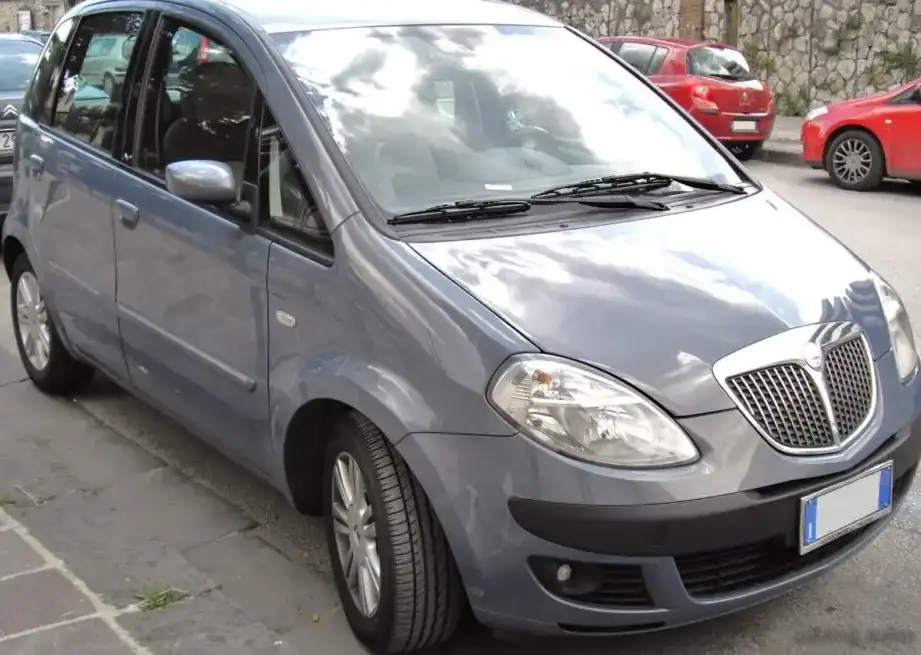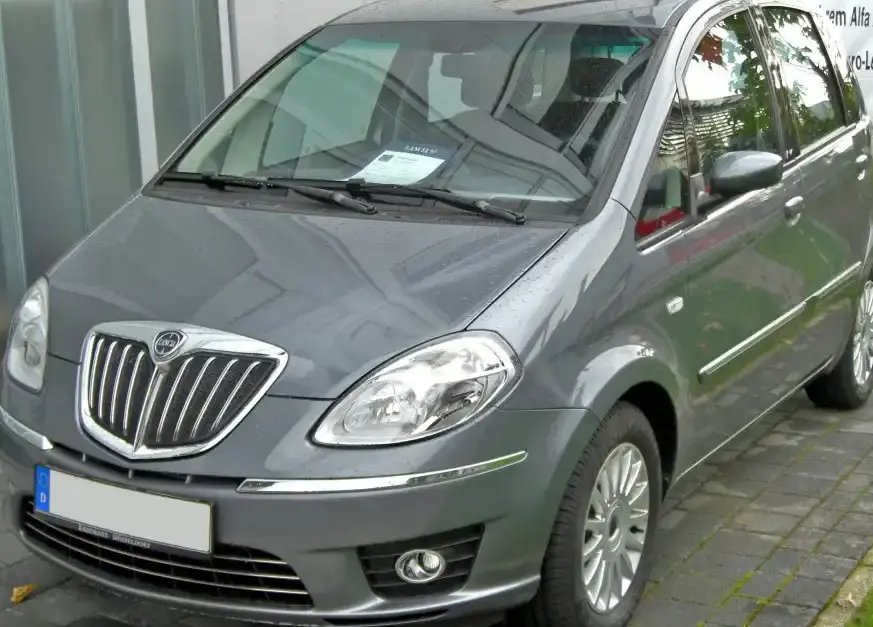
The Lancia Musa, particularly the facelifted version introduced in 2007, represented a unique offering in the European micro-MPV segment. This iteration, powered by the 1.9 Multijet diesel engine producing 100 horsepower, was marketed from 2007 through 2012. Positioned as a more affordable and fuel-efficient option within the Musa range, it aimed to attract buyers seeking practicality and economy in a compact package. The Musa, based on the Fiat-developed 1HX0/A3 platform (shared with the Fiat Idea and Peugeot 206), was intended to provide a premium feel within its class, leveraging Lancia’s historical reputation for stylish interiors and comfortable driving experiences.
Technical Specifications
| Brand | Lancia |
| Model | Musa |
| Generation | Musa (facelift 2007) |
| Type (Engine) | 1.9 Multijet (100 Hp) |
| Start of production | 2007 |
| End of production | 2012 |
| Powertrain Architecture | Internal Combustion engine |
| Body type | MPV |
| Seats | 5 |
| Doors | 5 |
| Fuel consumption (urban) | 6.5 l/100 km (36.2 US mpg, 43.5 UK mpg, 15.4 km/l) |
| Fuel consumption (extra urban) | 4.4 l/100 km (53.5 US mpg, 64.2 UK mpg, 22.7 km/l) |
| Fuel consumption (combined) | 5.2 l/100 km (45.2 US mpg, 54.3 UK mpg, 19.2 km/l) |
| CO2 emissions | 137 g/km |
| Fuel Type | Diesel |
| Acceleration 0 – 100 km/h | 11.5 sec |
| Acceleration 0 – 62 mph | 11.5 sec |
| Acceleration 0 – 60 mph | 10.9 sec |
| Maximum speed | 179 km/h (111.23 mph) |
| Emission standard | Euro 4 |
| Weight-to-power ratio | 12.8 kg/Hp, 78.4 Hp/tonne |
| Weight-to-torque ratio | 4.9 kg/Nm, 203.9 Nm/tonne |
| Power | 100 Hp @ 4000 rpm |
| Power per litre | 52.4 Hp/l |
| Torque | 260 Nm @ 1750 rpm (191.77 lb.-ft. @ 1750 rpm) |
| Engine layout | Front, Transverse |
| Engine Model/Code | 188 B2.000 |
| Engine displacement | 1910 cm3 (116.56 cu. in.) |
| Number of cylinders | 4 |
| Engine configuration | Inline |
| Cylinder Bore | 82 mm (3.23 in.) |
| Piston Stroke | 90.4 mm (3.56 in.) |
| Compression ratio | 18:1 |
| Number of valves per cylinder | 2 |
| Fuel injection system | Diesel Commonrail |
| Engine aspiration | Turbocharger, Intercooler |
| Engine oil capacity | 4.4 l (4.65 US qt | 3.87 UK qt) |
| Coolant | 6.5 l (6.87 US qt | 5.72 UK qt) |
| Kerb Weight | 1275 kg (2810.89 lbs.) |
| Max. weight | 1775 kg (3913.21 lbs.) |
| Max load | 500 kg (1102.31 lbs.) |
| Trunk (boot) space – minimum | 390 l (13.77 cu. ft.) |
| Trunk (boot) space – maximum | 1488 l (52.55 cu. ft.) |
| Fuel tank capacity | 47 l (12.42 US gal | 10.34 UK gal) |
| Permitted trailer load with brakes (12%) | 1000 kg (2204.62 lbs.) |
| Permitted trailer load without brakes | 400 kg (881.85 lbs.) |
| Length | 4035 mm (158.86 in.) |
| Width | 1698 mm (66.85 in.) |
| Height | 1660 mm (65.35 in.) |
| Wheelbase | 2508 mm (98.74 in.) |
| Front track | 1444 mm (56.85 in.) |
| Rear (Back) track | 1431 mm (56.34 in.) |
| Drag coefficient (Cd) | 0.31 |
| Minimum turning circle (turning diameter) | 10.4 m (34.12 ft.) |
| Drivetrain Architecture | The Internal combustion engine (ICE) drives the front wheels of the vehicle. |
| Drive wheel | Front wheel drive |
| Number of gears and type of gearbox | 5 gears, manual transmission |
| Front suspension | Independent, type McPherson with coil spring and anti-roll bar |
| Rear suspension | Semi-independent, coil spring |
| Front brakes | Ventilated discs |
| Rear brakes | Drum |
| Tires size | 195/60 R15 |
| Wheel rims size | 15 |
Powertrain & Engine Architecture
The heart of this Musa variant is the 1.9-liter, inline-four cylinder diesel engine, designated the 188 B2.000. This engine is a member of Fiat’s well-regarded Multijet family, known for its efficiency and relatively refined operation. The 100 horsepower output was achieved through a turbocharger with an intercooler, coupled with a common-rail direct fuel injection system. This system allowed for precise control of fuel delivery, optimizing combustion and reducing emissions. The engine featured two valves per cylinder and a compression ratio of 18:1. The 5-speed manual transmission was the standard offering, chosen for its balance of cost and efficiency. While an automated manual transmission (Dualogic) was available on other Musa trims, it wasn’t typically paired with this specific engine and power output.
Driving Characteristics
The 1.9 Multijet 100 hp Musa offered a practical and economical driving experience. Acceleration was modest, taking around 11.5 seconds to reach 62 mph, but the engine delivered a useful amount of torque – 260 Nm (191.77 lb-ft) – from low engine speeds. This made it suitable for everyday driving and overtaking maneuvers, although it lacked the punch of higher-powered versions. The gear ratios in the 5-speed manual transmission were geared towards fuel efficiency, resulting in a relaxed cruising experience. Compared to the more powerful 1.9 Multijet 150 hp variant, this version felt noticeably slower, but it offered significantly better fuel economy. The handling was typical of a small MPV – safe and predictable, but not particularly sporty.
Equipment & Trim Levels
The 1.9 Multijet 100 hp Musa typically came equipped with a reasonable level of standard features. These included air conditioning, power steering, electric front windows, and a basic audio system. Interior upholstery was generally cloth, with a focus on durability rather than luxury. Optional extras included alloy wheels, rear parking sensors, and upgraded audio systems. Trim levels varied depending on the market, but generally, this engine configuration represented an entry-level or mid-range offering within the Musa lineup. It was positioned below the more powerful diesel variants and the petrol-powered models.
Chassis & Braking
The Musa’s chassis featured an independent McPherson strut suspension at the front and a semi-independent coil spring suspension at the rear. This setup provided a comfortable ride, absorbing bumps and imperfections in the road surface effectively. The front brakes were ventilated discs, offering adequate stopping power, while the rear brakes were drums. This configuration was common for vehicles in this weight class and price range. A stabilizer bar was fitted to the front suspension to reduce body roll during cornering.
Market Reception & Comparison
The Lancia Musa 1.9 Multijet 100 hp was generally well-received by critics for its fuel efficiency and practicality. However, its performance was often criticized as being somewhat underwhelming. Compared to other MPVs in its class, such as the Renault Scenic or Citroën C4 Picasso, the Musa offered a more stylish interior and a more premium feel, but it lacked the spaciousness and versatility of some of its rivals. The 1.9 Multijet engine proved to be reliable, but regular maintenance was essential to ensure its longevity. Fuel economy was a strong point, consistently achieving around 45-55 mpg in real-world driving conditions.
Legacy
The Lancia Musa, while not a massive sales success, remains a distinctive and interesting vehicle. The 1.9 Multijet engine, in particular, has proven to be durable and relatively easy to maintain. On the used car market, these models are often sought after by buyers looking for an economical and practical MPV with a touch of Italian style. While finding parts can sometimes be challenging due to the Lancia brand’s limited presence in some markets, the engine components are often shared with other Fiat and Alfa Romeo models, making them relatively accessible. The 1.9 Multijet 100 hp Musa represents a solid, if unspectacular, choice for those seeking a reliable and fuel-efficient small MPV.