
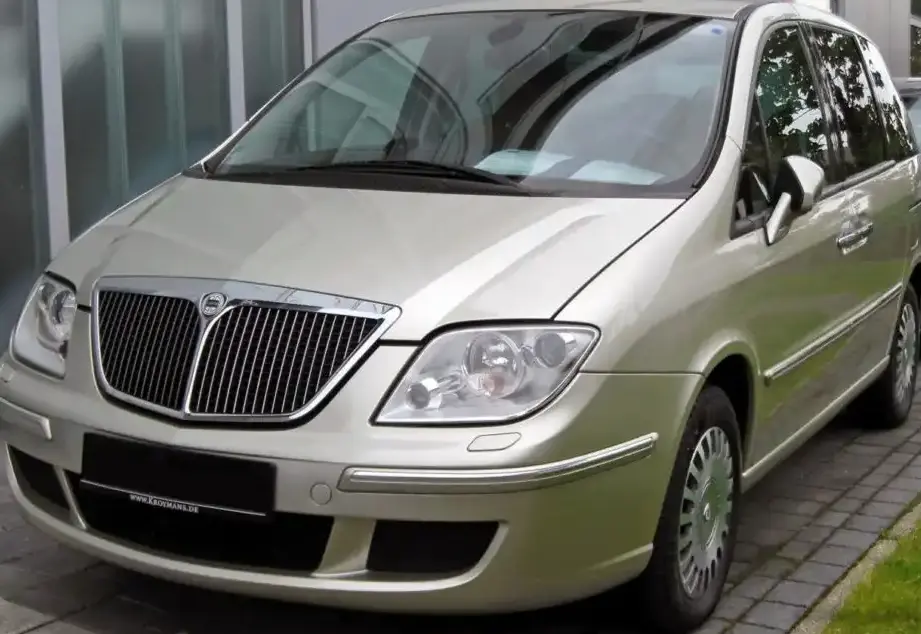
The Lancia Phedra 2.0 16V Automatic, produced between 2002 and 2008, represents a significant offering in the European minivan segment. Sharing its underpinnings with the Peugeot 807 and Citroën C8 – collectively known as the Ulysse/807/C8 platform – the Phedra aimed to provide a more premium experience within this class. This particular variant, equipped with the 2.0-liter 16-valve engine and a four-speed automatic transmission, occupied a mid-range position in the Phedra lineup, offering a balance between performance, fuel economy, and convenience. It was positioned below the more powerful 2.4-liter engine option, and aimed at families prioritizing comfort and ease of driving over outright performance.
Technical Specifications
| Brand | Lancia |
| Model | Phedra |
| Generation | Phedra |
| Type (Engine) | 2.0 16V (136 Hp) Automatic |
| Start of production | 2002 |
| End of production | 2008 |
| Powertrain Architecture | Internal Combustion engine |
| Body type | Minivan |
| Seats | 8 |
| Doors | 5 |
| Fuel consumption (urban) | 13.7 l/100 km (17.2 US mpg, 20.6 UK mpg, 7.3 km/l) |
| Fuel consumption (extra urban) | 7.3 l/100 km (32.2 US mpg, 38.7 UK mpg, 13.7 km/l) |
| Fuel consumption (combined) | 9.6 l/100 km (24.5 US mpg, 29.4 UK mpg, 10.4 km/l) |
| Fuel Type | Petrol (Gasoline) |
| Acceleration 0 – 100 km/h | 13.1 sec |
| Acceleration 0 – 62 mph | 13.1 sec |
| Acceleration 0 – 60 mph | 12.4 sec |
| Maximum speed | 178 km/h (110.6 mph) |
| Weight-to-power ratio | 11.6 kg/Hp, 86.3 Hp/tonne |
| Weight-to-torque ratio | 8.3 kg/Nm, 120.6 Nm/tonne |
| Power | 136 Hp @ 6000 rpm |
| Power per litre | 68.1 Hp/l |
| Torque | 190 Nm @ 4100 rpm (140.14 lb.-ft. @ 4100 rpm) |
| Engine layout | Front, Transverse |
| Engine Model/Code | RFN EW10J4 |
| Engine displacement | 1997 cm3 (121.86 cu. in.) |
| Number of cylinders | 4 |
| Engine configuration | Inline |
| Cylinder Bore | 85 mm (3.35 in.) |
| Piston Stroke | 88 mm (3.46 in.) |
| Compression ratio | 10.8:1 |
| Number of valves per cylinder | 4 |
| Fuel injection system | Multi-port manifold injection |
| Engine aspiration | Naturally aspirated engine |
| Valvetrain | DOHC |
| Engine oil capacity | 4.3 l (4.54 US qt | 3.78 UK qt) |
| Kerb Weight | 1575 kg (3472.28 lbs.) |
| Max. weight | 2380 kg (5247 lbs.) |
| Max load | 805 kg (1774.72 lbs.) |
| Trunk (boot) space – minimum | 325 l (11.48 cu. ft.) |
| Trunk (boot) space – maximum | 2950 l (104.18 cu. ft.) |
| Fuel tank capacity | 80 l (21.13 US gal | 17.6 UK gal) |
| Length | 4750 mm (187.01 in.) |
| Width | 1863 mm (73.35 in.) |
| Height | 1760 mm (69.29 in.) |
| Wheelbase | 2825 mm (111.22 in.) |
| Front track | 1570 mm (61.81 in.) |
| Rear (Back) track | 1548 mm (60.94 in.) |
| Drivetrain Architecture | The Internal combustion engine (ICE) drives the front wheels of the vehicle. |
| Drive wheel | Front wheel drive |
| Number of gears and type of gearbox | 4 gears, automatic transmission |
| Front suspension | Spring Strut |
| Rear suspension | Coil spring |
| Front brakes | Ventilated discs |
| Rear brakes | Disc |
| Assisting systems | ABS (Anti-lock braking system) |
| Steering type | Steering rack and pinion |
| Power steering | Hydraulic Steering |
| Tires size | 205/65 R15 |
| Wheel rims size | 15 |
Powertrain & Engine Architecture
The heart of the Phedra 2.0 16V Automatic is the RFN (EW10J4) engine, a 1.997-liter inline-four cylinder gasoline engine developed jointly by PSA (Peugeot-Citroën) and Renault. This engine features a double overhead camshaft (DOHC) valvetrain with four valves per cylinder, contributing to its relatively high output for its displacement. Fuel delivery is managed by a multi-port fuel injection system. The engine’s 136 horsepower at 6000 rpm and 190 Nm (140 lb-ft) of torque at 4100 rpm were considered adequate for the vehicle’s weight, but not particularly sporty. The four-speed automatic transmission, while providing convenience, was a somewhat dated design by the early 2000s, impacting both acceleration and fuel efficiency compared to more modern automatic gearboxes. It was a conventional hydraulic automatic, known for its smoothness but lacking the efficiency of later electronically controlled units.
Driving Characteristics
The Phedra 2.0 Automatic offered a comfortable, if not exhilarating, driving experience. Acceleration from 0-60 mph took around 12.4 seconds, and top speed was limited to 110.6 mph. The four-speed automatic transmission meant that the engine often felt strained during overtaking maneuvers or when climbing hills. The gear ratios were spaced to prioritize fuel economy and smooth cruising rather than rapid acceleration. Compared to the manual transmission versions of the Phedra, the automatic suffered a noticeable performance deficit. The higher-output 2.4-liter engine provided significantly more power and a more responsive driving experience, but at the cost of increased fuel consumption. The suspension was tuned for comfort, absorbing bumps and imperfections in the road well, making it a pleasant vehicle for long journeys.
Equipment & Trim Levels
The Phedra 2.0 16V Automatic typically came equipped with a reasonable level of standard features, including air conditioning, power windows, central locking, and an audio system. Higher trim levels added features such as alloy wheels, upgraded upholstery, a sunroof, and parking sensors. Interior upholstery was generally cloth, with leather options available as an extra cost. The dashboard layout was functional and straightforward, prioritizing usability over stylistic flair. Optional extras included a navigation system, rear entertainment system, and various comfort packages.
Chassis & Braking
The Phedra utilized a front-wheel-drive layout with a MacPherson strut suspension at the front and a coil spring suspension at the rear. The front brakes were ventilated discs, providing adequate stopping power, while the rear brakes were solid discs. Anti-lock Braking System (ABS) was standard. The suspension was tuned for comfort, prioritizing ride quality over sporty handling. Stabilizer bars were fitted to both the front and rear axles to reduce body roll during cornering, but the Phedra was not designed to be a particularly dynamic vehicle.
Market Reception & Comparison
The Lancia Phedra, and its Peugeot/Citroën siblings, received mixed reviews. Critics praised the spacious interior, comfortable ride, and practical features, but often criticized the somewhat uninspired styling and the performance of the base 2.0-liter engine, particularly when paired with the automatic transmission. Fuel economy was reasonable for a vehicle of its size, but not class-leading. Compared to other minivans on the market, such as the Renault Espace or Volkswagen Sharan, the Phedra offered a more premium feel, but at a slightly higher price point. The 2.4-liter engine was generally considered a better choice for those prioritizing performance, but it came with a higher fuel consumption penalty.
Legacy
The Lancia Phedra, while not a commercial blockbuster, remains a relatively reliable vehicle in the used car market. The RFN engine is generally considered durable, although regular maintenance is essential. The four-speed automatic transmission can be prone to wear and tear, and may require servicing or replacement over time. Parts availability can be a challenge in some regions, as Lancia has withdrawn from many markets. Today, the Phedra represents an interesting alternative for those seeking a spacious and comfortable minivan with a touch of Italian flair, but potential buyers should be aware of the potential maintenance costs associated with an older vehicle.
