
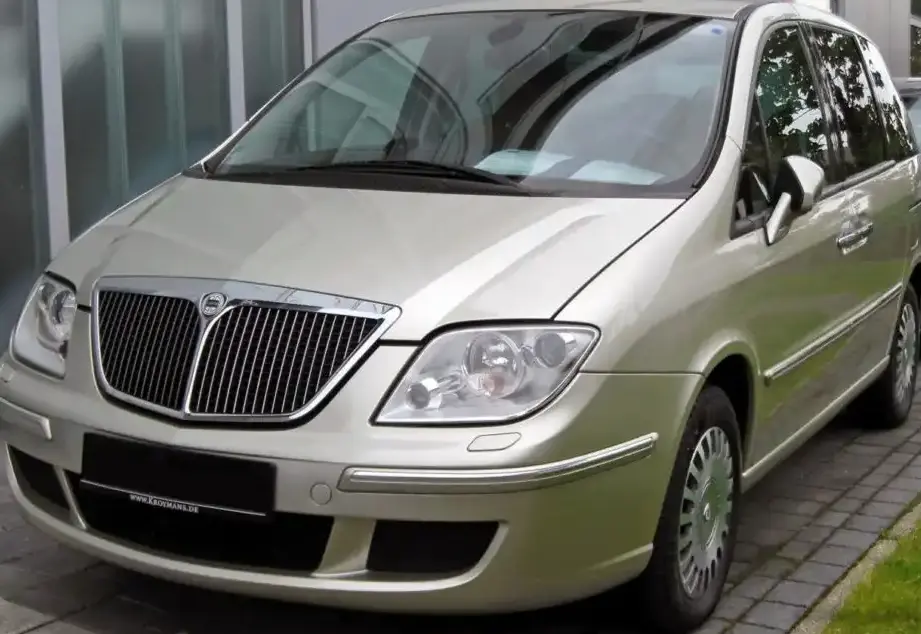
The Lancia Phedra 3.0 i V6 24V, produced between 2002 and 2008, represents a significant offering in the large, multi-purpose vehicle (MPV) segment. Developed in collaboration with Peugeot and Citroën – sharing its platform (the PSA Group’s EMP1 architecture) with the Peugeot 807 and Citroën C8 – the Phedra aimed to provide a luxurious and spacious alternative to more mainstream MPVs. This particular variant, equipped with the 3.0-liter V6 engine and a four-speed automatic transmission, occupied the upper echelon of the Phedra lineup, offering a blend of performance and convenience. The Phedra was primarily marketed in Europe, where large MPVs were a popular choice for families and those requiring substantial passenger and cargo capacity.
Technical Specifications
| Brand | Lancia |
| Model | Phedra |
| Generation | Phedra |
| Type (Engine) | 3.0 i V6 24V (204 Hp) |
| Start of production | 2002 |
| End of production | 2008 |
| Powertrain Architecture | Internal Combustion engine |
| Body type | Minivan |
| Seats | 8 |
| Doors | 5 |
| Fuel consumption (urban) | 15.8 l/100 km (14.9 US mpg, 17.9 UK mpg, 6.3 km/l) |
| Fuel consumption (extra urban) | 9 l/100 km (26.1 US mpg, 31.4 UK mpg, 11.1 km/l) |
| Fuel consumption (combined) | 11.5 l/100 km (20.5 US mpg, 24.6 UK mpg, 8.7 km/l) |
| Fuel Type | Petrol (Gasoline) |
| Acceleration 0 – 100 km/h | 10.2 sec |
| Acceleration 0 – 62 mph | 10.2 sec |
| Acceleration 0 – 60 mph | 9.7 sec |
| Maximum speed | 205 km/h (127.38 mph) |
| Weight-to-power ratio | 8.6 kg/Hp, 115.9 Hp/tonne |
| Weight-to-torque ratio | 6.5 kg/Nm, 153.4 Nm/tonne |
| Power | 204 Hp @ 6300 rpm |
| Power per litre | 68.9 Hp/l |
| Torque | 270 Nm @ 4500 rpm (199.14 lb.-ft. @ 4500 rpm) |
| Engine layout | Front, Transverse |
| Engine Model/Code | ES9 J4S |
| Engine displacement | 2959 cm3 (180.57 cu. in.) |
| Number of cylinders | 6 |
| Engine configuration | V-engine |
| Cylinder Bore | 93 mm (3.66 in.) |
| Piston Stroke | 72.6 mm (2.86 in.) |
| Compression ratio | 10:1 |
| Number of valves per cylinder | 4 |
| Fuel injection system | Multi-port manifold injection |
| Engine aspiration | Naturally aspirated engine |
| Valvetrain | DOHC |
| Engine oil capacity | 4.8 l (5.07 US qt, 4.22 UK qt) |
| Coolant | 11 l (11.62 US qt, 9.68 UK qt) |
| Kerb Weight | 1760 kg (3880.14 lbs.) |
| Max. weight | 2540 kg (5599.74 lbs.) |
| Max load | 780 kg (1719.61 lbs.) |
| Trunk (boot) space – minimum | 325 l (11.48 cu. ft.) |
| Trunk (boot) space – maximum | 2950 l (104.18 cu. ft.) |
| Fuel tank capacity | 80 l (21.13 US gal, 17.6 UK gal) |
| Length | 4750 mm (187.01 in.) |
| Width | 1863 mm (73.35 in.) |
| Height | 1760 mm (69.29 in.) |
| Wheelbase | 2823 mm (111.14 in.) |
| Front track | 1570 mm (61.81 in.) |
| Rear (Back) track | 1548 mm (60.94 in.) |
| Drivetrain Architecture | The Internal combustion engine (ICE) drives the front wheels of the vehicle. |
| Drive wheel | Front wheel drive |
| Number of gears and type of gearbox | 4 gears, automatic transmission |
| Front suspension | Spring Strut |
| Rear suspension | Coil spring |
| Front brakes | Ventilated discs |
| Rear brakes | Disc |
| Assisting systems | ABS (Anti-lock braking system) |
| Steering type | Steering rack and pinion |
| Power steering | Hydraulic Steering |
| Tires size | 215/65 R15 |
Powertrain & Engine Architecture
The heart of the Phedra 3.0 i V6 24V is the ES9 J4S engine, a 2.959-liter naturally aspirated V6. This engine, originating from Lancia’s collaboration with Peugeot and Citroën, features a 60-degree V-angle and utilizes a multi-port fuel injection system. The 24-valve configuration (four valves per cylinder) and double overhead camshafts (DOHC) contribute to its relatively high output for its displacement. The engine’s design prioritizes smooth operation and refinement over outright performance. The four-speed automatic transmission, while providing convenience, is a somewhat dated design by modern standards. It features a conventional torque converter and lacks the efficiency and responsiveness of more modern automatic gearboxes. The transmission’s gear ratios are tuned for comfortable cruising rather than spirited acceleration.
Driving Characteristics
The Phedra 3.0 V6 Automatic offers a comfortable and relaxed driving experience. The V6 engine delivers adequate power for highway cruising and overtaking, but it doesn’t provide particularly brisk acceleration. The 0-60 mph time of around 9.7 seconds reflects this. The automatic transmission, while smooth, can feel somewhat sluggish, especially when downshifting. Compared to the manual transmission versions of the Phedra, the automatic sacrifices some responsiveness. The 1.8-liter four-cylinder variants, while more fuel-efficient, offered significantly less power and were better suited for urban driving. The diesel variants, particularly the 2.2 HDi, provided superior fuel economy and strong low-end torque, making them popular choices for long-distance travel. The Phedra’s focus is on providing a comfortable and spacious environment for passengers, rather than engaging driving dynamics.
Equipment & Trim Levels
The 3.0 V6 Automatic trim typically included a generous level of standard equipment. This often included features such as air conditioning, power windows and mirrors, central locking, and an integrated audio system. Higher-spec versions could be equipped with leather upholstery, sunroof, rear parking sensors, and even a DVD entertainment system for rear passengers. Interior trim levels varied, with options for different fabric and leather colors. The dashboard layout was functional and ergonomically designed, although the materials used were not always of the highest quality. The Phedra aimed to offer a premium feel, but it didn’t quite reach the levels of luxury offered by some of its German competitors.
Chassis & Braking
The Phedra utilizes a front-wheel-drive layout with independent suspension at the front (typically a MacPherson strut setup) and a semi-independent coil spring arrangement at the rear. The suspension is tuned for comfort, providing a relatively soft ride. Braking duties are handled by ventilated discs at the front and solid discs at the rear. Anti-lock Braking System (ABS) is standard. The Phedra’s weight (around 1760 kg or 3880 lbs) contributes to its somewhat ponderous handling characteristics. Stabilizer bars are fitted to both the front and rear axles to help reduce body roll, but the Phedra is not designed for sporty driving.
Market Reception & Comparison
The Lancia Phedra received mixed reviews from automotive critics. While praised for its spacious interior, comfortable ride, and refined engine, it was often criticized for its somewhat dated automatic transmission and less-than-inspiring handling. Fuel economy, particularly with the V6 engine, was also a concern. Compared to rivals like the Renault Espace and Volkswagen Sharan, the Phedra offered a more distinctive Italian style but lacked the overall polish and brand recognition of its competitors. The diesel variants generally received more favorable reviews due to their superior fuel efficiency and torque.
Legacy
The Lancia Phedra, while not a commercial success in the same vein as some of its competitors, remains a unique and interesting vehicle. The 3.0 V6 Automatic variant, while not the most economical or performance-oriented option, offers a compelling combination of comfort, space, and refinement. Today, the Phedra is a relatively rare sight on the roads. The ES9 J4S engine, when properly maintained, is generally considered to be reliable, although parts availability can be a challenge. The four-speed automatic transmission is the most common point of concern, as it can be prone to wear and tear. The Phedra represents a final flourish of Lancia’s ambition in the MPV segment before the brand’s decline.
