
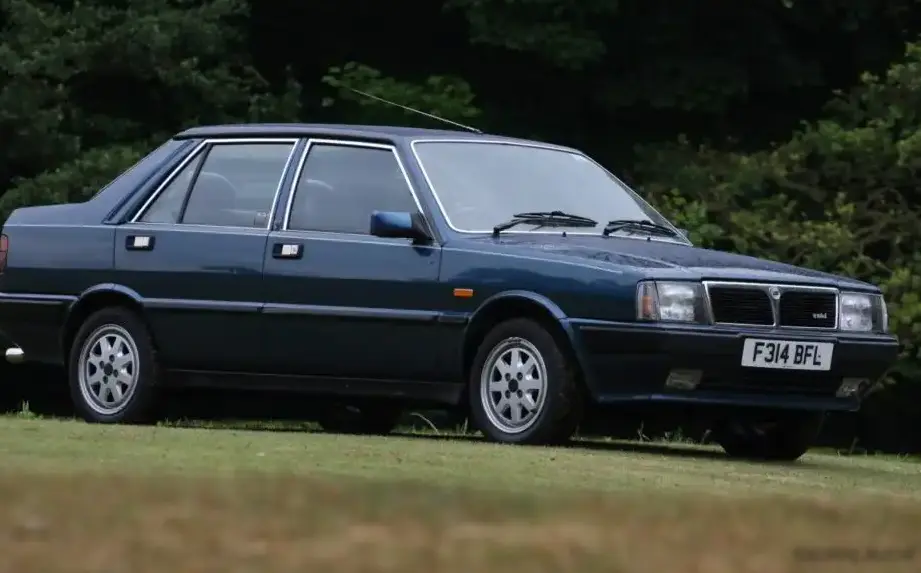
The Lancia Prisma 1.5 (75 hp) represents a significant, though often overlooked, iteration of the Prisma model, produced between 1985 and 1992. Falling within the 831 AB series, the Prisma was essentially a rebadged Fiat Regata, itself a development of the Fiat Ritmo. The Prisma aimed to offer a more sophisticated and comfortable experience than its Fiat sibling, targeting a buyer seeking a slightly more premium compact sedan. This 1.5-liter variant occupied the entry-level position in the Prisma lineup, providing a balance of affordability and practicality, though it was often overshadowed by the more powerful and sporty versions available.
Technical Specifications
| Brand | Lancia |
| Model | Prisma |
| Generation | Prisma (831 AB) |
| Type (Engine) | 1.5 (75 Hp) |
| Start of production | 1985 |
| End of production | 1992 |
| Powertrain Architecture | Internal Combustion engine |
| Body type | Sedan |
| Fuel Type | Petrol (Gasoline) |
| Power | 75 Hp |
| Engine Model/Code | 831 B1.048 |
| Engine aspiration | Naturally aspirated engine |
| Engine oil capacity | 4.3 l (4.54 US qt | 3.78 UK qt) |
| Coolant capacity | 6 l (6.34 US qt | 5.28 UK qt) |
Powertrain & Engine Architecture
The heart of the Prisma 1.5 was the 831 B1.048 engine, a 1498 cc inline-four cylinder petrol engine. This engine was a relatively simple design, featuring a single overhead camshaft (SOHC) operating two valves per cylinder. Fuel delivery was managed by a Weber 32 ADFA carburetor, a common setup for European cars of this era aiming for cost-effectiveness. The engine’s bore and stroke measured 80mm x 82mm, contributing to its relatively long-stroke configuration. This design favored low-end torque over high-revving power. The engine produced 75 horsepower (56 kW) at 5600 rpm and 116 Nm (86 lb-ft) of torque at 3200 rpm. The engine was typically paired with a four-speed manual gearbox, but a three-speed automatic transmission was also offered, though less common. The automatic transmission was a Borg Warner unit, known for its durability but also for its relatively slow shift times and tendency to reduce fuel economy.
Driving Characteristics
The Prisma 1.5, particularly in automatic guise, was not designed for spirited driving. Acceleration was modest, with a 0-60 mph time estimated around 13-14 seconds. The three-speed automatic transmission further dampened performance, with noticeable gaps between gears. However, the engine’s torque characteristics made it reasonably tractable for everyday driving, providing sufficient power for merging onto highways and navigating city streets. The automatic transmission prioritized comfort and ease of use over performance, making it a popular choice for drivers who preferred a relaxed driving experience. Compared to the 1.6-liter and 2.0-liter versions of the Prisma, the 1.5 felt noticeably slower and less responsive. The manual transmission version offered a slightly more engaging experience, but still lacked the punch of the larger engines. The suspension, while comfortable, wasn’t particularly sporty, resulting in a noticeable amount of body roll during cornering.
Equipment & Trim Levels
The Prisma 1.5 typically came with a fairly basic level of equipment, reflecting its position as the entry-level model. Standard features included cloth upholstery, a basic instrument cluster, and manual windows and door locks. Air conditioning was often an optional extra, as were power windows and central locking. Interior trim was generally functional and durable, though not particularly luxurious. The dashboard layout was typical of Italian cars of the period, with a focus on ergonomics and ease of use. Higher trim levels, such as the LX, added features like upgraded upholstery, a more comprehensive instrument cluster, and alloy wheels. The Prisma 1.5 often served as a base for fleet sales, meaning many examples were equipped with minimal options.
Chassis & Braking
The Prisma utilized a front-engine, front-wheel-drive layout. The suspension consisted of independent front suspension with MacPherson struts and a twist-beam rear axle. This setup provided a comfortable ride, but wasn’t particularly sophisticated. Braking was typically accomplished with disc brakes on the front wheels and drum brakes on the rear wheels. The braking system was adequate for the car’s weight and performance, but lacked the stopping power of more modern systems. Steering was rack-and-pinion, providing reasonably precise control. Stabilizer bars were fitted to both the front and rear axles, helping to reduce body roll during cornering, though their effectiveness was limited by the relatively soft suspension setup.
Market Reception & Comparison
The Lancia Prisma 1.5 was generally well-received as a practical and affordable compact sedan. Critics praised its comfortable ride and spacious interior, but noted its lack of performance and somewhat dated styling. Compared to its rivals, such as the Ford Escort and Opel Kadett, the Prisma offered a more refined driving experience, but at a slightly higher price point. The 1.5-liter engine was considered adequate for everyday driving, but lacked the power and refinement of the larger engines available in the Prisma lineup. Fuel economy was reasonable for the time, averaging around 30-35 mpg in mixed driving conditions. The automatic transmission version suffered a noticeable penalty in fuel economy compared to the manual transmission version. Reliability was generally good, though the carburetor required periodic adjustment and maintenance.
Legacy
The Lancia Prisma 1.5, while not a particularly iconic model, represents an interesting chapter in Lancia’s history. The 831 B1.048 engine proved to be a durable and reliable unit, and many examples are still on the road today. However, due to its relatively low performance and basic equipment level, the 1.5-liter version is less sought after by collectors than the more powerful and sporty variants. In the used car market, Prisma 1.5s are typically available at very affordable prices, making them an attractive option for budget-conscious buyers seeking a classic Italian sedan. Parts availability can be a challenge, as many components are specific to the Lancia Prisma and are no longer in production. However, a dedicated community of enthusiasts continues to support the model, ensuring its survival for years to come.
