
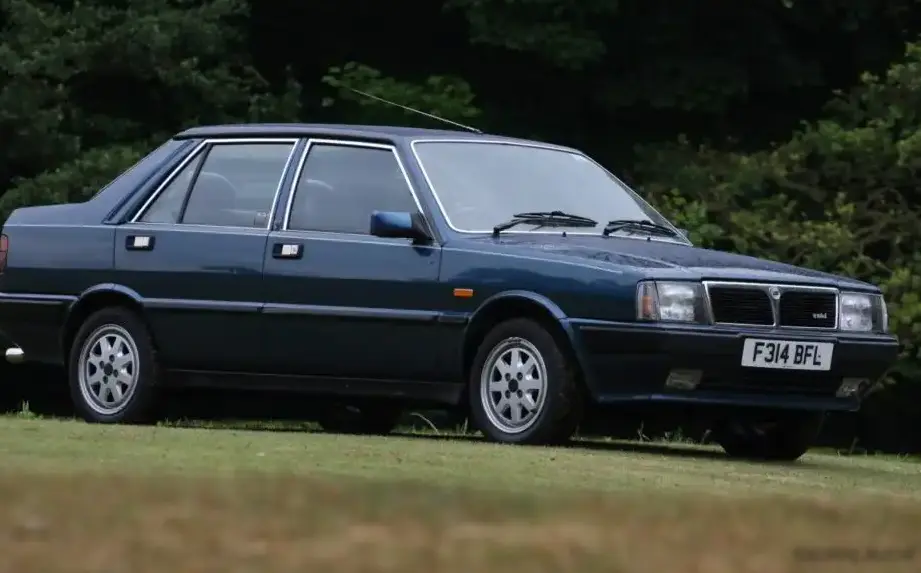
The Lancia Prisma 1.6 (99 hp) represents a significant, though often overlooked, iteration of the Prisma model, produced between 1986 and 1992. Falling within the 831 AB series, the Prisma was essentially a rebadged Fiat Regata, itself a development of the Fiat Ritmo. The Prisma aimed to offer a more sophisticated and comfortable experience than its Fiat sibling, targeting a slightly more upscale segment of the European compact sedan market. This 1.6-liter variant occupied a middle ground in the Prisma lineup, positioned between the base 1.3-liter engine and the more powerful 1.8 and 2.0-liter options. It was designed to balance affordability with acceptable performance and fuel economy for everyday driving.
Technical Specifications
| Brand | Lancia |
| Model | Prisma |
| Generation | Prisma (831 AB) |
| Type (Engine) | 1.6 (99 Hp) |
| Start of production | 1986 |
| End of production | 1992 |
| Powertrain Architecture | Internal Combustion engine |
| Body type | Sedan |
| Fuel Type | Petrol (Gasoline) |
| Power | 99 Hp |
| Engine Model/Code | 831 B6.000 |
| Engine aspiration | Naturally aspirated engine |
| Engine oil capacity | 5 l (5.28 US qt | 4.4 UK qt) |
| Coolant capacity | 6.5 l (6.87 US qt | 5.72 UK qt) |
Powertrain & Engine Architecture
The heart of the Prisma 1.6 was the 831 B6.000 engine, a 1.581-liter (96.4 cubic inches) inline-four cylinder gasoline engine. This engine was a continuation of Lancia’s long-standing tradition of refined engine design, though it shared many components with Fiat powertrains of the era. It featured a cast iron block and an aluminum cylinder head, employing a single overhead camshaft (SOHC) valvetrain with two valves per cylinder. Fuel delivery was managed by a Bosch mechanical fuel injection system, a relatively common setup for European cars of the mid-1980s. This system, while not as sophisticated as later electronic fuel injection, provided a reasonable balance of performance and reliability. The engine produced 99 horsepower (74 kW) at 5800 rpm and 137 Nm (101 lb-ft) of torque at 3600 rpm. The engine was typically paired with a four-speed automatic transmission, although a five-speed manual gearbox was also available. The automatic transmission, while offering convenience, was known to slightly reduce overall performance and fuel economy compared to the manual version.
Driving Characteristics
The Prisma 1.6 with the automatic transmission offered a comfortable, if not particularly sporty, driving experience. Acceleration was adequate for everyday driving, with a 0-60 mph time estimated around 12-13 seconds. The automatic transmission’s gear ratios were geared towards fuel efficiency and smooth cruising rather than rapid acceleration. The engine felt relatively responsive at lower and mid-range speeds, making it suitable for city driving and highway merging. However, passing maneuvers at higher speeds required careful planning. Compared to the manual transmission version, the automatic suffered a slight performance penalty due to the transmission’s inherent inefficiencies. The 1.8 and 2.0-liter Prisma models offered significantly more power and quicker acceleration, but at the cost of increased fuel consumption and a higher purchase price. The 1.3-liter Prisma, while more economical, felt noticeably underpowered, especially when fully loaded.
Equipment & Trim Levels
The Prisma 1.6 typically came equipped with a reasonable level of standard features for its time. Interior upholstery was generally cloth, with options for upgraded velour or leather available. The dashboard featured a straightforward layout with analog gauges for speed, tachometer, fuel level, and coolant temperature. Power steering was often included, enhancing ease of maneuverability. Other standard features included central locking, electric windows (on higher trim levels), and a basic stereo system. Optional extras included air conditioning, a sunroof, and alloy wheels. The trim levels varied slightly depending on the market, but generally followed a progression from base “LX” to more luxurious “SX” or “ES” models. The SX/ES trims typically included more comprehensive equipment lists and upgraded interior finishes.
Chassis & Braking
The Prisma 1.6 utilized a relatively conventional chassis design. It featured independent front suspension with MacPherson struts and a torsion beam rear suspension. This setup provided a comfortable ride quality, although it wasn’t particularly sporty. Braking was typically accomplished with disc brakes on the front wheels and drum brakes on the rear wheels. The braking system was adequate for normal driving conditions, but lacked the stopping power of more modern systems. Stabilizer bars were fitted to both the front and rear axles, helping to reduce body roll during cornering. The suspension tuning was geared towards comfort rather than handling precision, making the Prisma a pleasant cruiser but not a particularly engaging driver’s car.
Market Reception & Comparison
The Lancia Prisma 1.6 received generally positive reviews from automotive critics. It was praised for its comfortable ride, refined engine, and relatively spacious interior. However, it was also criticized for its somewhat bland styling and lack of dynamic flair. Compared to its rivals, such as the Ford Escort, Opel Kadett (Astra), and Volkswagen Jetta, the Prisma offered a more sophisticated and comfortable experience, but at a slightly higher price point. Fuel economy was respectable for the time, averaging around 30-35 mpg in mixed driving conditions. Reliability was generally good, although the automatic transmission could be prone to occasional issues if not properly maintained. The 1.8 and 2.0-liter Prisma models were favored by drivers seeking more performance, while the 1.3-liter version appealed to those prioritizing fuel economy.
Legacy
The Lancia Prisma, and specifically the 1.6 variant, has become a relatively sought-after classic car among enthusiasts. The 831 B6.000 engine is known for its durability and relatively simple maintenance requirements. Parts availability can be a challenge, as the Prisma is now a relatively rare vehicle. However, many components are interchangeable with Fiat models of the same era, making sourcing parts somewhat easier. Well-maintained examples of the Prisma 1.6 can still provide reliable and enjoyable transportation, offering a glimpse into a bygone era of Italian automotive design and engineering. In the used car market today, prices for good condition Prisma 1.6 models range from around $3,000 to $8,000, depending on condition, mileage, and trim level. Its status as a relatively uncommon and well-built Italian sedan contributes to its growing appeal among collectors and classic car enthusiasts.
