
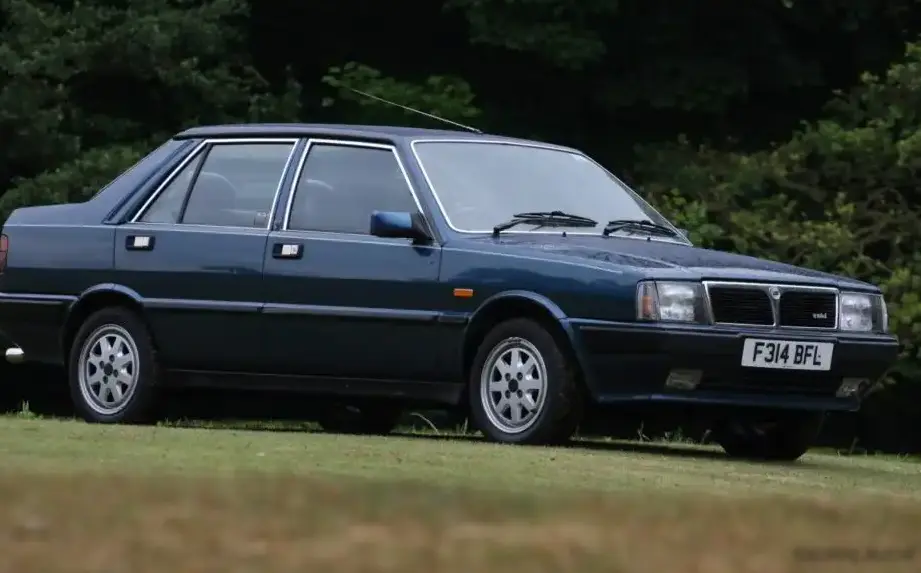
The Lancia Prisma 1.6 i.e. Super, produced between 1987 and 1989, represents a refined iteration of the Prisma (831 AB) sedan. Positioned as a mid-range offering within the Prisma lineup, it aimed to provide a balance of performance and comfort for the discerning European driver. The Prisma itself was a significant model for Lancia, representing a modernization of the aging Delta platform and offering a more conventional sedan body style compared to the hatchback-focused Delta. This variant, with its 90 horsepower 1.6-liter engine and automatic transmission, catered to buyers prioritizing ease of driving over outright sportiness. It was a key part of Lancia’s strategy to broaden its appeal beyond its traditional rally-focused image.
Technical Specifications
| Brand | Lancia |
| Model | Prisma |
| Generation | Prisma (831 AB) |
| Type (Engine) | 1.6 i.e. Super (90 Hp) |
| Start of production | 1987 |
| End of production | 1989 |
| Powertrain Architecture | Internal Combustion engine |
| Body type | Sedan |
| Fuel Type | Petrol (Gasoline) |
| Power | 90 Hp |
| Engine Model/Code | 149 C2.000 |
| Engine aspiration | Naturally aspirated engine |
| Engine oil capacity | 4.2 l / 4.44 US qt / 3.7 UK qt |
| Coolant capacity | 6 l / 6.34 US qt / 5.28 UK qt |
Powertrain & Engine Architecture
The heart of the Prisma 1.6 i.e. Super is the 149 C2.000 engine, a 1.6-liter inline-four cylinder powerplant. This engine featured Bosch Mono-Jetronic fuel injection, a system known for its relative simplicity and reliability, though less sophisticated than multi-point injection systems becoming prevalent at the time. The Mono-Jetronic system delivered fuel through a single injector mounted in the throttle body, providing adequate fuel atomization for the engine’s modest power output. The engine utilizes a single overhead camshaft (SOHC) valvetrain, operating two valves per cylinder. This configuration contributed to a broad, usable torque curve, prioritizing drivability over peak horsepower. The engine’s 90 horsepower output was achieved at 5800 rpm, while peak torque of approximately 137 Nm (101 lb-ft) was available at 3000 rpm. Paired with this engine was a three-speed automatic transmission, a common choice for European cars of this era aiming for comfort and convenience. This transmission was not known for its particularly quick shifts, but it provided smooth operation and reduced driver fatigue.
Driving Characteristics
The Prisma 1.6 i.e. Super, with its automatic transmission, offered a distinctly different driving experience compared to the manual transmission variants or the more powerful 2.0-liter models. Acceleration was adequate for everyday driving, with a 0-60 mph time estimated around 12-13 seconds. The three-speed automatic transmission meant that the engine often operated at higher RPMs during highway cruising, potentially impacting fuel economy. The gear ratios were optimized for smooth acceleration and comfortable cruising rather than outright performance. Compared to the manual versions, the automatic Prisma felt less engaging to drive, but it was significantly easier to operate in congested urban environments. The suspension, tuned for comfort, provided a relatively soft ride, absorbing bumps and imperfections in the road surface effectively. However, this came at the expense of handling precision, with noticeable body roll during cornering.
Equipment & Trim Levels
The “Super” trim level of the Prisma 1.6 i.e. denoted a step up in terms of standard equipment. Typically, these models included features such as power steering, central locking, electric windows, and a more refined interior trim. Upholstery was generally cloth, available in a range of colors, with higher-quality materials used compared to the base models. The dashboard featured a comprehensive instrument cluster, including a speedometer, tachometer, fuel gauge, and coolant temperature gauge. Optional extras included a sunroof, upgraded audio system, and alloy wheels. The interior design was typical of Italian cars of the period, emphasizing style and comfort. The Prisma aimed to provide a more luxurious experience than many of its competitors, focusing on creating a pleasant and inviting cabin environment.
Chassis & Braking
The Prisma 831 AB utilized a relatively conventional chassis design, featuring independent front suspension with MacPherson struts and a semi-independent rear suspension with a torsion beam. This setup provided a good balance of ride comfort and handling. Braking on the 1.6 i.e. Super typically consisted of disc brakes on the front wheels and drum brakes on the rear. While adequate for normal driving conditions, the rear drum brakes were a limitation compared to the all-disc setups found on some higher-performance variants. The steering was a recirculating ball system, providing a relatively heavy feel but offering good feedback. Stabilizer bars were fitted to both the front and rear axles to reduce body roll during cornering, though their effectiveness was limited by the soft suspension tuning.
Market Reception & Comparison
The Lancia Prisma 1.6 i.e. Super received mixed reviews from automotive critics. While praised for its comfortable ride and stylish interior, it was often criticized for its relatively modest performance and the somewhat dated automatic transmission. Compared to rivals such as the Fiat Regata and the Renault 19, the Prisma offered a more premium feel and a more distinctive Italian design. However, it was generally more expensive than these competitors. Fuel economy was reasonable for the time, averaging around 28-32 mpg in mixed driving conditions. Reliability was generally good, although the Bosch Mono-Jetronic fuel injection system could occasionally require maintenance. Compared to the 2.0-liter Prisma models, the 1.6 i.e. Super offered a more affordable entry point into the Lancia range, but it lacked the performance and driving excitement of its more powerful siblings. The 1.9 TDI diesel variant, while not directly comparable in terms of performance, offered significantly better fuel economy and proved popular with drivers covering long distances.
Legacy
The Lancia Prisma 1.6 i.e. Super, while not a particularly groundbreaking model, holds a place in automotive history as a representative of Italian automotive design and engineering from the late 1980s. The 149 C2.000 engine proved to be a relatively durable unit, and many examples are still on the road today. In the used car market, these Primas are sought after by enthusiasts and collectors, particularly those who appreciate their classic Italian styling and comfortable driving experience. Parts availability can be a challenge, but a dedicated network of Lancia specialists and online retailers helps to keep these cars running. The Prisma 1.6 i.e. Super serves as a reminder of a time when Lancia was a major player in the European automotive market, known for its innovative designs and commitment to quality.
