
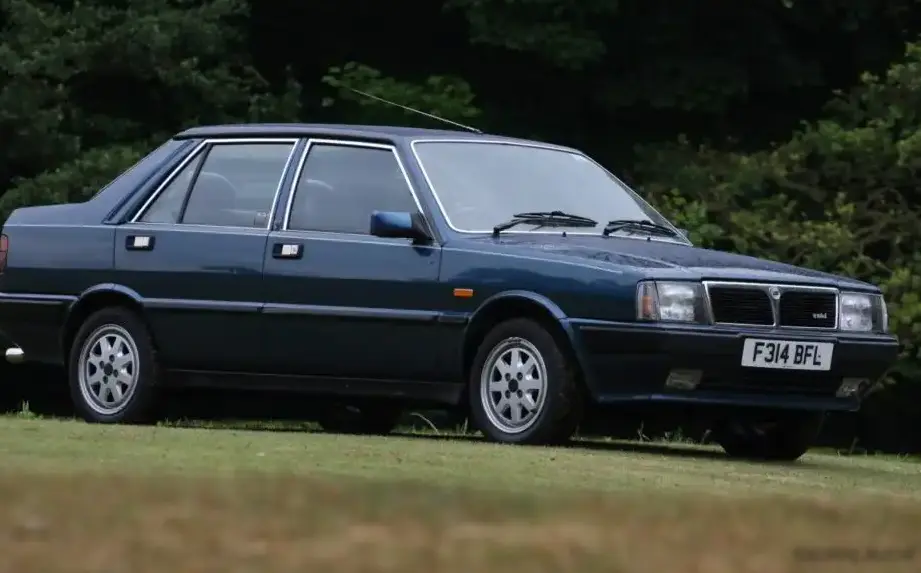
The Lancia Prisma 1.9 Diesel (831 AB), produced from 1982 to 1992, represents a significant, though often overlooked, variant within the broader Lancia Prisma range. The Prisma itself was a rebadged Fiat Regata, created following Fiat’s acquisition of Lancia. Positioned as a practical and economical sedan, the 1.9 Diesel trim aimed to provide fuel efficiency and durability, particularly appealing to fleet buyers and those seeking a reliable family vehicle in the European market. It occupied the lower end of the Prisma lineup, offering a more affordable alternative to the gasoline-powered versions and the more powerful diesel options available later in the production run. While not known for outright performance, the 1.9 Diesel Prisma carved a niche for itself as a dependable and cost-effective mode of transportation.
Technical Specifications
| Brand | Lancia |
| Model | Prisma |
| Generation | Prisma (831 AB) |
| Type (Engine) | 1.9 Diesel (65 Hp) |
| Start of production | 1982 |
| End of production | 1992 |
| Powertrain Architecture | Internal Combustion engine |
| Body type | Sedan |
| Fuel Type | Diesel |
| Power | 65 Hp |
| Engine Model/Code | 831 D.000 |
| Engine aspiration | Naturally aspirated engine |
| Engine oil capacity | 4.7 l (4.97 US qt | 4.14 UK qt) |
| Coolant capacity | 7 l (7.4 US qt | 6.16 UK qt) |
Powertrain & Engine Architecture
The heart of the Prisma 1.9 Diesel is the 831 D.000 engine, a 1864cc inline-four cylinder diesel. This engine, a product of Fiat/Lancia engineering, is a naturally aspirated, indirect injection diesel. Indirect injection, common for diesels of this era, involves injecting fuel into a pre-chamber where it partially combusts before entering the main cylinder, resulting in quieter operation but generally lower power output compared to direct injection systems. The engine utilizes a Bosch mechanical fuel injection pump, a robust and relatively simple system known for its reliability. The valvetrain consists of a single overhead camshaft operating two valves per cylinder. The engine’s design prioritized durability and fuel economy over high performance. The 831 D.000 engine is known for its relatively slow revving nature and a narrow power band. The engine was typically paired with a four or five-speed manual transmission, though a three-speed automatic transmission was also available, albeit less common. The automatic transmission, while offering convenience, further reduced the vehicle’s already modest acceleration.
Driving Characteristics
The driving experience in a Prisma 1.9 Diesel is best described as utilitarian. With only 65 horsepower on tap, acceleration is leisurely, and overtaking requires careful planning. The engine produces a modest 128 Nm (94 lb-ft) of torque, which is available at relatively low RPMs, making it reasonably tractable around town. The gear ratios in the manual transmission are spaced to maximize fuel efficiency, but this comes at the expense of responsiveness. The automatic transmission, while providing ease of use, exacerbates the sluggishness, with noticeable delays in downshifting. The suspension, tuned for comfort, provides a reasonably smooth ride, but the car exhibits noticeable body roll in corners. Compared to the gasoline-powered Prisma variants, the 1.9 Diesel offers significantly less performance but substantially better fuel economy. Compared to later, more powerful diesel Primas (such as those with turbocharging), the 1.9 Diesel feels particularly underpowered, but it also benefits from a simpler, potentially more reliable engine design.
Equipment & Trim Levels
The Prisma 1.9 Diesel typically represented the entry-level trim in the Prisma range. Standard equipment was fairly basic, reflecting its price point. Interior upholstery was typically cloth, often in a durable, patterned fabric. The dashboard featured a simple layout with analog gauges for speed, fuel level, coolant temperature, and a basic clock. Power steering was not standard on all models, and air conditioning was often an optional extra. Other optional extras included electric windows, a more sophisticated radio, and upgraded interior trim. The exterior trim was also relatively understated, with black plastic bumpers and steel wheels with hubcaps being common features. Higher trim levels of the Prisma offered features like alloy wheels, upgraded interior materials, and more comprehensive instrumentation, but these were not typically found on the 1.9 Diesel variant.
Chassis & Braking
The Prisma 1.9 Diesel utilizes a relatively conventional chassis design. It features a front independent suspension with MacPherson struts and a rear rigid axle with leaf springs. This suspension setup prioritizes simplicity and durability over sophisticated handling. The braking system consists of disc brakes on the front wheels and drum brakes on the rear wheels. The drum brakes on the rear were a cost-saving measure common in this class of vehicle. The braking performance is adequate for normal driving conditions, but it lacks the stopping power of more modern vehicles. Stabilizer bars were often omitted on the base 1.9 Diesel trim, contributing to increased body roll. The steering is a recirculating ball system, providing a somewhat vague and indirect feel.
Market Reception & Comparison
The Lancia Prisma 1.9 Diesel was generally well-received as a practical and economical family car. Critics praised its fuel efficiency and durability, but noted its lack of performance. It was often compared to other diesel sedans of the era, such as the Fiat Regata Diesel (being essentially the same car), the Peugeot 305 Diesel, and the Volkswagen Jetta Diesel. The Prisma Diesel typically offered a similar level of fuel economy to its competitors, but its performance was often slightly lower. Its reliability was generally considered to be good, although the indirect injection diesel engine could be prone to issues with injector coking if not properly maintained. The Prisma 1.9 Diesel appealed to buyers who prioritized fuel economy and reliability over driving excitement.
Legacy
The Lancia Prisma 1.9 Diesel, while not a particularly glamorous or high-performance vehicle, has proven to be a surprisingly durable and long-lasting car. Many examples are still on the road today, a testament to the robustness of its engine and chassis. In the used car market, the 1.9 Diesel Prisma is often valued for its simplicity and affordability. Parts availability can be a challenge, as the car is now quite old, but many components are shared with other Fiat/Lancia models of the era, making sourcing parts somewhat easier. The engine, while not particularly powerful, is known for its ability to withstand high mileage with proper maintenance. The Prisma 1.9 Diesel represents a snapshot of automotive engineering from the 1980s, prioritizing practicality and economy over outright performance and luxury.
