
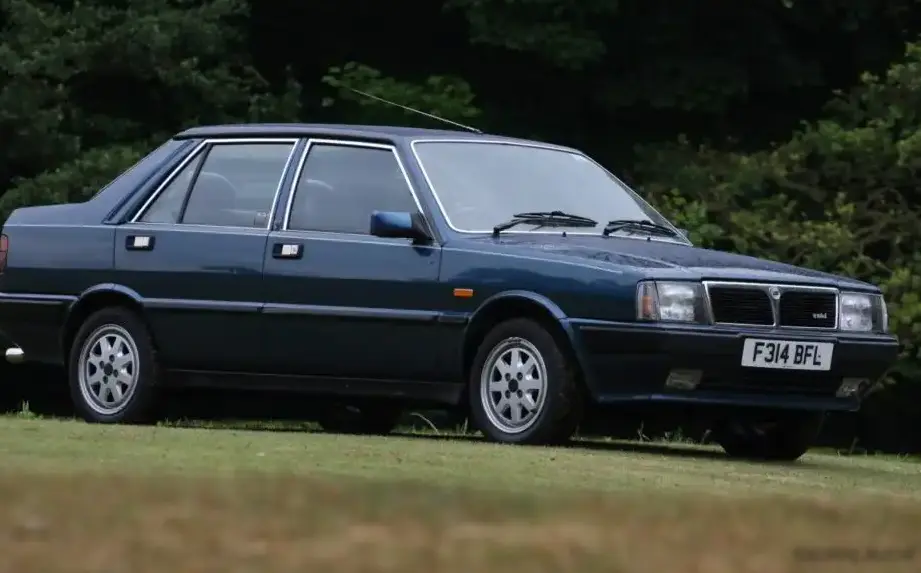
The Lancia Prisma 1.9 Turbo Diesel (831 AB), produced between 1985 and 1989, represented a significant offering in the European compact sedan market. Derived from the Lancia Delta, the Prisma was intended as a more conventionally styled and affordable alternative, aimed at buyers who preferred a traditional three-box sedan over the Delta’s hatchback configuration. The 1.9 Turbo Diesel variant, powered by the 831 D1.000 engine producing 80 horsepower, occupied a crucial position in the Prisma lineup, offering a balance of fuel efficiency and reasonable performance for long-distance driving, a common need for European motorists at the time. It was positioned as a practical, economical choice within the Prisma range, sitting below the more powerful gasoline-fueled versions.
Technical Specifications
| Brand | Lancia |
| Model | Prisma |
| Generation | Prisma (831 AB) |
| Type (Engine) | 1.9 Turbo Diesel (80 Hp) |
| Start of Production | 1985 |
| End of Production | 1989 |
| Powertrain Architecture | Internal Combustion Engine |
| Body Type | Sedan |
| Fuel Type | Diesel |
| Power | 80 Hp |
| Engine Model/Code | 831 D1.000 |
| Engine Aspiration | Turbocharger |
| Engine Oil Capacity | 4.7 l (4.97 US qt | 4.14 UK qt) |
| Coolant Capacity | 7 l (7.4 US qt | 6.16 UK qt) |
Powertrain & Engine Architecture
The heart of the Prisma 1.9 Turbo Diesel was the 831 D1.000 engine, a 1896cc inline-four cylinder diesel. This engine was a product of Lancia’s engineering expertise, incorporating a turbocharger to boost power output. The engine utilized indirect injection, a common feature for diesel engines of the era, employing Bosch mechanical fuel injection. This system, while not as refined as later common-rail direct injection systems, provided reliable operation and decent fuel economy. The engine featured a single overhead camshaft (SOHC) valvetrain operating two valves per cylinder. The turbocharger, a Garrett unit, provided a noticeable increase in power and torque compared to naturally aspirated diesel engines, although turbo lag was a characteristic of the system. The engine was typically paired with a four-speed automatic transmission, although a five-speed manual was also available. The automatic transmission, while offering convenience, was known to slightly diminish the engine’s overall efficiency and responsiveness.
Driving Characteristics
The Prisma 1.9 Turbo Diesel with the automatic transmission offered a comfortable, if not particularly sporty, driving experience. The 80 horsepower output, while adequate for highway cruising, meant acceleration was modest. The turbocharger did provide a surge of power in the mid-range, aiding overtaking maneuvers, but the automatic transmission’s shift points were sometimes slow to respond, diminishing the effect. Compared to the manual transmission version, the automatic felt noticeably less engaging and slightly slower. The gear ratios were optimized for fuel economy and relaxed cruising, rather than outright performance. The Prisma’s suspension, derived from the Delta, provided a reasonably comfortable ride, absorbing bumps and imperfections in the road surface effectively. However, the added weight of the automatic transmission and the diesel engine itself contributed to a slightly heavier feel in corners compared to lighter, gasoline-powered Prisma models.
Equipment & Trim Levels
The Prisma 1.9 Turbo Diesel typically came equipped with a fairly standard level of features for a European compact sedan of the mid-1980s. Standard equipment generally included cloth upholstery, a basic stereo system, and manual windows and door locks. Air conditioning was often an optional extra, as were power windows and central locking. The dashboard layout was functional and straightforward, with clearly marked gauges for speed, engine temperature, fuel level, and a clock. Interior trim levels were relatively basic, reflecting the Prisma’s positioning as a practical and affordable vehicle. Higher trim levels, if selected, might include upgraded upholstery, a more sophisticated stereo system, and additional convenience features. The exterior trim was also relatively understated, with body-colored bumpers and door handles being common features.
Chassis & Braking
The Prisma 1.9 Turbo Diesel utilized a front-engine, front-wheel-drive layout. The suspension consisted of independent front suspension with MacPherson struts and a twist-beam rear axle. This setup provided a good balance of ride comfort and handling. Braking was typically accomplished with disc brakes on the front wheels and drum brakes on the rear wheels. The braking system was adequate for the vehicle’s weight and performance, but lacked the stopping power of more modern braking systems. Stabilizer bars were fitted to both the front and rear axles to reduce body roll during cornering. The steering was a rack-and-pinion system, providing reasonably precise steering feel.
Market Reception & Comparison
The Lancia Prisma 1.9 Turbo Diesel was generally well-received in the European market as a practical and economical choice. Critics praised its fuel efficiency and comfortable ride, but noted its modest performance. Compared to the gasoline-powered Prisma variants, the diesel offered significantly better fuel economy, making it a popular choice for high-mileage drivers. Compared to other diesel-powered sedans of the era, such as the Fiat Regata Diesel, the Prisma offered a more refined driving experience and a higher level of perceived quality, thanks to its Lancia heritage. However, the Prisma was often more expensive than its competitors. The automatic transmission version, while convenient, was often criticized for its sluggishness and impact on fuel economy compared to the manual transmission option.
Legacy
The Lancia Prisma 1.9 Turbo Diesel, while not a high-performance vehicle, has proven to be a relatively durable and reliable car. The 831 D1.000 engine, when properly maintained, is known to be capable of high mileage. Today, the Prisma 1.9 Turbo Diesel is a relatively rare sight on the roads, but it has gained a following among classic car enthusiasts who appreciate its simplicity, fuel efficiency, and unique Italian styling. Parts availability can be a challenge, but many components are still available through specialist suppliers. The Prisma represents a unique chapter in Lancia’s history, bridging the gap between the brand’s rally-bred Delta and more mainstream offerings. The 1.9 Turbo Diesel variant, in particular, stands as a testament to the enduring appeal of economical and reliable diesel power in the European automotive landscape of the 1980s.
