
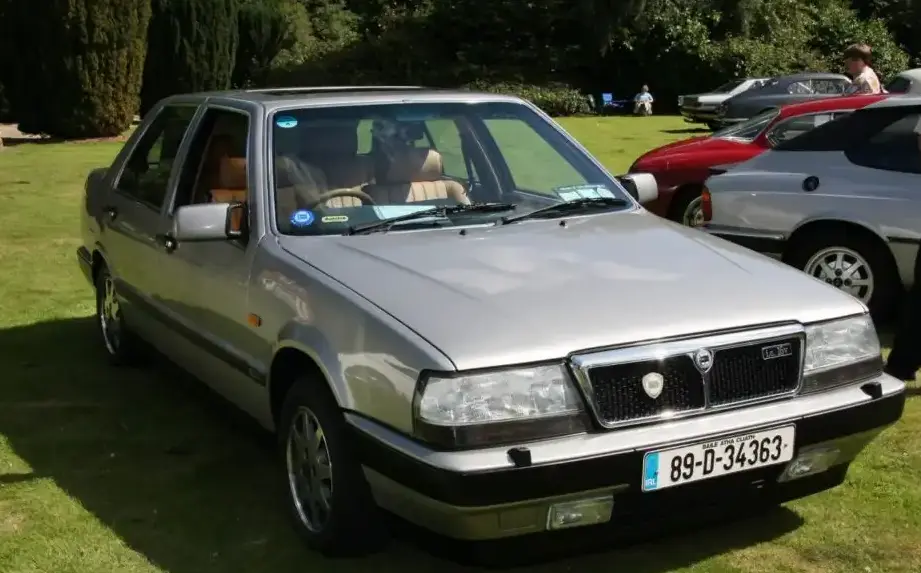
The Lancia Thema (834) 2000 i.e. 16V, produced between 1989 and 1992, represents a sophisticated iteration of Lancia’s flagship sedan. Positioned as a premium offering within the Thema range, this variant aimed to blend performance with Italian luxury. It was built upon the Tipo Quattro platform, shared with the Fiat Croma, Alfa Romeo 164, and Saab 9000, showcasing a collaborative effort by the Fiat Group to compete in the executive car segment. The 2000 i.e. 16V distinguished itself through its advanced 16-valve engine and generally higher level of standard equipment compared to lower-spec Thema models.
Technical Specifications
| Brand | Lancia |
| Model | Thema |
| Generation | Thema (834) |
| Type (Engine) | 2000 i.e. 16V (141 Hp) |
| Start of production | 1989 |
| End of production | 1992 |
| Powertrain Architecture | Internal Combustion engine |
| Body type | Sedan |
| Fuel Type | Petrol (Gasoline) |
| Power | 141 Hp |
| Engine Model/Code | 834 B2.246 |
| Engine aspiration | Naturally aspirated engine |
| Engine oil capacity | 5.5 l (5.81 US qt | 4.84 UK qt) |
| Coolant capacity | 8.2 l (8.66 US qt | 7.21 UK qt) |
Powertrain & Engine Architecture
The heart of the Thema 2000 i.e. 16V is the 834 B2.246 engine, a 1995cc, inline-four cylinder powerplant. This engine is notable for its dual overhead camshafts (DOHC) operating four valves per cylinder – hence the “16V” designation. This configuration allowed for improved breathing and higher engine speeds compared to earlier, simpler Lancia engines. Fuel delivery is managed by Bosch Motronic electronic fuel injection, a sophisticated system for its time, optimizing fuel efficiency and emissions while delivering responsive performance. The engine utilizes a cast iron block with an aluminum cylinder head, a common construction for balancing durability and weight. The engine’s redline is approximately 6200 rpm. While a five-speed manual transmission was available on some Thema models, the 2000 i.e. 16V was most commonly paired with a four-speed automatic transmission, designed to provide smooth and effortless cruising, aligning with the car’s luxury positioning.
Driving Characteristics
The 2000 i.e. 16V, when equipped with the automatic transmission, offered a comfortable and refined driving experience. Acceleration from 0 to 60 mph was achieved in around 9.5 seconds, respectable for the era but noticeably slower than the manual transmission variants. The automatic transmission, while smooth, did sap some of the engine’s potential, resulting in a more relaxed power delivery. Gear ratios were tuned for comfortable highway cruising rather than aggressive acceleration. The engine provided adequate torque throughout the rev range, making everyday driving effortless. Compared to the lower-displacement Thema models, the 2000 i.e. 16V offered a more engaging driving experience, particularly when pushed, thanks to its higher output and improved responsiveness. However, it didn’t possess the outright performance of the later, more powerful Thema 8.32 with its V6 engine.
Equipment & Trim Levels
The 2000 i.e. 16V typically came well-equipped, reflecting its status as a premium model. Standard features included central locking, electric windows, power steering, and an adjustable steering column. Interior upholstery was typically a high-quality cloth, with leather options available as an upgrade. The dashboard featured a comprehensive instrument cluster with a tachometer, speedometer, fuel gauge, and coolant temperature gauge. Optional extras included a sunroof, upgraded audio system, and climate control. The Thema’s interior was known for its spaciousness and comfortable seating, providing a relaxing environment for both driver and passengers. The trim level generally featured woodgrain accents on the dashboard and door panels, further enhancing the luxurious feel.
Chassis & Braking
The Thema 834 utilized an independent suspension system all around, featuring MacPherson struts at the front and semi-trailing arms at the rear. This setup provided a comfortable ride and good handling characteristics. Stabilizer bars were fitted to both the front and rear axles to reduce body roll during cornering. Braking duties were handled by disc brakes on all four wheels, providing ample stopping power. Anti-lock braking system (ABS) was often included as standard equipment, enhancing safety. The Thema’s chassis was robust and well-engineered, contributing to its overall stability and handling. The steering was power-assisted, making it light and easy to maneuver, particularly at low speeds.
Market Reception & Comparison
The Lancia Thema 2000 i.e. 16V was generally well-received by automotive critics. It was praised for its comfortable ride, spacious interior, and refined engine. However, some critics noted that the automatic transmission dulled the engine’s performance and that the Thema lacked the sporting character of some of its rivals, such as the Alfa Romeo 164. Compared to the base-model Thema, the 2000 i.e. 16V offered significantly improved performance and a higher level of equipment. Fuel economy was reasonable for the time, averaging around 22-26 mpg in mixed driving conditions. Reliability was generally good, although some owners reported issues with the Bosch Motronic fuel injection system and the automatic transmission. Compared to the Thema 8.32, the 2000 i.e. 16V was more affordable and fuel-efficient, but it lacked the V6’s power and prestige.
Legacy
The Lancia Thema 2000 i.e. 16V, while not as iconic as some other Italian performance cars, remains a desirable classic among enthusiasts. The 834 B2.246 engine is known for its durability and relatively straightforward maintenance. However, sourcing parts can be challenging due to the Thema’s age and limited production numbers. Well-maintained examples of the 2000 i.e. 16V are becoming increasingly collectible, particularly those with low mileage and a complete service history. The Thema’s innovative design and advanced features for its time continue to be appreciated by those who seek a comfortable and stylish classic sedan. The car represents a high point in Lancia’s engineering and design prowess, showcasing the brand’s commitment to innovation and luxury.
