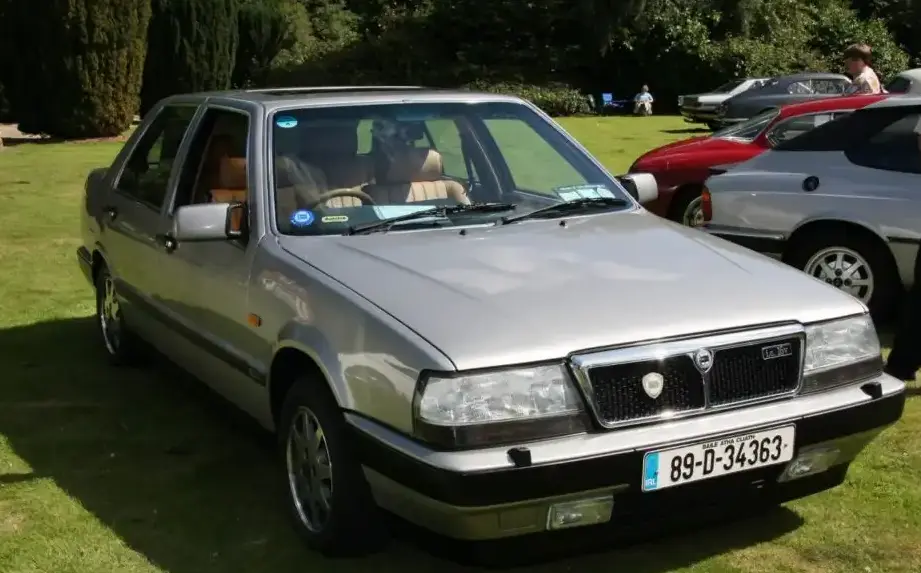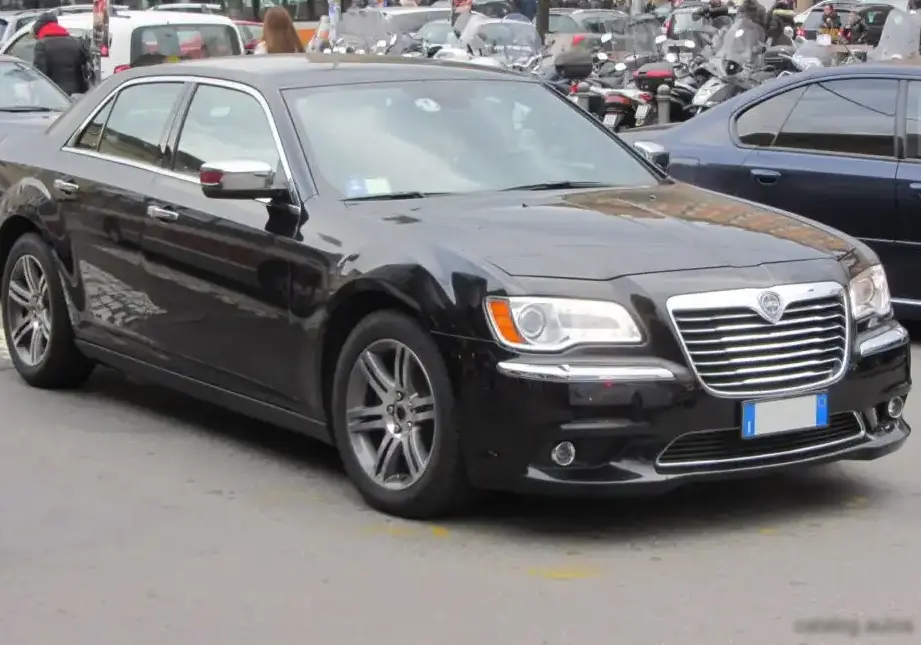
The Lancia Thema (LX) 3.0 V6 Multijet II, produced from 2011 to 2014, represents a unique chapter in Lancia’s history. This luxury sedan, based on the Chrysler 300 platform following Fiat’s acquisition of Chrysler, was primarily aimed at the European market, offering a blend of Italian styling and American engineering. The 3.0 V6 Multijet II variant, equipped with a five-speed 5G-TRONIC automatic transmission, occupied the upper echelon of the Thema lineup, positioned as the performance-oriented flagship model. It sought to recapture some of the prestige associated with the original Thema of the 1980s and 90s, though with a distinctly modern approach.
Technical Specifications
| Brand | Lancia |
| Model | Thema |
| Generation | Thema (LX) |
| Type (Engine) | 3.0 V6 Multijet II (239 Hp) 5G-TRONIC |
| Start of production | 2011 |
| End of production | 2014 |
| Powertrain Architecture | Internal Combustion engine |
| Body type | Sedan |
| Seats | 5 |
| Doors | 4 |
| Fuel consumption (urban) | 9.5-9.6 l/100 km (24.8 – 24.5 US mpg) |
| Fuel consumption (extra urban) | 5.7-5.9 l/100 km (41.3 – 39.9 US mpg) |
| Fuel consumption (combined) | 7.1-7.2 l/100 km (33.1 – 32.7 US mpg) |
| CO2 emissions | 185-191 g/km |
| Fuel Type | Diesel |
| Acceleration 0 – 100 km/h | 7.8 sec |
| Acceleration 0 – 62 mph | 7.8 sec |
| Acceleration 0 – 60 mph | 7.4 sec |
| Maximum speed | 232 km/h (144.16 mph) |
| Emission standard | Euro 5 |
| Weight-to-power ratio | 8.1 kg/Hp |
| Weight-to-torque ratio | 3.5 kg/Nm |
| Power | 239 Hp @ 4000 rpm |
| Torque | 550 Nm @ 1800-2800 rpm (405.66 lb.-ft.) |
| Engine layout | Front, Longitudinal |
| Engine Model/Code | VM A630 |
| Engine displacement | 2987 cm3 (182.28 cu. in.) |
| Number of cylinders | 6 |
| Engine configuration | V-engine |
| Cylinder Bore | 83 mm (3.27 in.) |
| Piston Stroke | 92 mm (3.62 in.) |
| Compression ratio | 16.5:1 |
| Number of valves per cylinder | 4 |
| Fuel injection system | Diesel Commonrail |
| Engine aspiration | Turbocharger, Intercooler |
| Valvetrain | DOHC |
| Engine oil capacity | 9.2 l (9.72 US qt | 8.09 UK qt) |
| Coolant capacity | 12 l (12.68 US qt | 10.56 UK qt) |
| Kerb Weight | 1938-2038 kg (4272.56 – 4493.02 lbs.) |
| Max. weight | 2472 kg (5449.83 lbs.) |
| Max load | 434-534 kg (956.81 – 1177.27 lbs.) |
| Trunk (boot) space | 462 l (16.32 cu. ft.) |
| Fuel tank capacity | 72 l (19.02 US gal | 15.84 UK gal) |
| Permitted trailer load (braked) | 1996 kg (4400.43 lbs.) |
| Permitted trailer load (unbraked) | 450 kg (992.08 lbs.) |
| Permitted towbar download | 100 kg (220.46 lbs.) |
| Length | 5066 mm (199.45 in.) |
| Width | 1906 mm (75.04 in.) |
| Height | 1488 mm (58.58 in.) |
| Wheelbase | 3052 mm (120.16 in.) |
| Front track | 1623 mm (63.9 in.) |
| Rear track | 1640 mm (64.57 in.) |
| Minimum turning circle | 11.5 m (37.73 ft.) |
| Drivetrain | Rear wheel drive |
| Number of gears | 5 |
| Gearbox type | Automatic transmission G-TRONIC |
| Front suspension | Independent multi-link suspension |
| Rear suspension | Independent multi-link suspension |
| Front brakes | Ventilated discs, 345×28 mm |
| Rear brakes | Ventilated discs, 320×22 mm |
| Tire size | 235/55 R18; 245/45 R20 |
| Wheel rims size | 7.5J x 18; 8.5J x 20 |
Powertrain & Engine Architecture
The heart of the Thema 3.0 V6 Multijet II is the VM A630 engine, a 3.0-liter V6 diesel. This engine, developed by VM Motori (later acquired by Fiat), utilizes a common rail direct injection system, delivering fuel at extremely high pressure for optimized combustion. The engine features a single turbocharger with an intercooler, boosting power and torque. The double overhead camshaft (DOHC) valvetrain, with four valves per cylinder, further enhances breathing and efficiency. The engine’s 16.5:1 compression ratio is typical for a diesel engine, contributing to its thermal efficiency. The 5G-TRONIC automatic transmission, a five-speed unit, was chosen for its smooth operation and relative simplicity. While not the most modern transmission available at the time, it was considered reliable and well-suited to the engine’s torque characteristics.
Driving Characteristics
The 239 horsepower and 405.66 lb.-ft. of torque produced by the 3.0 V6 Multijet II provided the Thema with respectable performance. Acceleration from 0 to 60 mph was achieved in approximately 7.4 seconds, and the car could reach a top speed of 144.16 mph. The automatic transmission, while smooth, wasn’t particularly quick to shift, and lacked the responsiveness of a manual gearbox. The engine’s torque was readily available from low RPMs, making it easy to drive in everyday situations. However, the Thema’s considerable weight (around 4,300 lbs) was noticeable, particularly during spirited driving. Compared to the lower-powered 1.8-liter petrol variants, the 3.0 V6 offered a significantly more refined and capable driving experience. It also provided a substantial performance advantage over the diesel models with lower horsepower ratings.
Equipment & Trim Levels
The Thema 3.0 V6 Multijet II came standard with a generous array of features, befitting its flagship status. These included leather upholstery, automatic climate control, a premium audio system, and a navigation system. Standard safety equipment included ABS, traction control, and multiple airbags. Optional extras included a sunroof, heated seats, and advanced driver-assistance systems. The interior design was a blend of Italian elegance and American practicality, with a focus on comfort and convenience. The dashboard layout was relatively straightforward, with easy-to-use controls.
Chassis & Braking
The Thema’s chassis was based on the Chrysler 300 platform, featuring an independent multi-link suspension at both the front and rear. This suspension setup provided a comfortable ride, absorbing bumps and imperfections in the road effectively. The Thema 3.0 V6 was equipped with ventilated disc brakes on all four wheels, providing ample stopping power. The braking system was assisted by ABS, ensuring stable and controlled braking even in emergency situations. Stabilizer bars were fitted to both the front and rear axles, reducing body roll during cornering.
Market Reception & Comparison
The Lancia Thema 3.0 V6 Multijet II received mixed reviews from automotive critics. While praised for its comfortable ride, spacious interior, and powerful engine, it was criticized for its American-derived platform and somewhat dated technology. Fuel economy was considered reasonable for a vehicle of its size and performance, but not class-leading. Compared to its German rivals, such as the Audi A6 and BMW 5 Series, the Thema offered a more affordable price point but lacked the same level of refinement and brand prestige. The 1.8-liter petrol variants were significantly cheaper to purchase and operate, but offered considerably less performance. The diesel models with lower horsepower ratings were more fuel-efficient, but lacked the 3.0 V6’s power and refinement.
Legacy
The Lancia Thema 3.0 V6 Multijet II represents a curious footnote in Lancia’s history. While it didn’t achieve significant sales success, it offered a unique combination of Italian style and American engineering. The VM A630 engine proved to be a reliable and durable powerplant, and examples are still found on the road today. In the used car market, the Thema 3.0 V6 is appreciated by enthusiasts who value its distinctive character and powerful engine. However, potential buyers should be aware of the potential for higher maintenance costs associated with a luxury vehicle of this age. The 5G-TRONIC transmission, while generally reliable, may require servicing or eventual replacement. Overall, the Thema 3.0 V6 Multijet II remains a distinctive and somewhat underrated luxury sedan.