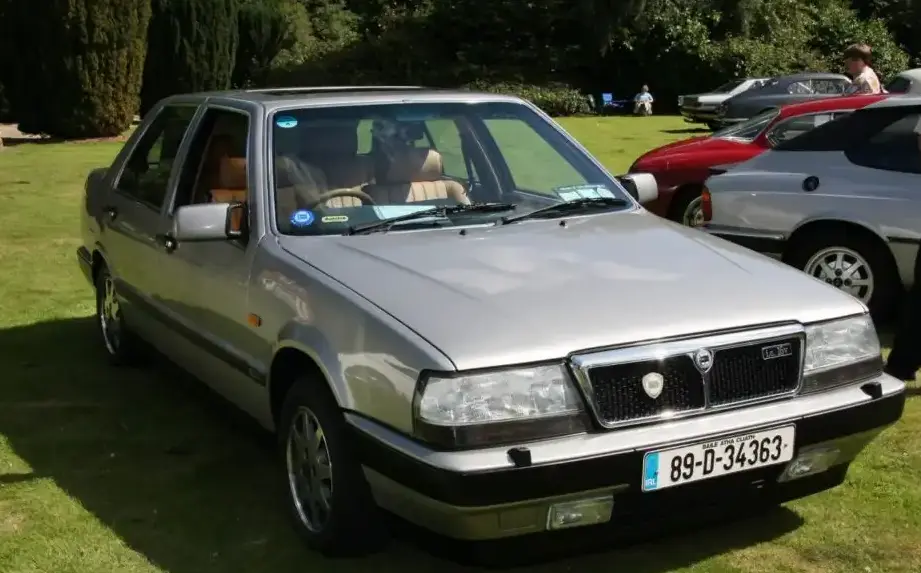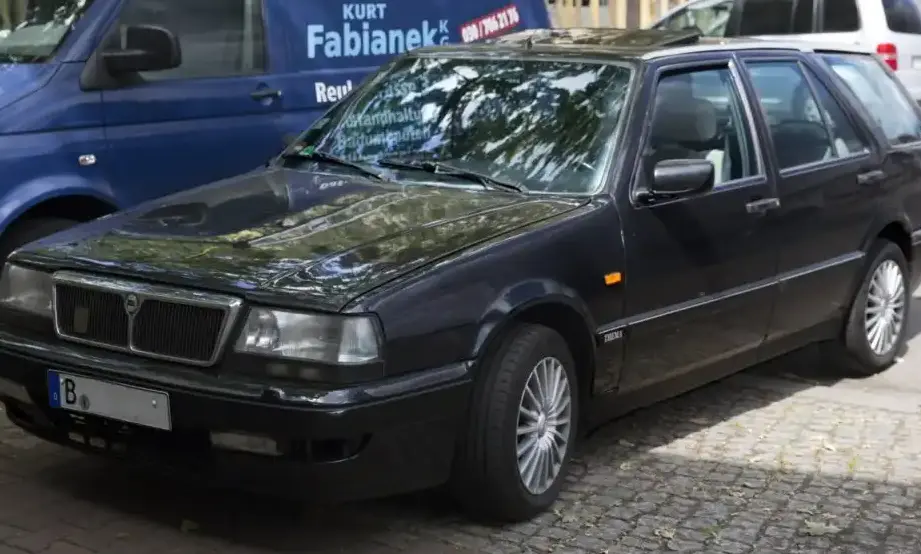
The Lancia Thema Station Wagon (834) 2000 16V, produced between 1992 and 1994, represents a refined and relatively rare iteration of Lancia’s flagship sedan. This variant, built on the 834 chassis, offered a blend of Italian styling, comfortable ride quality, and respectable performance within the executive station wagon segment. It was positioned as a more sporting alternative to the standard Thema wagons, appealing to buyers who desired a more engaging driving experience without sacrificing practicality. The 2000 16V model was a late-production update, benefiting from improvements to the engine and overall refinement compared to earlier Thema station wagons.
Technical Specifications
| Brand | Lancia |
| Model | Thema |
| Generation | Thema Station Wagon (834) |
| Type (Engine) | 2000 16V (152 Hp) |
| Start of production | 1992 |
| End of production | 1994 |
| Powertrain Architecture | Internal Combustion engine |
| Body type | Station wagon (estate) |
| Fuel Type | Petrol (Gasoline) |
| Power | 152 Hp |
| Engine Model/Code | 834 F1.000 |
| Engine aspiration | Naturally aspirated engine |
| Engine oil capacity | 5.5 l (5.81 US qt | 4.84 UK qt) |
| Coolant capacity | 8.2 l (8.66 US qt | 7.21 UK qt) |
Powertrain & Engine Architecture
The heart of the Thema 2000 16V is the 1995cc, four-cylinder, 16-valve engine designated as the 834 F1.000. This engine is a development of the earlier twin-cam, four-cylinder units used in Lancia and Fiat models, but with significant upgrades to the cylinder head and fuel injection system. It features a cast iron block and an aluminum cylinder head, contributing to a robust and relatively lightweight construction. The engine utilizes Bosch Motronic fuel injection and electronic ignition, providing precise control over fuel delivery and timing. The 16-valve configuration, with two valves per cylinder, allows for improved breathing and higher engine speeds compared to earlier 8-valve versions. While not a high-revving engine, it delivers a broad torque curve, making it flexible in everyday driving situations. The Thema 2000 16V was exclusively offered with a four-speed automatic transmission. This transmission, while smooth in operation, isn’t known for its particularly quick shifts or fuel efficiency by modern standards. It was a common automatic transmission used across various Fiat and Lancia models of the era.
Driving Characteristics
The 152 horsepower and approximately 147 lb-ft of torque produced by the 2000 16V engine provide adequate performance for a large station wagon. Acceleration from 0 to 60 mph is estimated to be around 9.5-10.5 seconds, which was competitive for the time but doesn’t feel particularly brisk by today’s standards. The four-speed automatic transmission, while offering convenience, does detract somewhat from the engine’s potential. Gear ratios are spaced to prioritize comfortable cruising rather than outright acceleration. The automatic transmission tends to hunt for gears on inclines, and downshifts can be slow to respond. Compared to the manual transmission versions of the Thema, the automatic feels noticeably less responsive. The Thema’s suspension, featuring independent suspension all around, provides a comfortable and well-controlled ride. The steering is power-assisted and relatively light, making it easy to maneuver in urban environments, but lacking in ultimate feel. Overall, the driving experience is geared towards comfort and refinement rather than sporty handling.
Equipment & Trim Levels
The Thema 2000 16V station wagon was generally well-equipped, reflecting its position as a premium vehicle. Standard features typically included central locking, electric windows, power-assisted steering, and an adjustable steering column. Interior upholstery was typically a high-quality cloth, with leather options available as an extra-cost upgrade. The dashboard layout is typical of early 1990s Italian design, featuring a combination of analog gauges and a central information display. Optional extras included a sunroof, upgraded audio system, and climate control. The Thema also featured a spacious and practical interior, with ample room for passengers and luggage. The station wagon body style, of course, significantly enhanced the vehicle’s practicality, offering a large cargo area that could be expanded by folding down the rear seats.
Chassis & Braking
The Thema 834 chassis utilizes independent suspension at all four wheels. The front suspension consists of MacPherson struts with anti-roll bar, while the rear features semi-trailing arms with a torsion bar. This setup provides a good balance between ride comfort and handling. Braking is accomplished via ventilated disc brakes at the front and drum brakes at the rear. While adequate for normal driving conditions, the rear drum brakes are a point of criticism, as they lack the stopping power and fade resistance of disc brakes. The Thema’s steering is a power-assisted rack and pinion system, providing light and easy steering feel. The chassis is relatively robust and well-built, contributing to the vehicle’s overall durability.
Market Reception & Comparison
The Lancia Thema Station Wagon 2000 16V was generally well-received by automotive critics, who praised its comfortable ride, spacious interior, and refined styling. However, the automatic transmission was often criticized for its lack of responsiveness and fuel efficiency. Compared to other station wagons in its class, such as the Volvo 940 or BMW 5 Series Touring, the Thema offered a more distinctive Italian flair and a more comfortable ride, but lacked the ultimate performance and handling of its German rivals. The 2000 16V variant offered a noticeable performance improvement over the lower-powered 1.8-liter and 2.0-liter non-16V models, but it came at a higher price. Fuel economy was reasonable for the time, averaging around 22-26 mpg in mixed driving conditions.
Legacy
The Lancia Thema, and particularly the 834 series, is now considered a classic car, appreciated by enthusiasts for its unique styling and Italian character. The 2000 16V engine is generally regarded as a reliable unit, provided it is properly maintained. However, like all older vehicles, it is prone to age-related issues, such as oil leaks and corrosion. Parts availability can be a challenge, as many components are no longer in production. The Thema’s automatic transmission requires regular servicing to ensure smooth operation. Today, the Thema Station Wagon 2000 16V is a relatively rare sight on the road, and well-maintained examples are becoming increasingly collectible. Its blend of practicality, comfort, and Italian style continues to appeal to a dedicated following of enthusiasts.