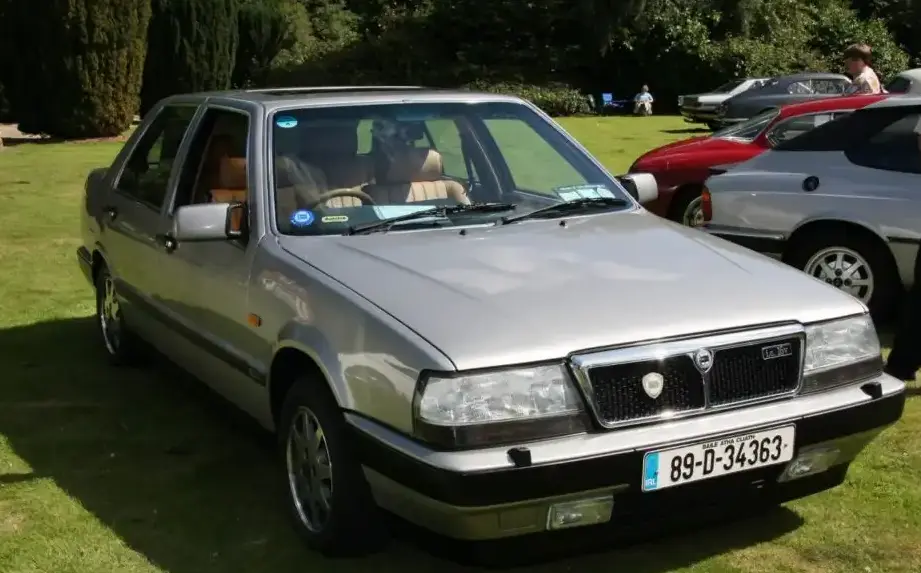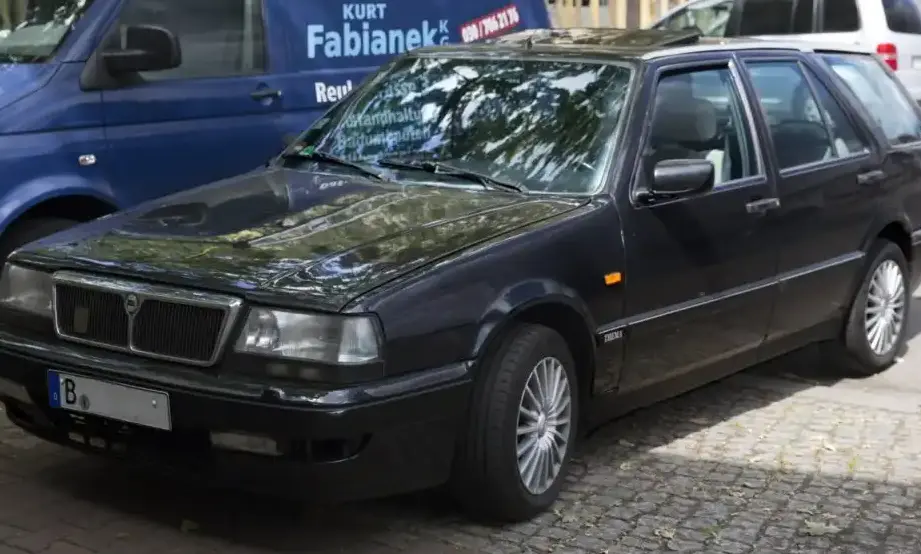
The Lancia Thema Station Wagon (834) 3000 V6, produced between 1992 and 1994, represents a luxurious and relatively rare iteration of Lancia’s flagship sedan. Built upon the 834 chassis, this variant combined the practicality of a station wagon body style with the performance of a 3.0-liter V6 engine. It was positioned as the premium offering within the Thema wagon lineup, appealing to buyers seeking a blend of space, comfort, and spirited driving. The Thema, in general, was Lancia’s attempt to compete directly with executive cars from German manufacturers like BMW and Mercedes-Benz, and the station wagon version expanded its appeal to families and those needing greater cargo capacity. The 834 series Thema was a collaborative effort with Saab, resulting in the Saab 9000 also sharing the same platform.
Technical Specifications
| Brand | Lancia |
| Model | Thema |
| Generation | Thema Station Wagon (834) |
| Type (Engine) | 3000 V6 (171 Hp) |
| Start of Production | 1992 |
| End of Production | 1994 |
| Powertrain Architecture | Internal Combustion Engine |
| Body Type | Station Wagon (Estate) |
| Fuel Type | Petrol (Gasoline) |
| Power | 171 Hp |
| Engine Model/Code | 834 F.000 |
| Engine Aspiration | Naturally Aspirated |
| Engine Oil Capacity | 6.6 l (6.97 US qt | 5.81 UK qt) |
| Coolant Capacity | 10 l (10.57 US qt | 8.8 UK qt) |
Powertrain & Engine Architecture
The heart of the Thema 3000 V6 was the 834 F.000 engine, a 2957 cc (180.6 cu in) 60-degree V6. This engine was notable for its relatively advanced design for its time, featuring a cast iron block and aluminum cylinder heads. It employed a single overhead camshaft (SOHC) design per bank, operating four valves per cylinder. Fuel delivery was managed by Bosch Motronic fuel injection, a sophisticated system for the early 1990s that optimized fuel efficiency and performance. The engine produced 171 horsepower (127 kW) at 5800 rpm and 230 Nm (169 lb-ft) of torque at 4000 rpm. The engine was known for its smooth operation and distinctive V6 sound. The Thema 3000 V6 was typically paired with a four-speed automatic transmission, although a five-speed manual was available in some markets. The automatic transmission was designed to provide comfortable and effortless cruising, prioritizing smooth shifts over outright performance.
Driving Characteristics
The Thema 3000 V6 offered a refined driving experience. While not a sports car, the V6 engine provided ample power for comfortable highway cruising and confident overtaking. The automatic transmission, while smooth, did slightly diminish the engine’s potential, resulting in a 0-60 mph time of around 9.5 seconds. The gear ratios were tuned for relaxed acceleration rather than rapid sprints. Compared to the four-cylinder Thema models, the V6 offered a significant performance upgrade, providing a more effortless and enjoyable driving experience. The suspension, tuned for comfort, absorbed bumps and imperfections in the road well, contributing to a smooth ride. However, the Thema’s relatively large size and weight meant it wasn’t particularly agile in corners.
Equipment & Trim Levels
The Thema 3000 V6 Station Wagon was typically equipped with a high level of standard features, reflecting its position as the premium trim level. Standard equipment often included leather upholstery, power-adjustable front seats, air conditioning, power windows and locks, and an upgraded sound system. Many examples also featured a sunroof. Optional extras could include a premium audio system, heated seats, and upgraded interior trim materials. The interior design was characterized by its Italian flair, with a focus on comfort and aesthetics. The dashboard layout was functional and well-organized, with easy-to-read gauges and intuitive controls. The station wagon body style offered a generous amount of cargo space, making it a practical choice for families and those needing to transport large items.
Chassis & Braking
The Thema 834 utilized a front-engine, front-wheel-drive layout. The suspension consisted of independent front suspension with MacPherson struts and a semi-independent torsion beam rear suspension. This setup prioritized ride comfort over handling precision. Braking duties were handled by ventilated disc brakes on the front wheels and solid disc brakes on the rear wheels. Anti-lock braking system (ABS) was standard equipment, enhancing safety and control during emergency braking situations. The Thema’s steering was power-assisted, providing light and effortless steering feel. Stabilizer bars were fitted to both the front and rear axles to reduce body roll during cornering.
Market Reception & Comparison
The Lancia Thema 3000 V6 Station Wagon was generally well-received by automotive critics, who praised its comfortable ride, spacious interior, and refined V6 engine. However, it faced stiff competition from established German rivals like the BMW 5 Series Touring and the Mercedes-Benz E-Class Estate. The Thema’s relatively low production numbers and limited availability in some markets meant it wasn’t as widely recognized as its competitors. Fuel economy was reasonable for a V6 engine of its size, averaging around 18-22 mpg in mixed driving conditions. Reliability was generally good, although some owners reported issues with the Bosch Motronic fuel injection system and the automatic transmission. Compared to the four-cylinder Thema models, the V6 offered a significant improvement in performance and refinement, but at a higher price point.
Legacy
The Lancia Thema 3000 V6 Station Wagon remains a relatively rare and sought-after classic car today. Its combination of Italian style, V6 performance, and station wagon practicality makes it an appealing choice for collectors and enthusiasts. The 834 F.000 V6 engine is known for its durability and relatively straightforward maintenance. However, finding replacement parts can be challenging due to the Thema’s limited production numbers. Well-maintained examples command a premium in the used car market. The Thema represents a unique chapter in Lancia’s history, showcasing the brand’s commitment to innovation and luxury. While Lancia’s presence in the US market was limited, the Thema, particularly the V6 station wagon, stands as a testament to the brand’s engineering prowess and distinctive design aesthetic.