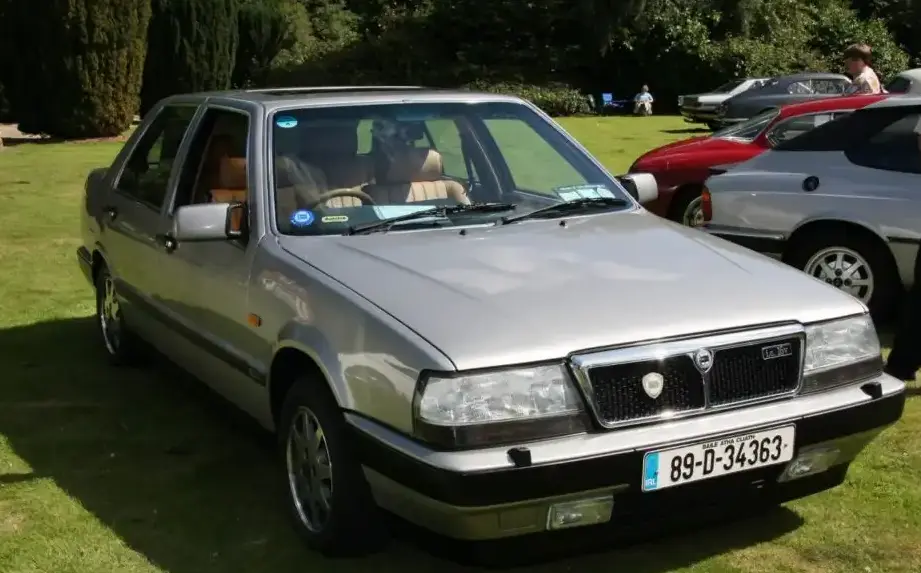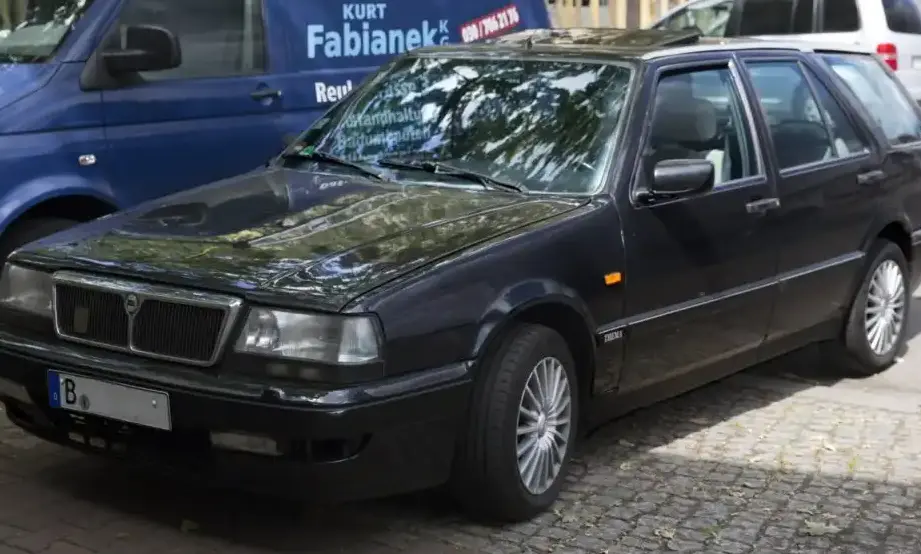
The Lancia Thema Station Wagon (834) 2000 Turbo 16V, produced between 1989 and 1993, represented a sophisticated and powerful offering in the executive estate car segment. Part of the second-generation Thema line (the 834 series), this variant combined the practicality of a station wagon with the performance of a turbocharged, 16-valve engine. It was positioned as a premium option within the Thema range, appealing to buyers seeking both space and spirited driving. The Thema, in general, was Lancia’s flagship, intended to compete with vehicles like the BMW 5 Series, Mercedes-Benz E-Class, and Audi 100, offering Italian style and technology. The station wagon body style, while less common than the sedan, broadened the Thema’s appeal to families and those requiring substantial cargo capacity.
Technical Specifications
| Brand | Lancia |
| Model | Thema |
| Generation | Thema Station Wagon (834) |
| Type (Engine) | 2000 Turbo 16V (177 Hp) |
| Start of production | 1989 |
| End of production | 1993 |
| Powertrain Architecture | Internal Combustion engine |
| Body type | Station wagon (estate) |
| Fuel Type | Petrol (Gasoline) |
| Power | 177 Hp |
| Engine Model/Code | 834 C1.246 |
| Engine aspiration | Turbocharger |
| Engine oil capacity | 5.5 l (5.81 US qt | 4.84 UK qt) |
| Coolant capacity | 8.2 l (8.66 US qt | 7.21 UK qt) |
Powertrain & Engine Architecture
The heart of the Thema 2000 Turbo 16V was the 834 C1.246 engine, a 1995cc inline-four cylinder powerplant. This engine was a significant evolution of Lancia’s earlier twin-cam designs, featuring four valves per cylinder and a Garrett T25 turbocharger with intercooling. The engine utilized Bosch Motronic fuel injection, a sophisticated system for its time, managing fuel delivery and ignition timing for optimal performance and efficiency. The 16-valve configuration, combined with the turbocharging, allowed for a broad powerband and a relatively high specific output for a naturally aspirated engine of that displacement. The engine’s block was constructed from cast iron, providing durability, while the cylinder head was aluminum alloy, contributing to weight reduction. While specific transmission options varied by market, the Thema 2000 Turbo 16V was typically offered with a four-speed automatic transmission, although a five-speed manual was also available in some regions. The automatic transmission was designed to handle the engine’s torque output, providing smooth shifts and reasonable acceleration.
Driving Characteristics
The Thema 2000 Turbo 16V offered a compelling blend of performance and comfort. The turbocharger provided a noticeable boost in power, delivering strong acceleration in the mid-range. While not a sports car, the Thema Turbo was capable of brisk performance, with a 0-60 mph time estimated around 8.5 seconds. The automatic transmission, while convenient, did slightly diminish the engine’s potential compared to the manual version, resulting in a less direct connection to the powertrain. Gear ratios were tuned for comfortable cruising, prioritizing smooth operation over outright acceleration. The suspension, featuring independent suspension all around, provided a compliant ride, absorbing bumps and irregularities in the road surface effectively. However, the Thema’s weight, inherent in a large station wagon, was noticeable during cornering, resulting in some body roll. Steering was power-assisted, offering a light and easy feel, but lacked the precision of some competitors.
Equipment & Trim Levels
The Thema 2000 Turbo 16V was generally well-equipped, reflecting its position as a premium vehicle. Standard features typically included central locking, electric windows, power-assisted steering, and an adjustable steering column. Interior upholstery was typically a high-quality cloth or leather, with wood trim accents adding a touch of luxury. Air conditioning was standard, and higher trim levels could include features such as a sunroof, upgraded audio systems, and heated seats. The dashboard layout was functional and ergonomically designed, with clear instrumentation and easy-to-reach controls. Optional extras included a trip computer, automatic climate control, and a premium sound system. The station wagon body style itself added to the practicality, offering a large cargo area with a flat load floor when the rear seats were folded down.
Chassis & Braking
The Thema Station Wagon featured a robust chassis designed to handle the weight and power of the 2000 Turbo 16V. The suspension system consisted of independent wishbones at the front and a semi-trailing arm setup at the rear. Stabilizer bars were fitted to both axles, helping to reduce body roll during cornering. Braking was typically accomplished with ventilated disc brakes at the front and either disc or drum brakes at the rear, depending on the specific market and trim level. Anti-lock braking system (ABS) was often included as standard equipment, enhancing safety and control during emergency braking situations. The Thema’s steering system was a power-assisted rack-and-pinion setup, providing a light and responsive feel. Wheel sizes were typically 15 or 16 inches, with tires chosen to balance comfort and grip.
Market Reception & Comparison
The Lancia Thema 2000 Turbo 16V received generally positive reviews from automotive critics. It was praised for its powerful engine, comfortable ride, and spacious interior. However, some critics noted that the Thema lacked the sporting character of some of its German rivals. Compared to the naturally aspirated Thema variants, the 2000 Turbo 16V offered a significant performance upgrade, but at a higher price point. Against competitors like the BMW 5 Series and Mercedes-Benz E-Class, the Thema offered a unique blend of Italian style and technology, but often struggled to match the brand recognition and perceived reliability of its German counterparts. Fuel economy was reasonable for a turbocharged engine of that era, averaging around 22-26 mpg in mixed driving. Reliability was generally good, although the complexity of the fuel injection and turbocharging systems could lead to occasional maintenance issues.
Legacy
The Lancia Thema 2000 Turbo 16V remains a relatively rare and sought-after vehicle among enthusiasts. The combination of its powerful engine, comfortable ride, and distinctive Italian styling has earned it a loyal following. While parts availability can be a challenge, the Thema’s robust construction and relatively simple mechanical design make it a manageable project for experienced DIY mechanics. In the used car market, well-maintained examples of the Thema 2000 Turbo 16V command a premium price, reflecting their rarity and desirability. The engine, while not without its quirks, is considered a durable and capable powerplant when properly maintained. The Thema, in its various forms, represents a high point in Lancia’s engineering and design history, and the 2000 Turbo 16V station wagon stands as a particularly appealing and versatile example of this iconic Italian car.