
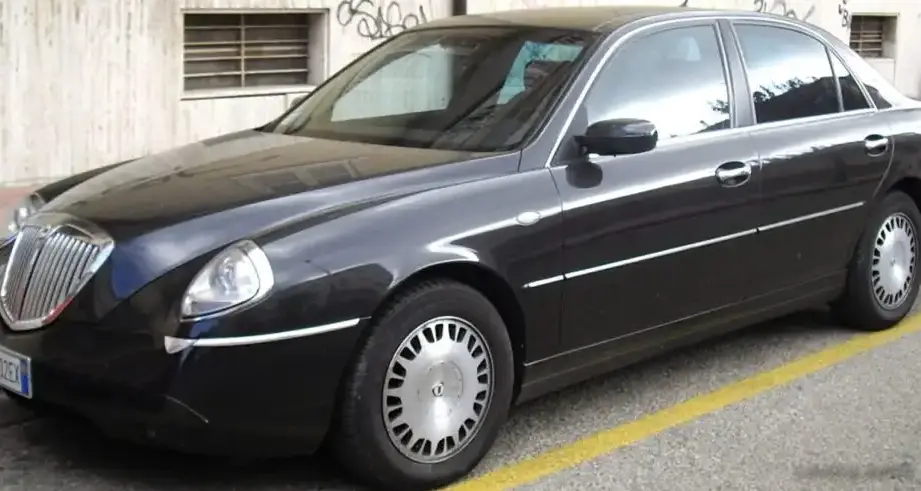
The Lancia Thesis 2.4 JTD, produced from March 2002 to December 2005, represented a significant offering in the upper-midsize luxury sedan segment for the Italian automaker. Positioned as a flagship model, the Thesis aimed to blend Italian design flair with robust diesel performance. This particular variant, equipped with the 2.4-liter JTD turbodiesel engine producing 150 horsepower, occupied a middle ground within the Thesis lineup, offering a balance between fuel efficiency, refinement, and cost. It served as a more accessible entry point into the Thesis range compared to the more powerful gasoline engines, while still providing a premium driving experience. The Thesis, built on Lancia’s dedicated platform, was intended to revitalize the brand’s image and compete with established German and Scandinavian rivals.
Technical Specifications
| Brand | Lancia |
| Model | Thesis |
| Generation | Thesis |
| Type (Engine) | 2.4 JTD (150 Hp) |
| Start of production | March, 2002 |
| End of production | December, 2005 |
| Powertrain Architecture | Internal Combustion engine |
| Body type | Sedan |
| Seats | 5 |
| Doors | 4 |
| Fuel consumption (urban) | 11.3 l/100 km (20.8 US mpg, 25 UK mpg, 8.8 km/l) |
| Fuel consumption (extra urban) | 6.3 l/100 km (37.3 US mpg, 44.8 UK mpg, 15.9 km/l) |
| Fuel consumption (combined) | 8 l/100 km (29.4 US mpg, 35.3 UK mpg, 12.5 km/l) |
| Fuel Type | Diesel |
| Acceleration 0 – 100 km/h | 10.1 sec |
| Acceleration 0 – 62 mph | 10.1 sec |
| Acceleration 0 – 60 mph | 9.6 sec |
| Maximum speed | 206 km/h (128 mph) |
| Weight-to-power ratio | 11.4 kg/Hp, 87.5 Hp/tonne |
| Weight-to-torque ratio | 5.6 kg/Nm, 177.3 Nm/tonne |
| Power | 150 Hp @ 4000 rpm |
| Power per litre | 62.8 Hp/l |
| Torque | 304 Nm @ 1800 rpm (224.22 lb.-ft. @ 1800 rpm) |
| Engine layout | Front, Transverse |
| Engine Model/Code | 841 C.000 |
| Engine displacement | 2387 cm3 (145.66 cu. in.) |
| Number of cylinders | 5 |
| Engine configuration | Inline |
| Cylinder Bore | 82 mm (3.23 in.) |
| Piston Stroke | 90.4 mm (3.56 in.) |
| Compression ratio | 18.45:1 |
| Number of valves per cylinder | 2 |
| Fuel injection system | Diesel Commonrail |
| Engine aspiration | Turbocharger, Intercooler |
| Valvetrain | OHC |
| Engine oil capacity | 5.5 l (5.81 US qt | 4.84 UK qt) |
| Coolant | 8.5 l (8.98 US qt | 7.48 UK qt) |
| Kerb Weight | 1715 kg (3780.93 lbs.) |
| Max. weight | 2225 kg (4905.29 lbs.) |
| Max load | 510 kg (1124.36 lbs.) |
| Trunk (boot) space – minimum | 480 l (16.95 cu. ft.) |
| Fuel tank capacity | 75 l (19.81 US gal | 16.5 UK gal) |
| Length | 4890 mm (192.52 in.) |
| Width | 1830 mm (72.05 in.) |
| Height | 1470 mm (57.87 in.) |
| Wheelbase | 2805 mm (110.43 in.) |
| Front track | 1570 mm (61.81 in.) |
| Rear (Back) track | 1540 mm (60.63 in.) |
| Drivetrain Architecture | The Internal combustion engine (ICE) drives the front wheels of the vehicle. |
| Drive wheel | Front wheel drive |
| Number of gears and type of gearbox | 6 gears, manual transmission |
| Front suspension | Spring Strut |
| Rear suspension | Coil spring |
| Front brakes | Ventilated discs |
| Rear brakes | Ventilated discs |
| Assisting systems | ABS (Anti-lock braking system) |
| Steering type | Steering rack and pinion |
| Power steering | Hydraulic Steering |
| Tires size | 215/60 R16 |
Powertrain & Engine Architecture
The heart of the Thesis 2.4 JTD is the 841 C.000 engine, a 2.4-liter inline-five cylinder diesel. This engine was a product of Fiat’s JTD (Jet Diesel Technology) development, utilizing a common rail direct injection system. This system allowed for precise control of fuel delivery, resulting in improved combustion efficiency, reduced noise, and lower emissions compared to older diesel technologies. The engine featured an intercooled turbocharger, boosting power output to 150 horsepower at 4000 rpm and 304 Nm (224 lb-ft) of torque at a relatively low 1800 rpm. The overhead camshaft (OHC) valvetrain operated two valves per cylinder. The engine’s robust construction and the inherent characteristics of diesel engines contributed to its longevity and reliability. The 6-speed manual transmission was the standard offering for this variant, providing a good balance between fuel economy and driver control. While an automatic transmission was available on other Thesis models, it wasn’t offered with the 2.4 JTD engine.
Driving Characteristics
The 2.4 JTD Thesis offered a comfortable and refined driving experience, prioritizing smoothness over outright performance. The 150 horsepower engine provided adequate power for everyday driving and highway cruising, but it wasn’t particularly quick. Acceleration from 0 to 60 mph took around 9.6 seconds, and the top speed was 128 mph. The engine’s strong low-end torque made it easy to navigate city streets and overtake slower vehicles. The 6-speed manual transmission allowed drivers to keep the engine in its optimal power band. Compared to the more powerful gasoline-powered Thesis variants, the 2.4 JTD felt less responsive, but it offered significantly better fuel economy. The suspension was tuned for comfort, absorbing bumps and imperfections in the road effectively. Steering was precise and well-weighted, providing a confident feel behind the wheel.
Equipment & Trim Levels
The Thesis 2.4 JTD typically came well-equipped, reflecting its positioning as a luxury sedan. Standard features included climate control, power windows and mirrors, central locking, an audio system, and ABS brakes. Interior upholstery was typically cloth or leather, with wood trim accents. Higher trim levels offered options such as leather seats, a sunroof, navigation system, and premium audio. The dashboard layout was elegant and functional, with a focus on ease of use. The Thesis aimed to provide a comfortable and sophisticated interior environment for both driver and passengers.
Chassis & Braking
The Thesis utilized a front-engine, front-wheel-drive layout. The front suspension employed a spring strut design, while the rear suspension featured coil springs. This configuration provided a good balance between ride comfort and handling. The braking system consisted of ventilated discs on all four wheels, providing ample stopping power. ABS (Anti-lock Braking System) was standard, enhancing safety and control during emergency braking situations. The chassis was designed to provide a stable and secure platform for the vehicle, minimizing body roll and maximizing grip.
Market Reception & Comparison
The Lancia Thesis 2.4 JTD received mixed reviews from automotive critics. While praised for its comfortable ride, spacious interior, and refined diesel engine, it was often criticized for its somewhat bland styling and lack of dynamic flair compared to its German rivals. The 2.4 JTD variant was generally considered a good value, offering a compelling combination of fuel efficiency and practicality. Compared to the more powerful Thesis models, the 2.4 JTD appealed to buyers who prioritized economy and comfort over outright performance. Fuel economy was a strong point, with combined fuel consumption averaging around 29.4 US mpg. Reliability was generally good, although some owners reported issues with the common rail injection system.
Legacy
The Lancia Thesis, despite its relatively short production run, remains a distinctive and somewhat underrated luxury sedan. The 2.4 JTD variant, in particular, has gained a reputation for its durability and fuel efficiency. On the used car market, these models are often sought after by enthusiasts who appreciate their unique character and Italian flair. The 841 C.000 engine, while not without its potential maintenance needs, is generally considered a robust and reliable unit. The Thesis represents a final flourish of Lancia’s ambition to compete in the premium segment, and the 2.4 JTD variant offers a practical and enjoyable entry point into the world of Italian luxury.
