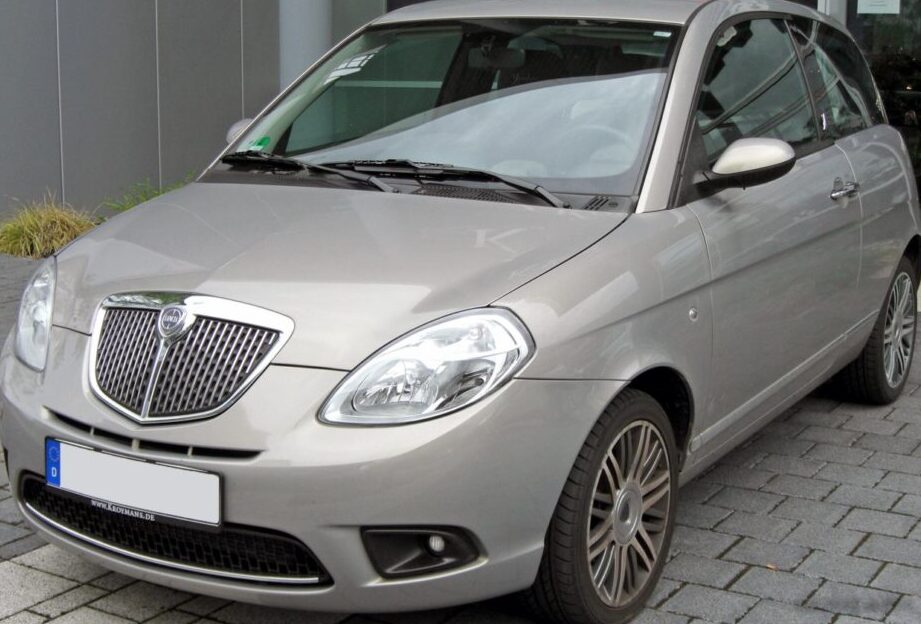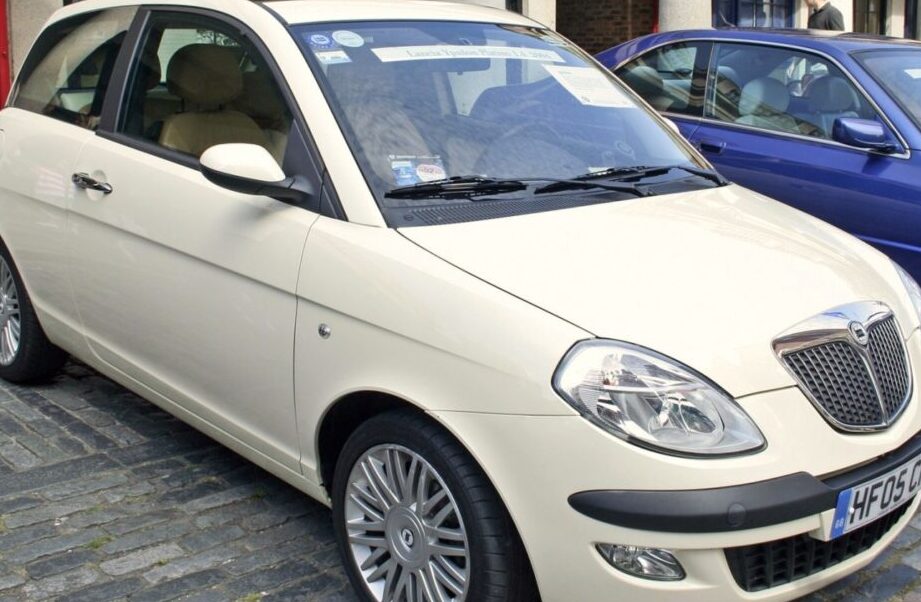
Technical Specifications
| Brand | Lancia |
| Model | Ypsilon |
| Generation | Ypsilon (843) |
| Type (Engine) | 1.2 i 16V (80 Hp) |
| Start of production | 2003 |
| End of production | 2006 |
| Powertrain Architecture | Internal Combustion engine |
| Body type | Hatchback |
| Seats | 5 |
| Doors | 3 |
| Fuel consumption (urban) | 7.7 l/100 km (30.5 US mpg) |
| Fuel consumption (extra urban) | 5 l/100 km (47 US mpg) |
| Fuel consumption (combined) | 6 l/100 km (39.2 US mpg) |
| Fuel Type | Petrol (Gasoline) |
| Acceleration 0 – 100 km/h | 13.2 sec |
| Acceleration 0 – 62 mph | 13.2 sec |
| Acceleration 0 – 60 mph | 12.5 sec |
| Maximum speed | 165 km/h (102.53 mph) |
| Weight-to-power ratio | 12.2 kg/Hp |
| Weight-to-torque ratio | 8.6 kg/Nm |
| Power | 80 Hp @ 5000 rpm |
| Torque | 114 Nm @ 4000 rpm (84.08 lb.-ft. @ 4000 rpm) |
| Engine layout | Front, Transverse |
| Engine Model/Code | 188 A5.000 |
| Engine displacement | 1242 cm3 (75.79 cu. in.) |
| Number of cylinders | 4 |
| Engine configuration | Inline |
| Cylinder Bore | 70.8 mm (2.79 in.) |
| Piston Stroke | 78.86 mm (3.1 in.) |
| Compression ratio | 10.6:1 |
| Number of valves per cylinder | 4 |
| Fuel injection system | Multi-port manifold injection |
| Engine aspiration | Naturally aspirated engine |
| Valvetrain | OHC |
| Engine oil capacity | 2.8 l (2.96 US qt | 2.46 UK qt) |
| Coolant capacity | 4.8 l (5.07 US qt | 4.22 UK qt) |
| Kerb Weight | 975 kg (2149.51 lbs.) |
| Trunk (boot) space – minimum | 215 l (7.59 cu. ft.) |
| Fuel tank capacity | 47 l (12.42 US gal | 10.34 UK gal) |
| Length | 3778 mm (148.74 in.) |
| Width | 1705 mm (67.13 in.) |
| Height | 1530 mm (60.24 in.) |
| Wheelbase | 2388 mm (94.02 in.) |
| Front track | 1450 mm (57.09 in.) |
| Rear track | 1440 mm (56.69 in.) |
| Minimum turning circle | 9.8 m (32.15 ft.) |
| Drivetrain Architecture | Front wheel drive |
| Number of gears | 5 |
| Gearbox type | Manual transmission |
| Front suspension | Spring Strut |
| Rear suspension | Torsion |
| Front brakes | Disc |
| Rear brakes | Drum |
| Assisting systems | ABS (Anti-lock braking system) |
| Steering type | Steering rack and pinion |
| Tires size | 185/65 R14 |
The Lancia Ypsilon (843) 1.2 i 16V, producing 80 horsepower, was a significant variant in the third generation of Lancia’s popular city car, manufactured from 2003 to 2006. Positioned as an entry-level offering within the 843 series – which also included more powerful 1.4 and sportier versions – this model aimed to provide affordable and economical transportation, primarily within the European market. The Ypsilon 843 represented a substantial evolution from its predecessors, adopting a more contemporary and sophisticated design while upholding the brand’s reputation for style and comfort. It was built on the Fiat/Lancia ‘Mini’ platform (commonly known as the 1HX0/A3 platform), shared with the Fiat Punto.
Powertrain & Engine Architecture
The Ypsilon 1.2 i 16V’s engine is the Fiat-developed 188A5.000, a 1.2-liter inline-four cylinder gasoline engine. This engine features a single overhead camshaft (SOHC) valvetrain with four valves per cylinder, enhancing its breathing efficiency for its displacement. Fuel delivery is managed by a multi-point fuel injection system, ensuring precise fuel metering for improved combustion and reduced emissions. The engine’s 16 valves, combined with a compression ratio of 10.6:1, generate 80 horsepower at 5000 rpm and 114 Nm (84 lb-ft) of torque at 4000 rpm. The engine is mounted transversely, powering the front wheels. A five-speed manual gearbox was standard, with a Dualogic automated manual transmission offered as an optional upgrade. The Dualogic system, while intended for convenience, often faced criticism for its comparatively slow and jerky shifts compared to conventional automatics or other automated manual transmissions available at the time.
Driving Characteristics
The 1.2-liter engine, coupled with the five-speed manual transmission, delivered adequate, though not particularly exciting, performance. Acceleration from 0 to 60 mph took approximately 12.5 seconds, and the top speed reached around 102.5 mph. The engine felt reasonably responsive at lower engine speeds, making it well-suited for city driving, but lacked substantial power for overtaking on highways. The gear ratios were optimized for fuel economy rather than outright performance. Compared to the more potent 1.4-liter Ypsilon models, the 1.2 felt noticeably slower, especially when carrying a full passenger load. However, the lighter engine weight contributed to slightly improved handling and a more agile feel in urban settings. The Dualogic transmission, when equipped, further diminished performance due to its slower shift times.
Equipment & Trim Levels
The Ypsilon 1.2 i 16V typically included a reasonable array of standard features for its price range. These included power steering, central locking, electric front windows, and an ABS anti-lock braking system. Interior upholstery was generally cloth, with a relatively straightforward dashboard layout. Optional extras encompassed air conditioning, alloy wheels, a radio/CD player, and upgraded interior trim materials. Higher trim levels, such as the ‘Eleganza’ and ‘Platina’ variants, added features like alloy wheels, metallic paint, and more luxurious interior appointments. Lancia marketed the Ypsilon as a fashionable and stylish city car, offering a wide range of customization options, including various exterior colors and interior fabric choices.
Chassis & Braking
The Ypsilon 843 employed a relatively simple chassis design. The front suspension utilized MacPherson strut springs, while the rear featured a torsion beam setup. This configuration provided a comfortable ride quality, ideal for city streets. Braking was provided by disc brakes on the front wheels and drum brakes on the rear. The ABS system assisted in maintaining steering control during emergency braking. The relatively light weight of the 1.2-liter variant (approximately 975 kg or 2149 lbs) contributed to its manageable handling characteristics. Stabilizer bars were fitted to both the front and rear axles to minimize body roll during cornering.
Market Reception & Comparison
The Lancia Ypsilon 1.2 i 16V was generally well-received by automotive critics as an affordable and stylish city car. Its fuel economy – around 39.2 US mpg combined – was a significant advantage, particularly in Europe where fuel costs were high. However, the engine’s limited power output was often noted, and the Dualogic transmission was widely considered inferior to traditional automatic gearboxes. Compared to competitors like the Fiat Punto, Renault Clio, and Peugeot 206, the Ypsilon offered a more upscale interior and a more distinctive design, but at a slightly higher price point. The 1.4-liter Ypsilon provided a noticeable performance boost, but at the expense of slightly reduced fuel efficiency.
Legacy
The 1.2-liter engine in the Ypsilon 843 is generally regarded as a reliable unit, provided regular maintenance is performed. Common issues can include oil leaks and occasional problems with the fuel injection system. The Ypsilon 843 has cultivated a modest following among enthusiasts who appreciate its unique styling and Italian character. In the used car market, these models are relatively affordable, although locating well-maintained examples can be challenging. The 1.2 i 16V variant remains a popular choice for those seeking a stylish and economical city car, particularly for drivers who prioritize fuel efficiency over high performance.