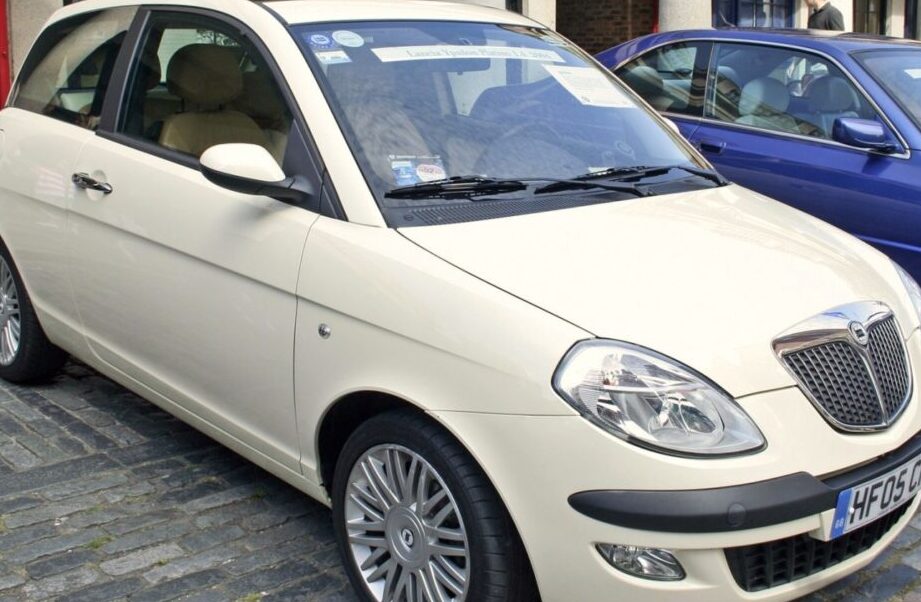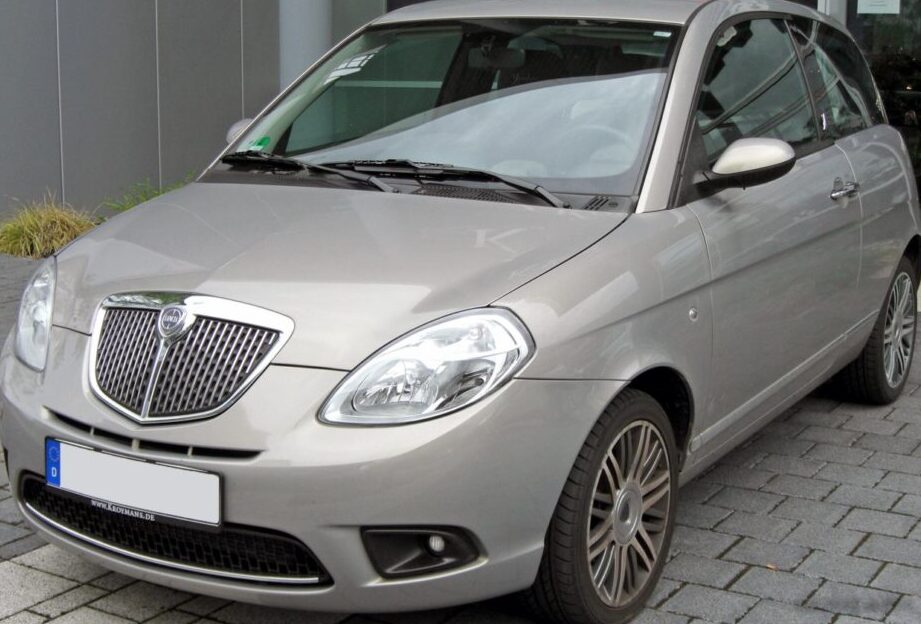
The Lancia Ypsilon (843 series, post-facelift introduced in October 2006) 1.2 8V, producing 60 horsepower, represented the entry point into the Ypsilon range during its production run until August 2010. Positioned as an affordable and stylish city car, this variant was primarily aimed at younger drivers and those seeking economical transportation. The 843 series Ypsilon, a significant redesign of the original Ypsilon, was built on the Fiat/Lancia ‘Mini’ platform, sharing components with the Fiat Panda and Fiat 500. The facelift brought subtle cosmetic updates and refinements to the interior, enhancing the Ypsilon’s appeal in the competitive European small car segment.
Technical Specifications
| Brand | Lancia |
| Model | Ypsilon |
| Generation | Ypsilon (843, facelift 2006) |
| Type (Engine) | 1.2 8V (60 Hp) |
| Start of production | October, 2006 |
| End of production | August, 2010 |
| Powertrain Architecture | Internal Combustion engine |
| Body type | Hatchback |
| Seats | 4 |
| Doors | 3 |
| Fuel consumption (economy) – urban (NEDC) | 7.7 l/100 km (30.5 US mpg, 36.7 UK mpg, 13 km/l) |
| Fuel consumption (economy) – extra urban (NEDC) | 5 l/100 km (47 US mpg, 56.5 UK mpg, 20 km/l) |
| Fuel consumption (economy) – combined (NEDC) | 6 l/100 km (39.2 US mpg, 47.1 UK mpg, 16.7 km/l) |
| CO2 emissions (NEDC) | 142 g/km |
| Fuel Type | Petrol (Gasoline) |
| Acceleration 0 – 100 km/h | 16.8 sec |
| Acceleration 0 – 62 mph | 16.8 sec |
| Acceleration 0 – 60 mph | 16 sec |
| Maximum speed | 153 km/h (95.07 mph) |
| Emission standard | Euro 4 |
| Weight-to-power ratio | 15.8 kg/Hp, 63.5 Hp/tonne |
| Weight-to-torque ratio | 9.3 kg/Nm, 107.9 Nm/tonne |
| Power | 60 Hp @ 5000 rpm |
| Power per litre | 48.3 Hp/l |
| Torque | 102 Nm @ 2500 rpm (75.23 lb.-ft. @ 2500 rpm) |
| Engine layout | Front, Transverse |
| Engine Model/Code | 188A4000 |
| Engine displacement | 1242 cm3 (75.79 cu. in.) |
| Number of cylinders | 4 |
| Engine configuration | Inline |
| Cylinder Bore | 70.8 mm (2.79 in.) |
| Piston Stroke | 78.86 mm (3.1 in.) |
| Compression ratio | 9.8:1 |
| Number of valves per cylinder | 2 |
| Fuel injection system | Multi-port manifold injection |
| Engine aspiration | Naturally aspirated engine |
| Valvetrain | SOHC |
| Engine oil capacity | 2.8 l (2.96 US qt | 2.46 UK qt) |
| Coolant | 4.8 l (5.07 US qt | 4.22 UK qt) |
| Kerb Weight | 945 kg (2083.37 lbs.) |
| Max. weight | 1460 kg (3218.75 lbs.) |
| Max load | 515 kg (1135.38 lbs.) |
| Trunk (boot) space – minimum | 215 l (7.59 cu. ft.) |
| Fuel tank capacity | 47 l (12.42 US gal | 10.34 UK gal) |
| Max. roof load | 75 kg (165.35 lbs.) |
| Permitted trailer load with brakes (12%) | 750 kg (1653.47 lbs.) |
| Permitted trailer load without brakes | 400 kg (881.85 lbs.) |
| Permitted towbar download | 60 kg (132.28 lbs.) |
| Length | 3810 mm (150 in.) |
| Width | 1704 mm (67.09 in.) |
| Height | 1530 mm (60.24 in.) |
| Wheelbase | 2388 mm (94.02 in.) |
| Front track | 1450 mm (57.09 in.) |
| Rear (Back) track | 1440 mm (56.69 in.) |
| Front overhang | 819 mm (32.24 in.) |
| Rear overhang | 603 mm (23.74 in.) |
| Minimum turning circle (turning diameter) | 9.83 m (32.25 ft.) |
| Drivetrain Architecture | The Internal combustion engine (ICE) drives the front wheels of the vehicle. |
| Drive wheel | Front wheel drive |
| Number of gears and type of gearbox | 5 gears, manual transmission |
| Front suspension | Independent, type McPherson with coil spring and anti-roll bar |
| Rear suspension | Transverse stabilizer, Torsion |
| Front brakes | Disc, 257×12 mm |
| Rear brakes | Drum, 203×38 mm |
| Assisting systems | ABS (Anti-lock braking system) |
| Steering type | Steering rack and pinion |
| Power steering | Electric Steering |
| Tires size | 185/65 R14; 195/55 R15; 195/45 R16 |
| Wheel rims size | 6J x 14; 6J x 15; 6.5J x 16 |
INTRODUCTION
The Lancia Ypsilon 1.2 8V (60 Hp) was a key model in the revitalized Ypsilon lineup launched in 2006. This iteration of the Ypsilon, designated the 843 project code, represented a departure from its predecessor, adopting a more modern and sophisticated design. The 1.2 8V engine, coupled with a five-speed manual transmission, served as the base model, offering an accessible entry point to the Ypsilon range. It was designed to appeal to buyers prioritizing fuel efficiency and affordability within the competitive European city car market. The Ypsilon aimed to blend Italian style with practicality, offering a premium feel at a relatively affordable price point.
Powertrain & Engine Architecture
The heart of the Ypsilon 1.2 8V is the 188A4.000 engine, a 1.2-liter inline-four cylinder petrol engine. This engine is a naturally aspirated unit featuring a single overhead camshaft (SOHC) operating two valves per cylinder. The engine utilizes a multi-port fuel injection system, delivering fuel directly into the intake ports. The 60 horsepower output is achieved at 5000 rpm, while peak torque of 102 Nm (75.23 lb-ft) arrives at 2500 rpm. The engine’s relatively simple design contributes to its reliability and ease of maintenance. The five-speed manual transmission provides a straightforward driving experience, with gear ratios optimized for fuel economy and urban driving. While not a performance-oriented setup, the powertrain was designed for smooth and predictable operation.
Driving Characteristics
The Ypsilon 1.2 8V’s driving experience is best described as relaxed and undemanding. Acceleration is modest, taking approximately 16.8 seconds to reach 100 km/h (62 mph). The engine feels somewhat strained at higher speeds, and overtaking maneuvers require careful planning. However, within the urban environment, the Ypsilon 1.2 8V is perfectly adequate, offering sufficient power for navigating city streets and parking. The five-speed gearbox is light and easy to use, although the long shift throws aren’t particularly sporty. Compared to higher-output Ypsilon variants, such as those equipped with the 1.4-liter engine, the 1.2 8V feels noticeably slower. The manual transmission provides more driver engagement than the optional Dualogic automated manual transmission, which was sometimes criticized for its sluggish shifts.
Equipment & Trim Levels
The base Ypsilon 1.2 8V typically came equipped with a reasonable level of standard equipment. This included power steering, central locking, electric front windows, and an ABS anti-lock braking system. Interior upholstery was typically cloth, with a functional and durable design. Optional extras included air conditioning, alloy wheels, a CD player, and upgraded interior trim materials. Higher trim levels, such as the ‘Argenta’ and ‘Platino’ offered more luxurious appointments, including leather upholstery, automatic climate control, and a more comprehensive infotainment system. The dashboard layout was clean and modern, with a focus on ergonomics and ease of use.
Chassis & Braking
The Ypsilon 1.2 8V utilizes a McPherson strut front suspension and a torsion beam rear suspension. This setup provides a comfortable ride quality, absorbing bumps and imperfections in the road surface effectively. The front brakes are disc brakes, while the rear brakes are drum brakes – a cost-saving measure common in this segment. The ABS system provides enhanced braking performance and stability, particularly on slippery surfaces. The steering is light and precise, making it easy to maneuver in tight spaces. The relatively lightweight construction of the Ypsilon contributes to its nimble handling characteristics.
Market Reception & Comparison
The Lancia Ypsilon 1.2 8V was generally well-received by critics as an affordable and stylish city car. However, its performance was often criticized as being underwhelming, particularly when compared to rivals such as the Fiat Panda and Renault Twingo. Fuel economy was a strong point, with the Ypsilon 1.2 8V achieving around 6 liters per 100 kilometers (39.2 US mpg) in combined driving. Reliability was generally good, although some owners reported minor issues with the electrical system. Compared to the more powerful Ypsilon variants, the 1.2 8V offered a lower purchase price and reduced running costs, making it an attractive option for budget-conscious buyers.
Legacy
The Lancia Ypsilon 1.2 8V remains a relatively common sight on European roads today. The 188A4.000 engine is known for its durability and relatively low maintenance costs. Used examples are generally affordable, making them an attractive option for first-time car buyers or those seeking a cheap and cheerful city car. While not a particularly exciting vehicle to drive, the Ypsilon 1.2 8V offers a blend of Italian style, practicality, and affordability that continues to appeal to a wide range of buyers. Its simple mechanicals make it relatively easy to maintain and repair, ensuring its continued presence on the roads for years to come.