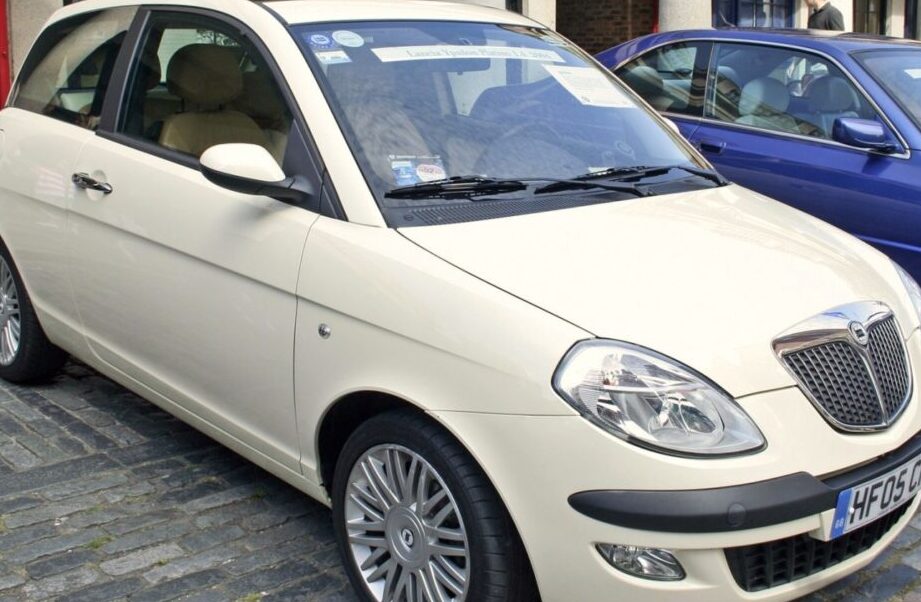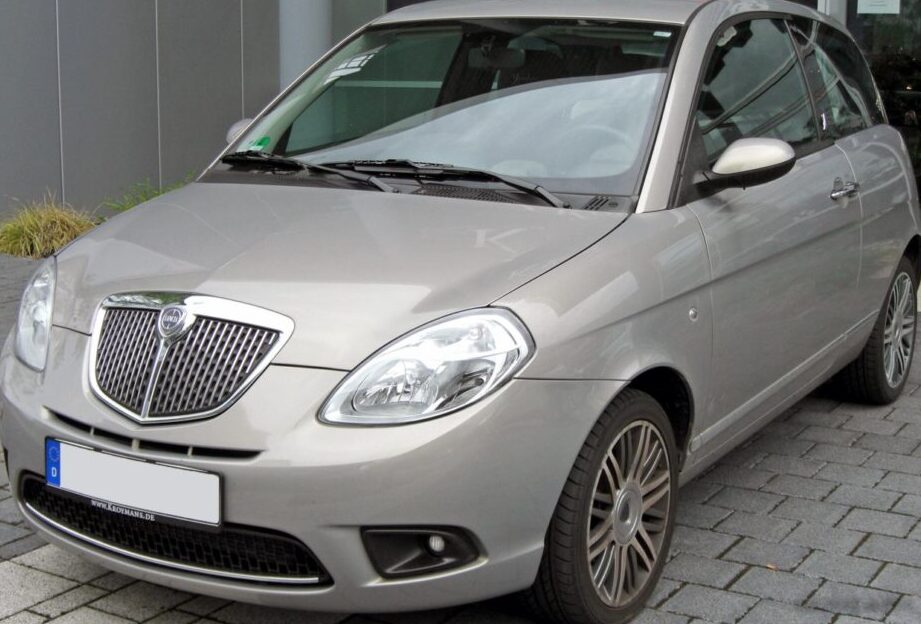
The Lancia Ypsilon (843 series, post-facelift) 1.3 Multijet 16V 75 hp with the DFN automatic transmission was a key variant in the Ypsilon lineup produced from October 2006 to February 2010. Positioned as an entry-level to mid-range offering, it aimed to provide economical and practical transportation within the competitive European city car segment. This version of the Ypsilon, a three-door hatchback, represented Lancia’s attempt to modernize its image while retaining a focus on style and comfort, characteristics traditionally associated with the brand. The 843 series Ypsilon was based on the Fiat Punto’s platform (1HX0/A3), sharing many mechanical components but differentiated by its unique styling and more upscale interior appointments.
Technical Specifications
| Brand | Lancia |
| Model | Ypsilon |
| Generation | Ypsilon (843, facelift 2006) |
| Type (Engine) | 1.3 Multijet 16V (75 Hp) DFN |
| Start of production | October, 2006 |
| End of production | February, 2010 |
| Powertrain Architecture | Internal Combustion engine |
| Body type | Hatchback |
| Seats | 4 |
| Doors | 3 |
| Fuel consumption (urban) | 5.2 l/100 km (45.2 US mpg, 54.3 UK mpg, 19.2 km/l) |
| Fuel consumption (extra urban) | 3.8 l/100 km (61.9 US mpg, 74.3 UK mpg, 26.3 km/l) |
| Fuel consumption (combined) | 4.3 l/100 km (54.7 US mpg, 65.7 UK mpg, 23.3 km/l) |
| CO2 emissions | 114 g/km |
| Fuel Type | Diesel |
| Acceleration 0 – 100 km/h | 14 sec |
| Acceleration 0 – 62 mph | 14 sec |
| Acceleration 0 – 60 mph | 13.3 sec |
| Maximum speed | 167 km/h (103.77 mph) |
| Emission standard | Euro 4 |
| Weight-to-power ratio | 13.9 kg/Hp, 71.8 Hp/tonne |
| Weight-to-torque ratio | 5.5 kg/Nm, 181.8 Nm/tonne |
| Power | 75 Hp @ 4000 rpm |
| Power per litre | 60.1 Hp/l |
| Torque | 190 Nm @ 1750 rpm (140.14 lb.-ft. @ 1750 rpm) |
| Engine layout | Front, Transverse |
| Engine Model/Code | 199A2000 |
| Engine displacement | 1248 cm3 (76.16 cu. in.) |
| Number of cylinders | 4 |
| Engine configuration | Inline |
| Cylinder Bore | 69.6 mm (2.74 in.) |
| Piston Stroke | 82 mm (3.23 in.) |
| Compression ratio | 17.6:1 |
| Number of valves per cylinder | 4 |
| Fuel injection system | Diesel Commonrail |
| Engine aspiration | Turbocharger, Intercooler |
| Valvetrain | DOHC |
| Engine oil capacity | 3.2 l (3.38 US qt | 2.82 UK qt) |
| Coolant capacity | 6 l (6.34 US qt | 5.28 UK qt) |
| Kerb Weight | 1045 kg (2303.83 lbs.) |
| Max. weight | 1520 kg (3351.03 lbs.) |
| Max load | 475 kg (1047.2 lbs.) |
| Trunk (boot) space (minimum) | 215 l (7.59 cu. ft.) |
| Fuel tank capacity | 47 l (12.42 US gal | 10.34 UK gal) |
| Max. roof load | 75 kg (165.35 lbs.) |
| Permitted trailer load (with brakes) | 900 kg (1984.16 lbs.) |
| Permitted trailer load (without brakes) | 400 kg (881.85 lbs.) |
| Permitted towbar download | 60 kg (132.28 lbs.) |
| Length | 3810 mm (150 in.) |
| Width | 1704 mm (67.09 in.) |
| Height | 1530 mm (60.24 in.) |
| Wheelbase | 2388 mm (94.02 in.) |
| Front track | 1450 mm (57.09 in.) |
| Rear track | 1440 mm (56.69 in.) |
| Front overhang | 819 mm (32.24 in.) |
| Rear overhang | 603 mm (23.74 in.) |
| Minimum turning circle | 9.83 m (32.25 ft.) |
| Drivetrain | Front wheel drive |
| Number of gears & gearbox type | 5 gears, automatic transmission DFN |
| Front suspension | Independent, McPherson with coil spring and anti-roll bar |
| Rear suspension | Transverse stabilizer, Torsion |
| Front brakes | Ventilated discs, 257×22 mm |
| Rear brakes | Drum, 203×38 mm |
| Assisting systems | ABS (Anti-lock braking system) |
| Steering type | Steering rack and pinion |
| Power steering | Electric |
| Tires size | 185/65 R14; 195/55 R15; 195/45 R16 |
| Wheel rims size | 6J x 14; 6J x 15; 6.5J x 16 |
INTRODUCTION
The Lancia Ypsilon 1.3 Multijet 16V 75 hp DFN, produced between 2006 and 2010, was a significant variant within the facelifted 843 series. This iteration of the Ypsilon aimed to blend Italian styling with the practicality of a small, fuel-efficient diesel engine and the convenience of an automatic transmission. It occupied a middle ground in the Ypsilon range, offering a more affordable alternative to the higher-powered petrol versions while providing a more refined experience than the base-level models. The DFN automatic transmission was a key selling point for buyers prioritizing ease of use, particularly in congested urban environments.
Powertrain & Engine Architecture
At the heart of this Ypsilon variant lies the 1.3 Multijet 16V diesel engine, identified by the code 199A2000. This engine is a four-cylinder, inline configuration, displacing 1248 cc. It features a turbocharger with an intercooler to boost power and efficiency. The engine utilizes a second-generation common rail direct injection system, delivering fuel directly into the combustion chamber at extremely high pressure for optimized combustion. The 16-valve DOHC (Double Overhead Camshaft) valvetrain further enhances breathing and contributes to the engine’s relatively high specific output. The DFN automatic transmission is a conventional torque converter type with five forward gears. It was chosen for its smooth operation and reliability, although it isn’t known for particularly sporty performance. The transmission’s gear ratios are geared towards fuel economy and comfortable cruising rather than rapid acceleration.
Driving Characteristics
The 75 hp output and 190 Nm of torque, combined with the DFN automatic transmission, resulted in a driving experience focused on usability rather than outright performance. Acceleration from 0-60 mph took around 13.3 seconds, and top speed was limited to 167 km/h (103.77 mph). The automatic transmission, while convenient, did detract from the engine’s responsiveness. Gear changes were generally smooth, but could feel somewhat sluggish during quick overtaking maneuvers. The engine’s peak torque was available from 1750 rpm, providing adequate pulling power for everyday driving, but the automatic transmission’s programming often meant the engine wasn’t always in the optimal gear for maximizing acceleration. Compared to the manual versions of the 1.3 Multijet, the automatic felt noticeably slower. Higher-powered Ypsilon variants, such as those equipped with the 1.4 petrol engine, offered significantly more spirited performance.
Equipment & Trim Levels
The 1.3 Multijet 16V 75 hp DFN Ypsilon typically came equipped with a reasonable level of standard equipment. This included power steering, central locking, electric front windows, and an audio system. Air conditioning was often included, but sometimes offered as an optional extra. Interior upholstery was typically cloth, with a choice of colors and patterns. Higher trim levels offered upgrades such as alloy wheels, a more sophisticated audio system, and additional safety features like side airbags. Optional extras included a sunroof, parking sensors, and metallic paint finishes. The dashboard layout was generally functional and well-designed, reflecting Lancia’s focus on creating a comfortable and stylish interior.
Chassis & Braking
The Ypsilon 843 series utilized a McPherson strut front suspension with a torsion beam rear suspension. This setup provided a good balance between ride comfort and handling. The front suspension incorporated an anti-roll bar to reduce body roll during cornering. Braking was handled by ventilated discs on the front wheels and drum brakes on the rear. ABS (Anti-lock Braking System) was standard, enhancing safety during emergency braking situations. The chassis was tuned for comfortable urban driving, prioritizing ride quality over sporty handling. The relatively lightweight construction of the Ypsilon helped to offset the modest engine output.
Market Reception & Comparison
The Lancia Ypsilon 1.3 Multijet 16V 75 hp DFN was generally well-received by critics as a practical and economical city car. Its fuel economy figures of around 4.3 l/100 km (54.7 US mpg) were particularly praised. However, the automatic transmission was sometimes criticized for its lack of responsiveness. Compared to other trims in the Ypsilon lineup, this variant offered a good compromise between price, fuel efficiency, and comfort. The manual versions of the 1.3 Multijet were more popular with drivers seeking a more engaging driving experience, while the higher-powered petrol versions appealed to those prioritizing performance. Competitors in the city car segment included the Fiat Panda, Renault Twingo, and Peugeot 107.
Legacy
The 1.3 Multijet engine, in various iterations, proved to be a reliable and durable powerplant. The DFN automatic transmission, while not without its shortcomings, also demonstrated reasonable longevity. Today, used examples of the Ypsilon 1.3 Multijet 75 hp DFN are relatively affordable and can represent a good value for buyers seeking a fuel-efficient and practical city car. Maintenance costs are generally reasonable, although sourcing parts for older Lancia models can sometimes be challenging. The Ypsilon’s stylish design and comfortable interior continue to appeal to a niche market of buyers who appreciate Italian automotive flair.