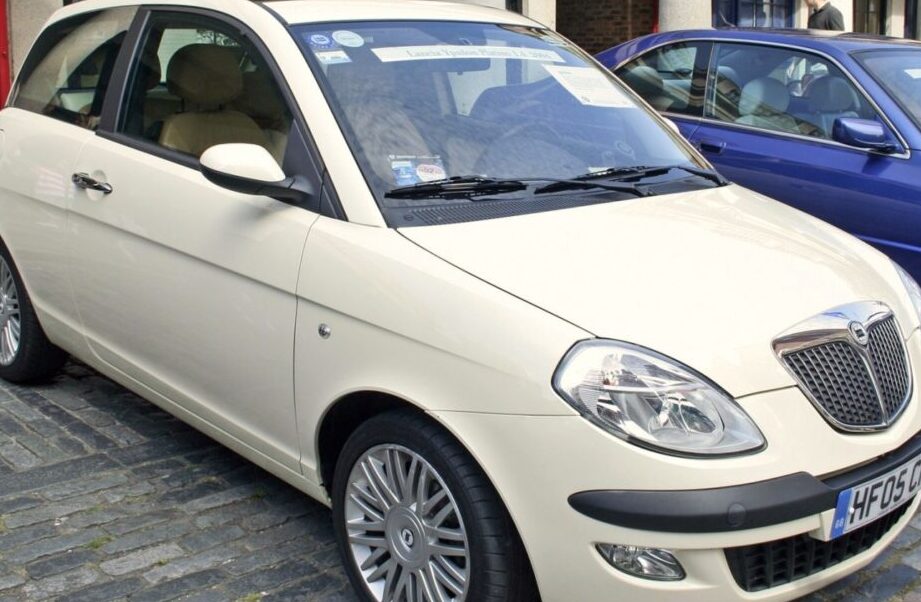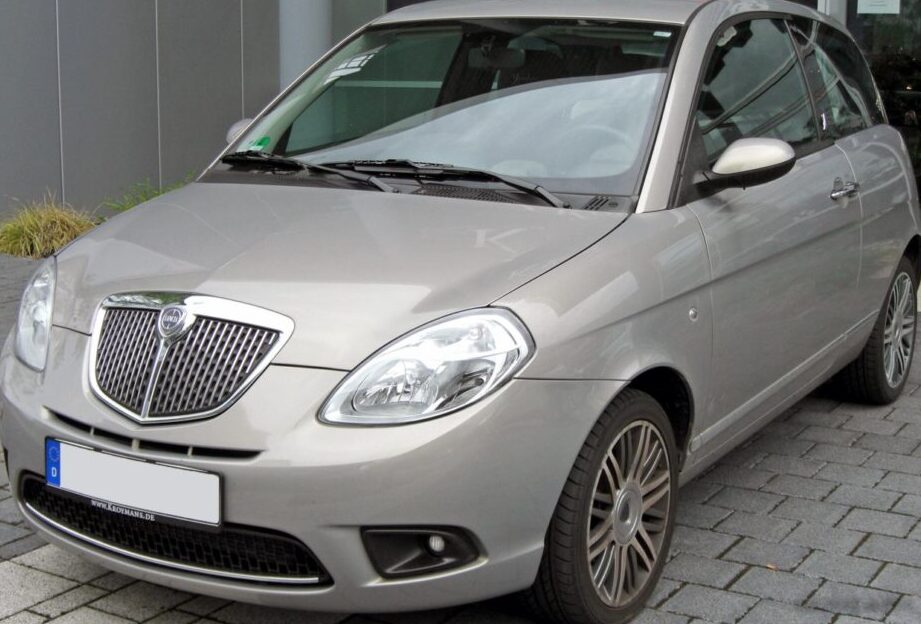
The Lancia Ypsilon 843, specifically the facelifted version introduced in October 2006 and continuing through February 2010, represented a significant iteration of Lancia’s popular city car. This variant, powered by the 1.3 Multijet 16V engine producing 90 horsepower, occupied a key position in the Ypsilon lineup, offering a balance between fuel efficiency, practicality, and affordability. It was designed primarily for the European market, where compact, economical vehicles were – and continue to be – highly sought after. The 843 series Ypsilon was built upon the Fiat/Lancia ‘mini’ platform, also known as the 1HX0/A3 platform, shared with models like the Fiat Punto.
Technical Specifications
| Brand | Lancia |
| Model | Ypsilon |
| Generation | Ypsilon (843, facelift 2006) |
| Type (Engine) | 1.3 Multijet 16V (90 Hp) |
| Start of production | October, 2006 |
| End of production | February, 2010 |
| Powertrain Architecture | Internal Combustion engine |
| Body type | Hatchback |
| Seats | 4 |
| Doors | 3 |
| Fuel consumption (urban) | 5.4 l/100 km (43.6 US mpg, 52.3 UK mpg, 18.5 km/l) |
| Fuel consumption (extra urban) | 3.9 l/100 km (60.3 US mpg, 72.4 UK mpg, 25.6 km/l) |
| Fuel consumption (combined) | 4.5 l/100 km (52.3 US mpg, 62.8 UK mpg, 22.2 km/l) |
| CO2 emissions | 117 g/km |
| Fuel Type | Diesel |
| Acceleration 0 – 100 km/h | 11 sec |
| Acceleration 0 – 62 mph | 11 sec |
| Acceleration 0 – 60 mph | 10.5 sec |
| Maximum speed | 175 km/h (108.74 mph) |
| Emission standard | Euro 4 |
| Weight-to-power ratio | 11.6 kg/Hp, 86.1 Hp/tonne |
| Weight-to-torque ratio | 5.2 kg/Nm, 191.4 Nm/tonne |
| Power | 90 Hp @ 4000 rpm |
| Power per litre | 72.1 Hp/l |
| Torque | 200 Nm @ 1750 rpm (147.51 lb.-ft. @ 1750 rpm) |
| Engine layout | Front, Transverse |
| Engine Model/Code | 199A3000 |
| Engine displacement | 1248 cm3 (76.16 cu. in.) |
| Number of cylinders | 4 |
| Engine configuration | Inline |
| Cylinder Bore | 69.6 mm (2.74 in.) |
| Piston Stroke | 82 mm (3.23 in.) |
| Compression ratio | 17.6:1 |
| Number of valves per cylinder | 4 |
| Fuel injection system | Diesel Commonrail |
| Engine aspiration | Turbocharger, Intercooler |
| Valvetrain | DOHC |
| Engine oil capacity | 3.2 l (3.38 US qt | 2.82 UK qt) |
| Coolant capacity | 6 l (6.34 US qt | 5.28 UK qt) |
| Kerb Weight | 1045 kg (2303.83 lbs.) |
| Max. weight | 1520 kg (3351.03 lbs.) |
| Max load | 475 kg (1047.2 lbs.) |
| Trunk (boot) space – minimum | 215 l (7.59 cu. ft.) |
| Fuel tank capacity | 47 l (12.42 US gal | 10.34 UK gal) |
| Max. roof load | 75 kg (165.35 lbs.) |
| Permitted trailer load with brakes (12%) | 900 kg (1984.16 lbs.) |
| Permitted trailer load without brakes | 400 kg (881.85 lbs.) |
| Permitted towbar download | 60 kg (132.28 lbs.) |
| Length | 3810 mm (150 in.) |
| Width | 1704 mm (67.09 in.) |
| Height | 1530 mm (60.24 in.) |
| Wheelbase | 2388 mm (94.02 in.) |
| Front track | 1450 mm (57.09 in.) |
| Rear track | 1440 mm (56.69 in.) |
| Front overhang | 819 mm (32.24 in.) |
| Rear overhang | 603 mm (23.74 in.) |
| Minimum turning circle | 9.83 m (32.25 ft.) |
| Drivetrain | Front wheel drive |
| Number of gears | 5 |
| Gearbox type | Manual transmission |
| Front suspension | Independent, McPherson with coil spring and anti-roll bar |
| Rear suspension | Transverse stabilizer, Torsion |
| Front brakes | Ventilated discs, 257×22 mm |
| Rear brakes | Drum, 203×38 mm |
| Assisting systems | ABS (Anti-lock braking system) |
| Steering type | Steering rack and pinion |
| Power steering | Electric |
| Tires size | 185/65 R14; 195/55 R15; 195/45 R16 |
| Wheel rims size | 6J x 14; 6J x 15; 6.5J x 16 |
INTRODUCTION
The Lancia Ypsilon 1.3 Multijet 16V (90 Hp) facelift, produced from 2006 to 2010, was a popular choice for buyers seeking an economical and stylish city car. Positioned as a mid-range offering within the Ypsilon lineup, it slotted between the lower-powered 1.1-liter petrol engine and the more potent (and expensive) 1.9-liter diesel variants. The facelift brought subtle cosmetic updates, including revised front and rear bumpers, new headlight designs, and interior trim enhancements. This iteration of the Ypsilon aimed to maintain Lancia’s reputation for elegant design and comfortable interiors while offering competitive fuel economy and practicality.
Powertrain & Engine Architecture
At the heart of this Ypsilon variant lies the 199A3000 1.3 Multijet 16V diesel engine. This engine is a four-cylinder, inline configuration, displacing 1248cc. It utilizes a common rail direct injection system, delivering fuel at extremely high pressure for optimized combustion. The 16-valve DOHC (Double Overhead Camshaft) valvetrain, coupled with a turbocharger and intercooler, contributes to the engine’s relatively high output for its size. The engine boasts a high compression ratio of 17.6:1, typical for diesel engines, maximizing efficiency. The 90 horsepower and 200 Nm (147.51 lb-ft) of torque are delivered at 4000 rpm and 1750 rpm respectively. The engine is transversely mounted in the front of the vehicle. The Ypsilon 1.3 Multijet was typically paired with a five-speed manual transmission, although an automated manual transmission (Dualogic) was also available as an option, though less common.
Driving Characteristics
The 1.3 Multijet 90 hp engine, when coupled with the five-speed manual transmission, provided adequate performance for urban and suburban driving. Acceleration from 0-60 mph took around 10.5 seconds, and top speed was approximately 108.74 mph. While not a particularly sporty vehicle, the engine’s torque characteristics made it feel responsive at lower speeds, making it easy to navigate city traffic. Compared to the lower-powered 1.1-liter petrol version, the Multijet offered significantly more pulling power, especially when fully loaded. However, it lacked the outright acceleration of the 1.9-liter diesel models. The gear ratios were tuned for fuel efficiency, meaning the engine could feel slightly strained at higher speeds or when climbing hills. The manual transmission was generally smooth and precise, contributing to a pleasant driving experience.
Equipment & Trim Levels
The Ypsilon 1.3 Multijet 90 hp typically came equipped with a reasonable level of standard features. These included power steering, central locking, electric front windows, and an ABS anti-lock braking system. Interior upholstery was typically cloth, with a choice of colors and patterns. Optional extras included air conditioning, alloy wheels, a CD stereo system, and parking sensors. Higher trim levels, such as the “Platino” or “Eleganza” variants, added features like climate control, leather upholstery, and upgraded audio systems. The dashboard layout was generally functional and well-designed, with a focus on ergonomics.
Chassis & Braking
The Ypsilon 843 utilized an independent McPherson strut suspension setup at the front, providing a comfortable ride and decent handling. The rear suspension employed a torsion beam arrangement, which was a cost-effective solution for a vehicle in this segment. Front brakes were ventilated discs, offering good stopping power, while the rear brakes were drum brakes, a common feature on smaller, more affordable cars. The electric power steering provided light and easy steering, making it ideal for maneuvering in tight spaces. Stabilizer bars were fitted to both the front and rear axles to reduce body roll during cornering.
Market Reception & Comparison
The Lancia Ypsilon 1.3 Multijet 90 hp was generally well-received by automotive critics. It was praised for its fuel efficiency, comfortable ride, and stylish design. However, some critics noted that the engine could be somewhat noisy and that the interior plastics were not of the highest quality. Compared to other vehicles in its class, such as the Fiat Punto, Renault Clio, and Peugeot 207, the Ypsilon offered a more premium feel and a more distinctive design. The 1.3 Multijet offered significantly better fuel economy than the petrol-powered Ypsilon variants, making it a popular choice for drivers who covered high mileage. Reliability was generally good, although some owners reported issues with the diesel particulate filter (DPF) on earlier models.
Legacy
The Lancia Ypsilon 1.3 Multijet 16V (90 Hp) remains a relatively common sight on European roads today. The 199A3000 engine is known for its durability and relatively low maintenance costs, provided it is properly serviced. The Ypsilon’s stylish design and comfortable interior have helped it maintain its appeal in the used car market. However, potential buyers should be aware of the potential for DPF issues on earlier models and ensure that the vehicle has been regularly maintained. The Ypsilon 1.3 Multijet represents a well-rounded and practical city car that continues to offer good value for money.