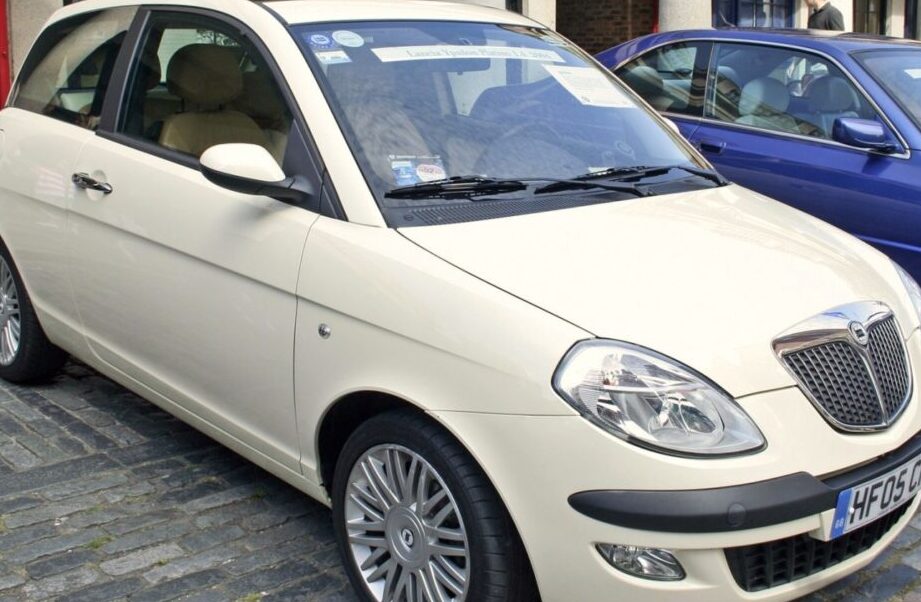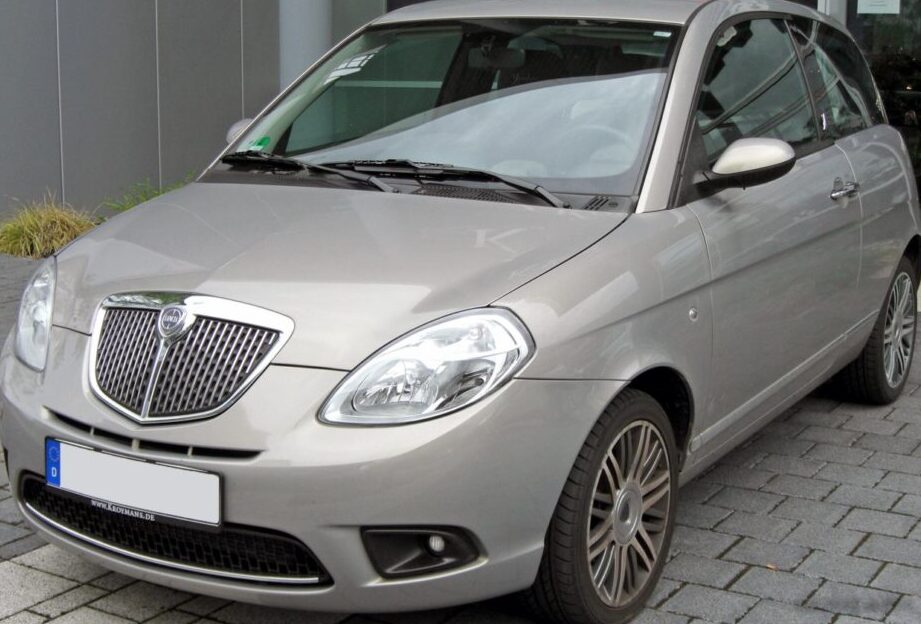
The Lancia Ypsilon (843 series, post-facelift) 1.4 16V DFN, produced from October 2006 to August 2010, represented a key variant within the second generation of Lancia’s popular city car. Positioned as a mid-range offering, it aimed to balance affordability with a degree of refinement and convenience, primarily targeting buyers in the European market. This version combined a 1.4-liter, 16-valve gasoline engine producing 95 horsepower with a Dualtronic Fully Automatic (DFN) transmission, a unique automated manual gearbox. The Ypsilon 843, and this variant specifically, was intended to appeal to drivers seeking a stylish and relatively economical urban vehicle.
Technical Specifications
| Brand | Lancia |
| Model | Ypsilon |
| Generation | Ypsilon (843, facelift 2006) |
| Type (Engine) | 1.4 16V (95 Hp) DFN |
| Start of production | October, 2006 |
| End of production | August, 2010 |
| Powertrain Architecture | Internal Combustion engine |
| Body type | Hatchback |
| Seats | 4 |
| Doors | 3 |
| Fuel consumption (urban) | 8.2 l/100 km (28.7 US mpg, 34.4 UK mpg, 12.2 km/l) |
| Fuel consumption (extra urban) | 5.4 l/100 km (43.6 US mpg, 52.3 UK mpg, 18.5 km/l) |
| Fuel consumption (combined) | 6.4 l/100 km (36.8 US mpg, 44.1 UK mpg, 15.6 km/l) |
| CO2 emissions | 152 g/km |
| Fuel Type | Petrol (Gasoline) |
| Acceleration 0 – 100 km/h | 10.4 sec |
| Acceleration 0 – 62 mph | 10.4 sec |
| Acceleration 0 – 60 mph | 9.9 sec |
| Maximum speed | 175 km/h (108.74 mph) |
| Emission standard | Euro 4 |
| Weight-to-power ratio | 10.3 kg/Hp, 96.9 Hp/tonne |
| Weight-to-torque ratio | 7.7 kg/Nm, 130.6 Nm/tonne |
| Power | 95 Hp @ 5800 rpm |
| Power per litre | 69.4 Hp/l |
| Torque | 128 Nm @ 4500 rpm (94.41 lb.-ft. @ 4500 rpm) |
| Engine layout | Front, Transverse |
| Engine Model/Code | 843A1000 |
| Engine displacement | 1368 cm3 (83.48 cu. in.) |
| Number of cylinders | 4 |
| Engine configuration | Inline |
| Cylinder Bore | 72 mm (2.83 in.) |
| Piston Stroke | 84 mm (3.31 in.) |
| Compression ratio | 11:1 |
| Number of valves per cylinder | 4 |
| Fuel injection system | Multi-port manifold injection |
| Engine aspiration | Naturally aspirated engine |
| Valvetrain | DOHC |
| Engine oil capacity | 3.2 l (3.38 US qt | 2.82 UK qt) |
| Coolant capacity | 4.5 l (4.76 US qt | 3.96 UK qt) |
| Kerb Weight | 980 kg (2160.53 lbs.) |
| Max. weight | 1495 kg (3295.91 lbs.) |
| Max load | 515 kg (1135.38 lbs.) |
| Trunk (boot) space (minimum) | 215 l (7.59 cu. ft.) |
| Fuel tank capacity | 47 l (12.42 US gal | 10.34 UK gal) |
| Max. roof load | 75 kg (165.35 lbs.) |
| Length | 3810 mm (150 in.) |
| Width | 1704 mm (67.09 in.) |
| Height | 1530 mm (60.24 in.) |
| Wheelbase | 2388 mm (94.02 in.) |
| Front track | 1450 mm (57.09 in.) |
| Rear track | 1440 mm (56.69 in.) |
| Front overhang | 819 mm (32.24 in.) |
| Rear overhang | 603 mm (23.74 in.) |
| Minimum turning circle | 9.83 m (32.25 ft.) |
| Drivetrain Architecture | Front wheel drive |
| Number of gears and type of gearbox | 5 gears, automatic transmission DFN |
| Front suspension | Independent, type McPherson with coil spring and anti-roll bar |
| Rear suspension | Transverse stabilizer, Torsion |
| Front brakes | Ventilated discs, 257×22 mm |
| Rear brakes | Drum, 203×38 mm |
| Assisting systems | ABS (Anti-lock braking system) |
| Steering type | Steering rack and pinion |
| Power steering | Electric Steering |
| Tires size | 185/65 R14; 195/55 R15; 195/45 R16 |
| Wheel rims size | 6J x 14; 6J x 15; 6.5J x 16 |
INTRODUCTION
The Lancia Ypsilon 843 facelift, launched in 2006, built upon the success of the original Ypsilon introduced in 2003. This iteration featured revised styling, improved safety features, and updated engine options. The 1.4 16V DFN variant occupied a middle ground in the Ypsilon lineup, offering a compromise between the more affordable 1.1-liter engine and the more powerful (and expensive) 1.8-liter options. It was designed to appeal to buyers who wanted a comfortable and stylish city car with the convenience of an automatic transmission. The Ypsilon, throughout its generations, has been a significant model for Lancia, particularly in the European market, representing a blend of Italian design and practicality.
Powertrain & Engine Architecture
The heart of the Ypsilon 1.4 16V DFN is the 843A1000 engine, a 1368cc inline-four cylinder gasoline engine. This engine utilizes a multi-port fuel injection system and a double overhead camshaft (DOHC) valvetrain, contributing to its relatively efficient operation and respectable power output for its size. The 16 valves (four per cylinder) enhance breathing and contribute to the engine’s responsiveness. The DFN transmission is a five-speed automated manual gearbox. Unlike a traditional automatic with a torque converter, the DFN uses electronic controls to shift gears, offering a degree of fuel efficiency and directness. However, it’s not as smooth as a conventional automatic and can exhibit some jerkiness, particularly at lower speeds. The engine’s design prioritizes fuel economy and drivability over outright performance.
Driving Characteristics
The Ypsilon 1.4 16V DFN delivers a comfortable, if not particularly exhilarating, driving experience. With 95 horsepower and 128 Nm of torque, acceleration is adequate for urban driving and short highway trips. The 0-60 mph time of around 9.9 seconds and a top speed of 175 km/h (108.74 mph) reflect this. The DFN transmission, while offering convenience, can feel somewhat hesitant during gear changes, especially when compared to a traditional automatic or a manual gearbox. The gear ratios are tuned for fuel efficiency, meaning the engine can feel strained when accelerating quickly. Compared to the more powerful 1.8-liter Ypsilon, the 1.4 DFN lacks the punch needed for spirited driving. However, it offers better fuel economy and is generally more forgiving in stop-and-go traffic.
Equipment & Trim Levels
The Ypsilon 1.4 16V DFN typically came equipped with a reasonable level of standard features. These included power steering, central locking, electric front windows, and an audio system. Air conditioning was often standard, but could be optional depending on the specific market. Interior upholstery was typically cloth, with options for upgraded materials. Higher trim levels offered features such as alloy wheels, a sunroof, and more sophisticated audio systems. The dashboard layout was characterized by its rounded design and user-friendly controls. Safety features included ABS brakes and driver and passenger airbags.
Chassis & Braking
The Ypsilon 843 series utilized a McPherson strut front suspension and a torsion beam rear suspension. This setup provided a comfortable ride quality, well-suited for navigating city streets. The front brakes were ventilated discs, offering good stopping power, while the rear brakes were drums, a cost-saving measure common in this class of vehicle. The steering was rack and pinion with electric power assistance, providing light and easy steering feel. Stabilizer bars were fitted to both the front and rear axles to reduce body roll during cornering.
Market Reception & Comparison
The Lancia Ypsilon 1.4 16V DFN was generally well-received by critics as a stylish and practical city car. However, the DFN transmission received mixed reviews, with some testers finding it jerky and unresponsive. Compared to the manual transmission versions of the 1.4, the DFN offered less driver engagement but greater convenience. Against the 1.8-liter Ypsilon, the 1.4 DFN was more affordable and fuel-efficient, but lacked the same level of performance. Fuel economy figures of around 6.4 l/100 km (36.8 US mpg) were competitive for its class. Reliability was generally good, although the DFN transmission could be prone to occasional issues.
Legacy
The Lancia Ypsilon 1.4 16V DFN remains a relatively common sight on European roads today. The 843 series Ypsilon established a strong reputation for style and practicality. While the DFN transmission isn’t known for its longevity, the 1.4 engine itself is generally considered reliable. In the used car market, these Ypsilons are often sought after by buyers looking for an affordable and fashionable city car. Maintenance costs are generally reasonable, and parts availability is still good. The Ypsilon 843, and this 1.4 DFN variant, represents a significant chapter in Lancia’s history, showcasing the brand’s commitment to design and innovation.