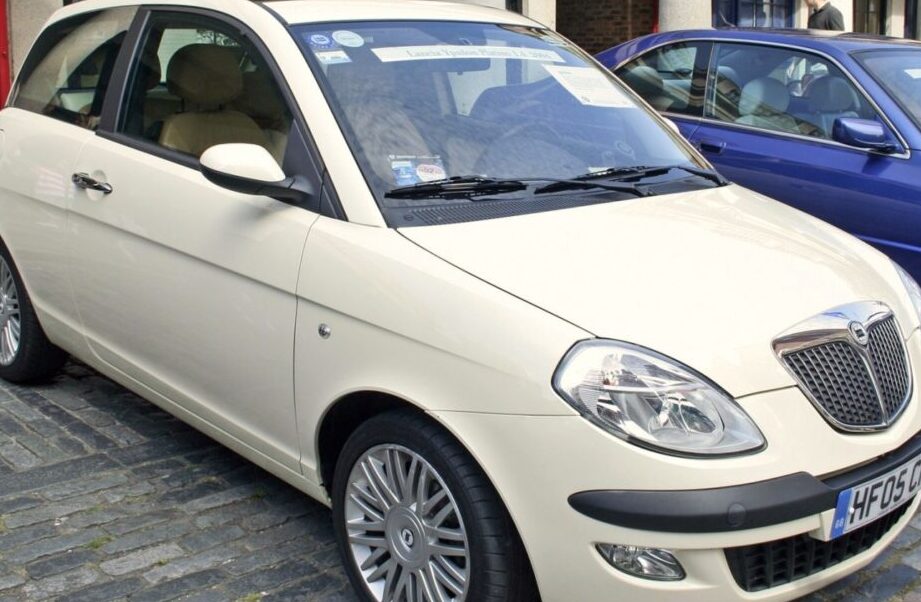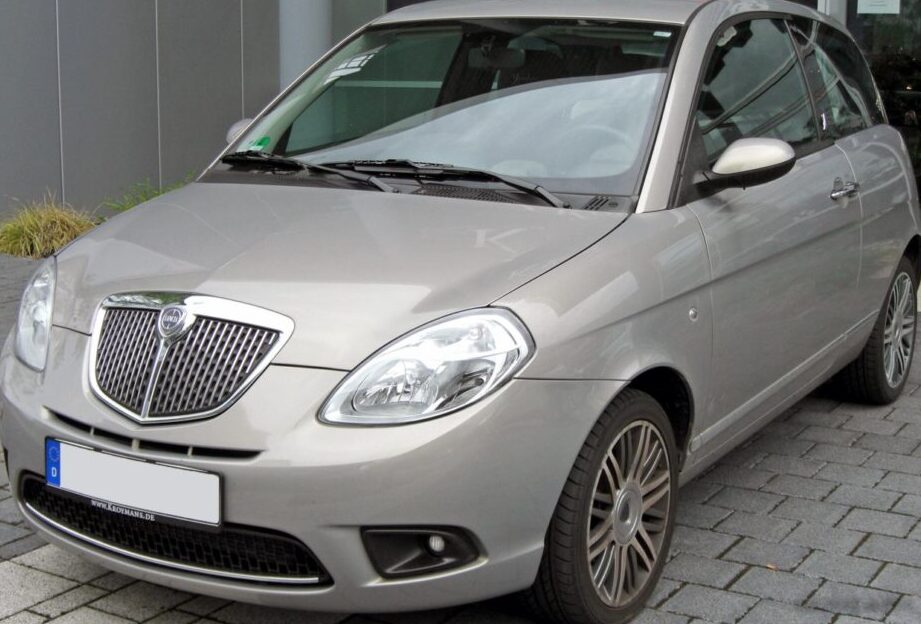
The Lancia Ypsilon 1.4 8V (77 hp) represents a significant iteration of the third-generation Ypsilon (843 series), particularly the facelifted model introduced in October 2006 and continuing through August 2010. Positioned as an entry-level offering within the Ypsilon range, this variant aimed to provide affordable and economical transportation within the European city car segment. It built upon the foundation of the 843 platform, originally launched in 2003, offering a blend of Italian styling and practicality. This specific engine and transmission combination was a mainstay of the Ypsilon lineup, appealing to buyers prioritizing fuel efficiency and ease of use over outright performance.
Technical Specifications
| Brand | Lancia |
| Model | Ypsilon |
| Generation | Ypsilon (843, facelift 2006) |
| Type (Engine) | 1.4 8V (77 Hp) |
| Start of production | October, 2006 |
| End of production | August, 2010 |
| Powertrain Architecture | Internal Combustion engine |
| Body type | Hatchback |
| Seats | 4 |
| Doors | 3 |
| Fuel consumption (economy) – urban (NEDC) | 7.2 l/100 km (32.7 US mpg, 39.2 UK mpg, 13.9 km/l) |
| Fuel consumption (economy) – extra urban (NEDC) | 4.6 l/100 km (51.1 US mpg, 61.4 UK mpg, 21.7 km/l) |
| Fuel consumption (economy) – combined (NEDC) | 5.5 l/100 km (42.8 US mpg, 51.4 UK mpg, 18.2 km/l) |
| CO2 emissions (NEDC) | 130 g/km |
| Fuel Type | Petrol (Gasoline) |
| Acceleration 0 – 100 km/h | 13.5 sec |
| Acceleration 0 – 62 mph | 13.5 sec |
| Acceleration 0 – 60 mph | 12.8 sec |
| Maximum speed | 167 km/h (103.77 mph) |
| Emission standard | Euro 4 |
| Weight-to-power ratio | 12.7 kg/Hp, 78.6 Hp/tonne |
| Weight-to-torque ratio | 8.7 kg/Nm, 115.3 Nm/tonne |
| Power | 77 Hp @ 6000 rpm |
| Power per litre | 56.3 Hp/l |
| Torque | 113 Nm @ 3750 rpm (83.34 lb.-ft. @ 3750 rpm) |
| Engine layout | Front, Transverse |
| Engine Model/Code | 350A1000 |
| Engine displacement | 1368 cm3 (83.48 cu. in.) |
| Number of cylinders | 4 |
| Engine configuration | Inline |
| Cylinder Bore | 72 mm (2.83 in.) |
| Piston Stroke | 84 mm (3.31 in.) |
| Compression ratio | 11:1 |
| Number of valves per cylinder | 2 |
| Fuel injection system | Multi-port manifold injection |
| Engine aspiration | Naturally aspirated engine |
| Valvetrain | SOHC |
| Engine oil capacity | 3.2 l (3.38 US qt, 2.82 UK qt) |
| Coolant | 4.5 l (4.76 US qt, 3.96 UK qt) |
| Kerb Weight | 980 kg (2160.53 lbs.) |
| Max. weight | 1495 kg (3295.91 lbs.) |
| Max load | 515 kg (1135.38 lbs.) |
| Trunk (boot) space – minimum | 215 l (7.59 cu. ft.) |
| Fuel tank capacity | 47 l (12.42 US gal, 10.34 UK gal) |
| Max. roof load | 75 kg (165.35 lbs.) |
| Permitted trailer load with brakes (12%) | 900 kg (1984.16 lbs.) |
| Permitted trailer load without brakes | 400 kg (881.85 lbs.) |
| Permitted towbar download | 60 kg (132.28 lbs.) |
| Length | 3810 mm (150 in.) |
| Width | 1704 mm (67.09 in.) |
| Height | 1530 mm (60.24 in.) |
| Wheelbase | 2388 mm (94.02 in.) |
| Front track | 1450 mm (57.09 in.) |
| Rear (Back) track | 1440 mm (56.69 in.) |
| Front overhang | 819 mm (32.24 in.) |
| Rear overhang | 603 mm (23.74 in.) |
| Minimum turning circle (turning diameter) | 9.83 m (32.25 ft.) |
| Drivetrain Architecture | The Internal combustion engine (ICE) drives the front wheels of the vehicle. |
| Drive wheel | Front wheel drive |
| Number of gears and type of gearbox | 5 gears, manual transmission |
| Front suspension | Independent, type McPherson with coil spring and anti-roll bar |
| Rear suspension | Transverse stabilizer, Torsion |
| Front brakes | Ventilated discs, 257×22 mm |
| Rear brakes | Drum, 203×38 mm |
| Assisting systems | ABS (Anti-lock braking system) |
| Steering type | Steering rack and pinion |
| Power steering | Electric Steering |
| Tires size | 185/65 R14; 195/55 R15; 195/45 R16 |
| Wheel rims size | 6J x 14; 6J x 15; 6.5J x 16 |
INTRODUCTION
The Lancia Ypsilon 1.4 8V (77 hp) was a key component of the refreshed Ypsilon range launched in 2006. This facelift brought subtle styling updates and aimed to solidify the Ypsilon’s position as a premium small car in the European market. The Ypsilon, in general, was designed to appeal to a fashion-conscious and urban clientele, offering a distinctive Italian flair. The 1.4 8V variant, with its modest power output, served as the entry point to the Ypsilon experience, prioritizing affordability and fuel economy over sporty performance. It was a direct response to the growing demand for economical city cars, particularly in countries with high fuel prices and congested urban environments.
Powertrain & Engine Architecture
At the heart of the Ypsilon 1.4 8V lies the 350A1000 engine, a naturally aspirated, inline-four cylinder petrol engine displacing 1368cc. This engine utilizes a single overhead camshaft (SOHC) valvetrain operating two valves per cylinder. Fuel delivery is managed by a multi-port fuel injection system, providing a balance between efficiency and responsiveness. The 77 horsepower peak is achieved at 6000 rpm, while the 113 Nm (83.34 lb-ft) of torque is available at 3750 rpm. The engine is transversely mounted in the front of the vehicle. The Ypsilon 1.4 8V was typically paired with a five-speed manual transmission, although an optional Dualogic automated manual transmission was also available. The Dualogic system, while offering some convenience, was often criticized for its slow and jerky shifts compared to traditional automatic transmissions or even other automated manual systems.
Driving Characteristics
The driving experience in the Ypsilon 1.4 8V is best described as relaxed and undemanding. Acceleration is modest, taking approximately 13.5 seconds to reach 62 mph (100 km/h). The engine feels relatively strained at higher speeds, and overtaking maneuvers require careful planning. The five-speed manual transmission offers a reasonable spread of gears, but the shift quality isn’t particularly sporty. Compared to higher-output Ypsilon variants, such as those equipped with the 1.9-liter diesel engine or the more powerful petrol options, the 1.4 8V feels noticeably slower. However, its lighter weight and less stressed engine contribute to improved fuel economy and a smoother ride, particularly in urban conditions. The steering is light and easy, making it well-suited for navigating tight city streets.
Equipment & Trim Levels
The Ypsilon 1.4 8V typically came equipped with a reasonable level of standard equipment, reflecting its position as an entry-level model. This included power steering, central locking, electric front windows, and an ABS anti-lock braking system. Interior upholstery was typically cloth, with a relatively simple dashboard layout. Optional extras included air conditioning, alloy wheels, a CD stereo system, and upgraded interior trim materials. Higher trim levels, such as the “Eleganza” or “Platino” variants, added more luxurious features like leather upholstery, automatic climate control, and parking sensors.
Chassis & Braking
The Ypsilon 1.4 8V utilizes a McPherson strut front suspension with a torsion beam rear suspension. This setup provides a comfortable ride quality, although it doesn’t offer the same level of handling precision as more sophisticated suspension designs. The front brakes are ventilated discs, while the rear brakes are drums. This configuration was common for cars in this weight class and price range. The ABS system provides effective stopping power in emergency situations. The relatively lightweight nature of the 1.4 8V variant helps to minimize braking distances.
Market Reception & Comparison
The Ypsilon 1.4 8V received generally positive reviews for its stylish design, comfortable ride, and fuel efficiency. However, critics often pointed to its modest performance and the sometimes-temperamental Dualogic transmission (when equipped). Compared to other city cars in its segment, such as the Fiat Panda, Renault Clio, and Peugeot 207, the Ypsilon offered a more premium feel and a more distinctive Italian design. However, it was often more expensive than its rivals. The 1.9 TDI diesel variant of the Ypsilon offered significantly better fuel economy and stronger performance, but at a higher purchase price. The 1.4 8V appealed to buyers who prioritized style and comfort over outright performance and were willing to pay a premium for the Lancia badge.
Legacy
The Lancia Ypsilon 1.4 8V remains a relatively common sight on European roads today. The 350A1000 engine is known for its reliability, although regular maintenance is essential to prevent issues. Common problems include oil leaks and occasional sensor failures. The Dualogic transmission, if fitted, can be prone to mechanical issues and requires careful servicing. In the used car market, the Ypsilon 1.4 8V represents an affordable and stylish option for those seeking a small, economical city car. Its distinctive Italian design and comfortable ride continue to appeal to a loyal following.