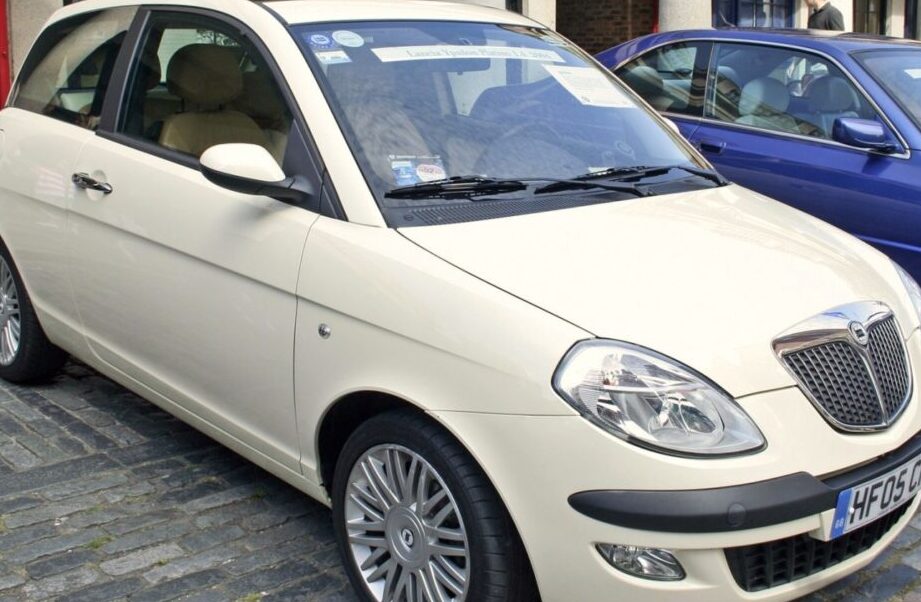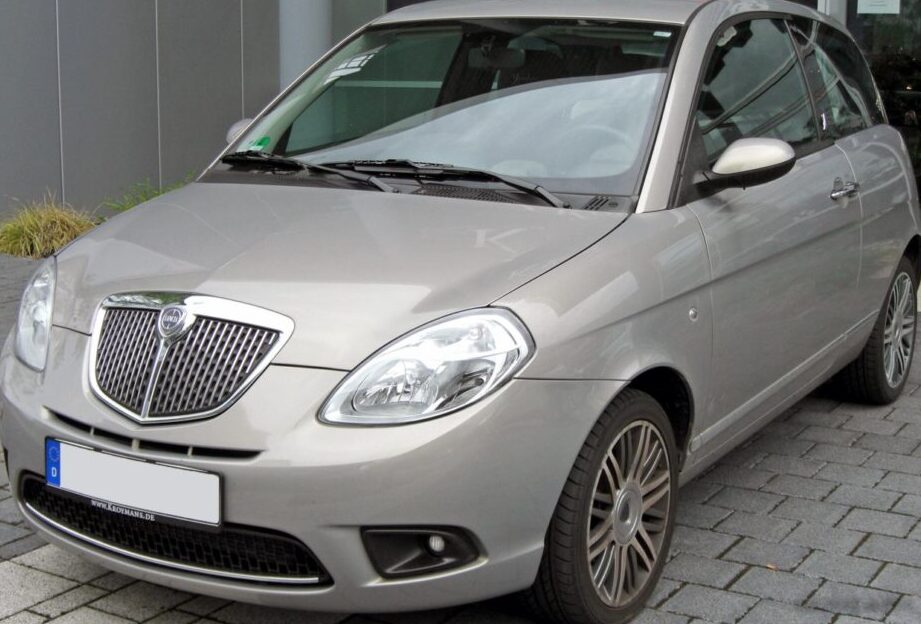
The Lancia Ypsilon Sport Momo Design 1.3 Multijet 16V (105 Hp) represents a distinctive iteration of the Ypsilon (843 series), specifically the facelifted model introduced in 2006. Production of this variant ran from 2007 to February 2010. Positioned as a sporty and stylish trim level within the Ypsilon range, it aimed to appeal to a younger demographic seeking a blend of performance, fuel efficiency, and distinctive Italian design. This model was primarily marketed in Europe, where the Ypsilon enjoyed considerable success as a premium subcompact car.
Technical Specifications
| Brand | Lancia |
| Model | Ypsilon |
| Generation | Ypsilon (843, facelift 2006) |
| Type (Engine) | Sport Momo Design 1.3 Multijet 16V (105 Hp) |
| Start of production | 2007 |
| End of production | February, 2010 |
| Powertrain Architecture | Internal Combustion engine |
| Body type | Hatchback |
| Seats | 4 |
| Doors | 3 |
| Fuel consumption (urban) | 5.7 l/100 km (41.3 US mpg, 49.6 UK mpg, 17.5 km/l) |
| Fuel consumption (extra urban) | 4.1 l/100 km (57.4 US mpg, 68.9 UK mpg, 24.4 km/l) |
| Fuel consumption (combined) | 4.7 l/100 km (50 US mpg, 60.1 UK mpg, 21.3 km/l) |
| CO2 emissions | 123 g/km |
| Fuel Type | Diesel |
| Acceleration 0 – 100 km/h | 10.3 sec |
| Acceleration 0 – 62 mph | 10.3 sec |
| Acceleration 0 – 60 mph | 9.8 sec |
| Maximum speed | 177 km/h (109.98 mph) |
| Emission standard | Euro 4 |
| Weight-to-power ratio | 10 kg/Hp, 100.5 Hp/tonne |
| Weight-to-torque ratio | 5.2 kg/Nm, 191.4 Nm/tonne |
| Power | 105 Hp @ 4000 rpm |
| Power per litre | 84.1 Hp/l |
| Torque | 200 Nm @ 1750 rpm (147.51 lb.-ft. @ 1750 rpm) |
| Engine layout | Front, Transverse |
| Engine Model/Code | 843A2000 |
| Engine displacement | 1248 cm3 (76.16 cu. in.) |
| Number of cylinders | 4 |
| Engine configuration | Inline |
| Cylinder Bore | 69.6 mm (2.74 in.) |
| Piston Stroke | 82 mm (3.23 in.) |
| Compression ratio | 16.8:1 |
| Number of valves per cylinder | 4 |
| Fuel injection system | Diesel Commonrail |
| Engine aspiration | Turbocharger, Intercooler |
| Valvetrain | DOHC |
| Engine oil capacity | 3.2 l (3.38 US qt | 2.82 UK qt) |
| Coolant capacity | 6 l (6.34 US qt | 5.28 UK qt) |
| Kerb Weight | 1045 kg (2303.83 lbs.) |
| Max. weight | 1520 kg (3351.03 lbs.) |
| Max load | 475 kg (1047.2 lbs.) |
| Trunk (boot) space (minimum) | 215 l (7.59 cu. ft.) |
| Fuel tank capacity | 47 l (12.42 US gal | 10.34 UK gal) |
| Max. roof load | 75 kg (165.35 lbs.) |
| Permitted trailer load (with brakes) | 900 kg (1984.16 lbs.) |
| Permitted trailer load (without brakes) | 400 kg (881.85 lbs.) |
| Permitted towbar download | 60 kg (132.28 lbs.) |
| Length | 3810 mm (150 in.) |
| Width | 1704 mm (67.09 in.) |
| Height | 1510 mm (59.45 in.) |
| Wheelbase | 2388 mm (94.02 in.) |
| Front track | 1450 mm (57.09 in.) |
| Rear track | 1440 mm (56.69 in.) |
| Front overhang | 819 mm (32.24 in.) |
| Rear overhang | 603 mm (23.74 in.) |
| Minimum turning circle | 9.83 m (32.25 ft.) |
| Drivetrain | Front wheel drive |
| Number of gears | 5 |
| Gearbox type | Manual transmission |
| Front suspension | Independent, McPherson with coil spring and anti-roll bar |
| Rear suspension | Transverse stabilizer, Torsion |
| Front brakes | Ventilated discs, 257×22 mm |
| Rear brakes | Disc, 240 mm |
| Assisting systems | ABS (Anti-lock braking system) |
| Steering type | Steering rack and pinion |
| Power steering | Electric |
| Tires size | 195/45 R16 |
| Wheel rims size | 6.5J x 16 |
INTRODUCTION
The Lancia Ypsilon Sport Momo Design 1.3 Multijet 16V, built on the 843 platform (shared with the Fiat Punto), was a key variant in the second generation Ypsilon lineup. The facelift in 2006 brought subtle styling updates and refinements to the interior. The “Sport Momo Design” designation signified a collaboration with the renowned Italian motorsport and aftermarket parts manufacturer, Momo. This partnership resulted in unique aesthetic touches, both inside and out, aimed at enhancing the car’s sporty appeal. This trim sat in the mid-range of the Ypsilon offerings, providing a step up in both performance and style compared to the base models, but remaining more accessible than the fully-equipped versions.
Powertrain & Engine Architecture
At the heart of the Ypsilon Sport Momo Design lies the 1.3 Multijet 16V diesel engine, identified by the code 843A2000. This engine is a four-cylinder, inline configuration, utilizing a common rail direct injection system for optimized fuel delivery and combustion. The 16-valve DOHC (Double Overhead Camshaft) valvetrain further contributes to efficient engine breathing. A turbocharger with an intercooler is employed to boost power output and improve torque across a wider rev range. The engine’s 1248 cc displacement produces 105 horsepower at 4000 rpm and 200 Nm (147.51 lb-ft) of torque at 1750 rpm. This engine is known for its relatively quiet operation and good fuel economy. The engine is paired with a 5-speed manual transmission, delivering power to the front wheels. The transmission’s gear ratios are tuned to balance acceleration with fuel efficiency, prioritizing usability in urban environments.
Driving Characteristics
The 1.3 Multijet engine, while not exceptionally powerful, provides adequate performance for everyday driving. Acceleration from 0-60 mph takes approximately 9.8 seconds, and the car reaches a top speed of 177 km/h (109.98 mph). The turbocharger provides a noticeable boost in power during acceleration, making overtaking maneuvers relatively effortless. Compared to the base 1.4-liter petrol engine, the 1.3 Multijet offers significantly more torque, resulting in better responsiveness at lower speeds. However, it lacks the outright punch of higher-output versions, such as those found in the Abarth-tuned Ypsilons. The 5-speed manual transmission is smooth and precise, although the shift linkage can feel slightly notchy. The Ypsilon’s suspension provides a comfortable ride, absorbing bumps and imperfections in the road surface effectively. However, the handling is not particularly sporty, with noticeable body roll during cornering.
Equipment & Trim Levels
The Sport Momo Design trim level included several distinctive features. Exterior enhancements included unique alloy wheels designed by Momo, a sporty body kit (including side skirts and a rear spoiler), and Momo badging. Inside, the car featured sport seats upholstered in a combination of fabric and leather, a leather-wrapped steering wheel (also branded by Momo), and aluminum pedals. Standard equipment also included air conditioning, power windows, central locking, and an audio system. Optional extras included a sunroof, navigation system, and upgraded audio equipment. The interior design emphasized a modern and stylish aesthetic, with a focus on creating a sporty driving environment.
Chassis & Braking
The Ypsilon Sport Momo Design utilizes a McPherson strut suspension setup at the front, providing a good balance of comfort and handling. The rear suspension employs a torsion beam axle, which is a cost-effective and space-saving solution. The braking system consists of ventilated discs at the front and solid discs at the rear. ABS (Anti-lock Braking System) is standard, enhancing safety during emergency braking situations. The car’s relatively lightweight construction (1045 kg / 2303.83 lbs) contributes to its agility and fuel efficiency. The steering is electrically assisted, providing light and precise control.
Market Reception & Comparison
The Lancia Ypsilon Sport Momo Design was generally well-received by automotive critics. It was praised for its stylish design, fuel efficiency, and comfortable ride. However, some critics noted that the engine lacked outright power and that the handling was not particularly engaging. Compared to other trims in the Ypsilon lineup, the Sport Momo Design offered a more sporty and visually appealing package. It was a popular choice among buyers who wanted a stylish and economical city car with a touch of Italian flair. Compared to petrol-powered Ypsilons, the 1.3 Multijet offered superior fuel economy and torque, making it a more practical choice for long-distance driving.
Legacy
The 1.3 Multijet engine proved to be a reliable and durable powertrain, and many examples of the Ypsilon Sport Momo Design are still on the road today. While not known for any groundbreaking innovations, this variant represents a well-rounded and appealing package within the Ypsilon range. In the used car market, these models are generally sought after for their style, fuel efficiency, and relatively low running costs. Maintenance is generally straightforward, and parts availability is good, although sourcing specific Momo Design trim pieces can sometimes be challenging. The Ypsilon Sport Momo Design remains a testament to Lancia’s design heritage and its ability to create stylish and practical city cars.