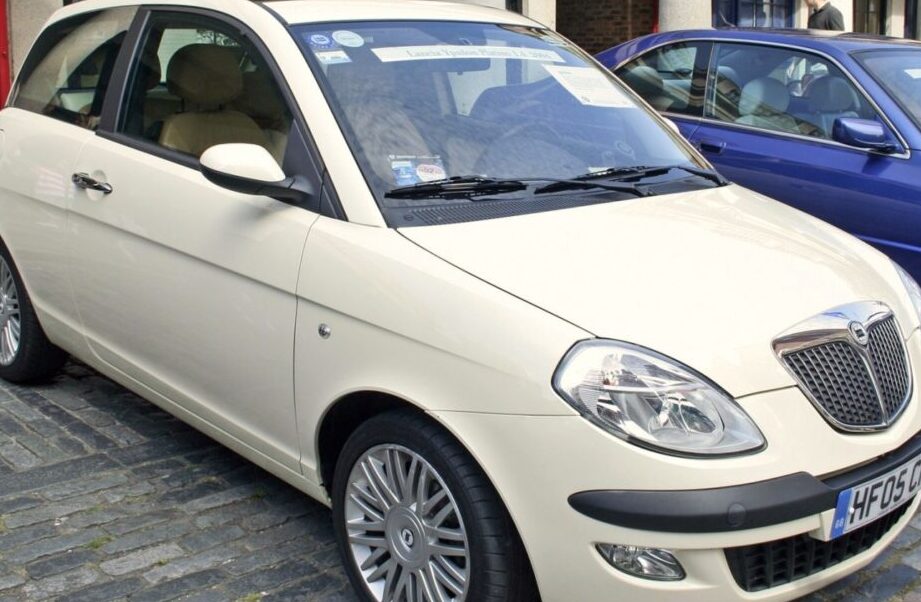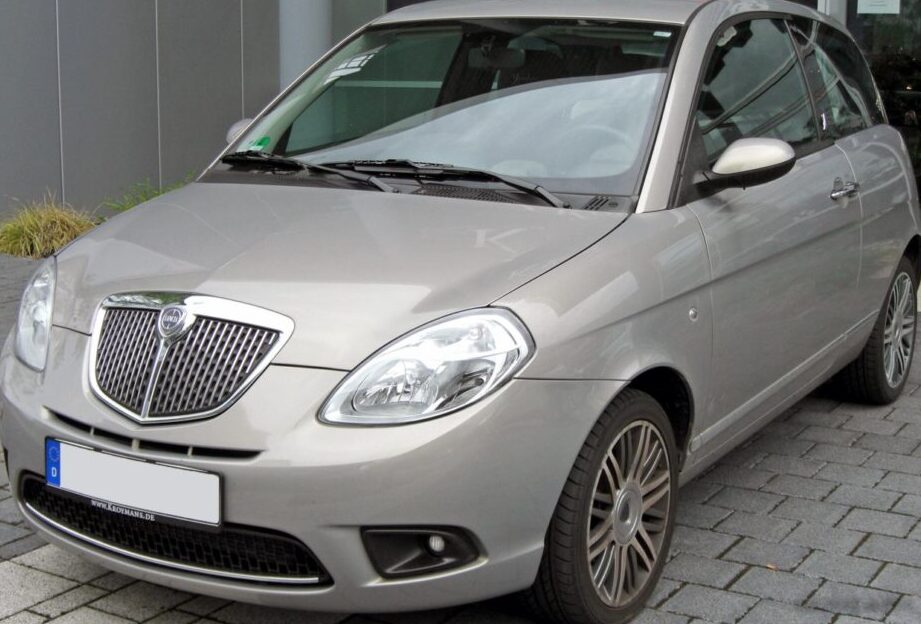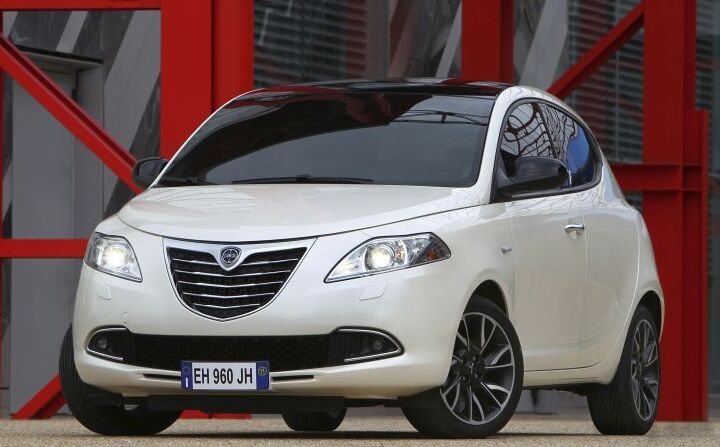
The Lancia Ypsilon (846) 0.9 Methane, produced from 2011 to 2015, represented a unique offering within the Ypsilon range – a subcompact hatchback designed primarily for the European market. This variant combined a small-displacement, turbocharged engine with the flexibility of bi-fuel capability (petrol and Compressed Natural Gas – CNG), aiming to appeal to environmentally conscious and cost-sensitive buyers. Positioned as an entry-level to mid-range option, it sat below the more powerful petrol variants and above the base, non-turbocharged models. The 846 generation Ypsilon was built on the Fiat/Chrysler Small Wide platform, shared with models like the Fiat Punto and Alfa Romeo MiTo, and aimed to revitalize the Ypsilon nameplate with a more modern and stylish design.
Technical Specifications
| Brand | Lancia |
| Model | Ypsilon |
| Generation | Ypsilon (846) |
| Type (Engine) | 0.9 (80 Hp) Methane |
| Start of production | 2011 |
| End of production | 2015 |
| Powertrain Architecture | Internal Combustion engine |
| Body type | Hatchback |
| Seats | 5 |
| Doors | 5 |
| Fuel consumption (economy) – urban | 5.8 l/100 km (40.6 US mpg, 48.7 UK mpg, 17.2 km/l) |
| Fuel consumption (economy) – urban (CNG) | 4.0 kg/100 km |
| Fuel consumption (economy) – extra urban | 3.9 l/100 km (60.3 US mpg, 72.4 UK mpg, 25.6 km/l) |
| Fuel consumption (economy) – extra urban (CNG) | 2.6 kg/100 km |
| Fuel consumption (economy) – combined | 4.6 l/100 km (51.1 US mpg, 61.4 UK mpg, 21.7 km/l) |
| Fuel consumption (economy) – combined (CNG) | 3.1 kg/100 km |
| CO2 emissions | 107 g/km |
| CO2 emissions (CNG) | 86 g/km |
| Fuel Type | Petrol / CNG |
| Acceleration 0 – 100 km/h | 13.1 sec |
| Acceleration 0 – 62 mph | 13.1 sec |
| Acceleration 0 – 60 mph | 12.4 sec |
| Maximum speed | 167 km/h (103.77 mph) |
| Emission standard | Euro 5 |
| Weight-to-power ratio | 13.6 kg/Hp, 73.4 Hp/tonne |
| Weight-to-torque ratio | 7.8 kg/Nm, 128.4 Nm/tonne |
| Power | 80 Hp @ 5500 rpm |
| Power per litre | 91.4 Hp/l |
| Torque | 140 Nm @ 2500 rpm (103.26 lb.-ft. @ 2500 rpm) |
| Engine layout | Front, Transverse |
| Engine Model/Code | 312 A5.000 |
| Engine displacement | 875 cm3 (53.4 cu. in.) |
| Number of cylinders | 4 |
| Engine configuration | Inline |
| Compression ratio | 10:1 |
| Number of valves per cylinder | 2 |
| Fuel injection system | Multi-port manifold injection |
| Engine aspiration | Turbocharger, Intercooler |
| Engine oil capacity | 3.2 l (3.38 US qt | 2.82 UK qt) |
| Coolant | 5.3 l (5.6 US qt | 4.66 UK qt) |
| Kerb Weight | 1090 kg (2403.04 lbs.) |
| Trunk (boot) space – minimum | 202 l (7.13 cu. ft.) |
| Fuel tank capacity | 40 l (10.57 US gal | 8.8 UK gal) |
| CNG cylinder capacity | 12 kg |
| Length | 3842 mm (151.26 in.) |
| Width | 1875 mm (73.82 in.) |
| Height | 1554 mm (61.18 in.) |
| Wheelbase | 2390 mm (94.09 in.) |
| Front track | 1414 mm (55.67 in.) |
| Rear (Back) track | 1408 mm (55.43 in.) |
| Minimum turning circle | 9.4 m (30.84 ft.) |
| Drivetrain Architecture | The Internal combustion engine (ICE) drives the front wheels of the vehicle. |
| Drive wheel | Front wheel drive |
| Number of gears and type of gearbox | 5 gears, manual transmission |
| Front suspension | Independent type McPherson |
| Rear suspension | Semi-independent, coil spring |
| Front brakes | Ventilated discs |
| Rear brakes | Drum |
| Assisting systems | ABS (Anti-lock braking system) |
| Steering type | Steering rack and pinion |
| Tires size | 175/65 R15 84 T |
| Wheel rims size | 15 |
Powertrain & Engine Architecture
The heart of the Ypsilon 0.9 Methane is the Fiat FIRE (Fully Integrated Robotized Engine) family engine, specifically the 312 A5.000 unit. This is a 875cc (53.4 cubic inches) inline-four cylinder engine featuring a single overhead camshaft (SOHC) and two valves per cylinder. Crucially, this version is turbocharged and intercooled, a significant upgrade over the naturally aspirated FIRE engines found in other Ypsilon variants. The turbocharger, a Honeywell unit, provides a noticeable boost in power and torque compared to the non-turbocharged engines. Fuel delivery is managed by a multi-point fuel injection system. The engine is designed to run on both petrol and Compressed Natural Gas (CNG). When running on CNG, the engine management system automatically switches fuel sources, optimizing performance and emissions for the alternative fuel. The 5-speed manual transmission was the only gearbox option available with this engine, prioritizing fuel efficiency over outright performance.
Driving Characteristics
The 80 horsepower and 103 lb-ft of torque produced by the 0.9 Methane engine translate to modest, but adequate, performance. Acceleration from 0-60 mph takes around 12.4 seconds, and top speed is approximately 104 mph. The turbocharger does provide a noticeable surge of power in the mid-range, making overtaking on highways manageable. However, the engine can feel strained when fully loaded or climbing steep hills. The 5-speed manual gearbox is well-matched to the engine’s characteristics, with relatively short gear ratios designed to keep the engine in its optimal power band. Compared to the 1.2-liter petrol versions, the 0.9 Methane offers a more responsive driving experience thanks to the turbocharger, but lacks the outright punch of the higher-powered 1.4-liter models. The primary benefit of this variant is its fuel economy, particularly when running on CNG.
Equipment & Trim Levels
The 0.9 Methane trim typically included air conditioning, power steering, central locking, and an audio system with USB connectivity as standard equipment. Safety features included ABS brakes and driver/passenger airbags. Interior upholstery was generally cloth, with a relatively simple dashboard layout. Optional extras included alloy wheels, a panoramic sunroof, and upgraded audio systems. The trim level often sat in the middle of the Ypsilon range, offering a good balance of features and affordability. The focus was on practicality and efficiency rather than luxury.
Chassis & Braking
The Ypsilon 0.9 Methane utilizes a McPherson strut front suspension and a semi-independent coil spring rear suspension. This setup provides a comfortable ride quality, although it’s not particularly sporty. The front brakes are ventilated discs, providing adequate stopping power, while the rear brakes are drums – a cost-saving measure common in this segment. The steering is a rack and pinion system, offering reasonable precision and feedback. The relatively light weight of the vehicle (around 2400 lbs) helps to compensate for the modest power output and contributes to its nimble handling.
Market Reception & Comparison
The Lancia Ypsilon 0.9 Methane was generally well-received by critics for its fuel efficiency and low running costs. The CNG capability was a significant selling point in countries with well-developed CNG infrastructure, such as Italy. However, some reviewers noted the engine’s lack of refinement and the somewhat basic interior. Compared to the petrol-only Ypsilon variants, the 0.9 Methane offered comparable fuel economy on petrol, but significantly lower running costs when utilizing CNG. It was a direct competitor to other small, fuel-efficient hatchbacks like the Fiat Punto, Renault Twingo, and Peugeot 107.
Legacy
The 0.9 Methane powertrain has proven to be relatively reliable, with few major issues reported. The FIRE engine family is known for its durability, and the turbocharger, while adding complexity, has generally held up well over time. In the used car market, the Ypsilon 0.9 Methane remains an affordable and economical option, particularly for buyers who have access to CNG fueling stations. Its combination of fuel efficiency, practicality, and relatively low maintenance costs makes it a sensible choice for urban commuting and short trips. However, potential buyers should be aware of the limited power output and the potential for CNG system maintenance.