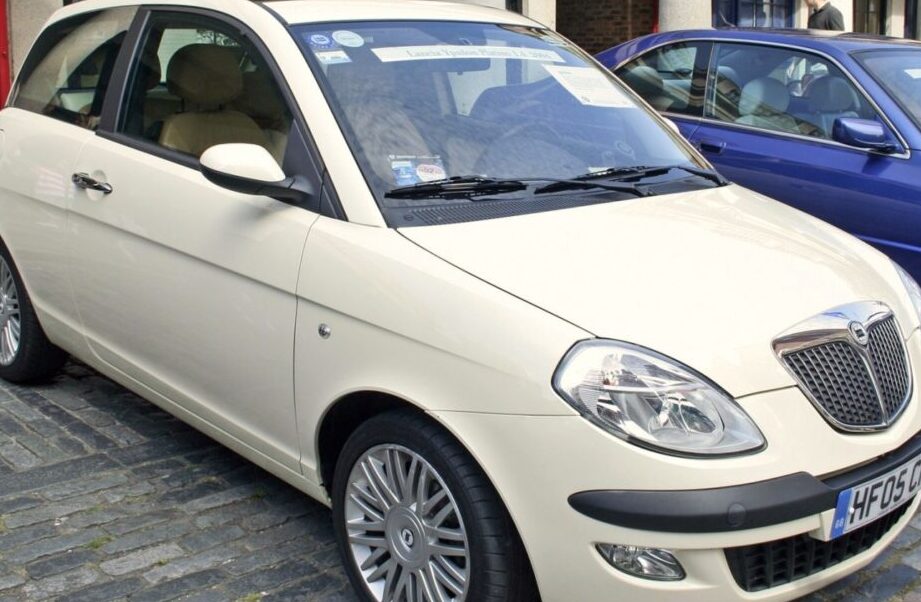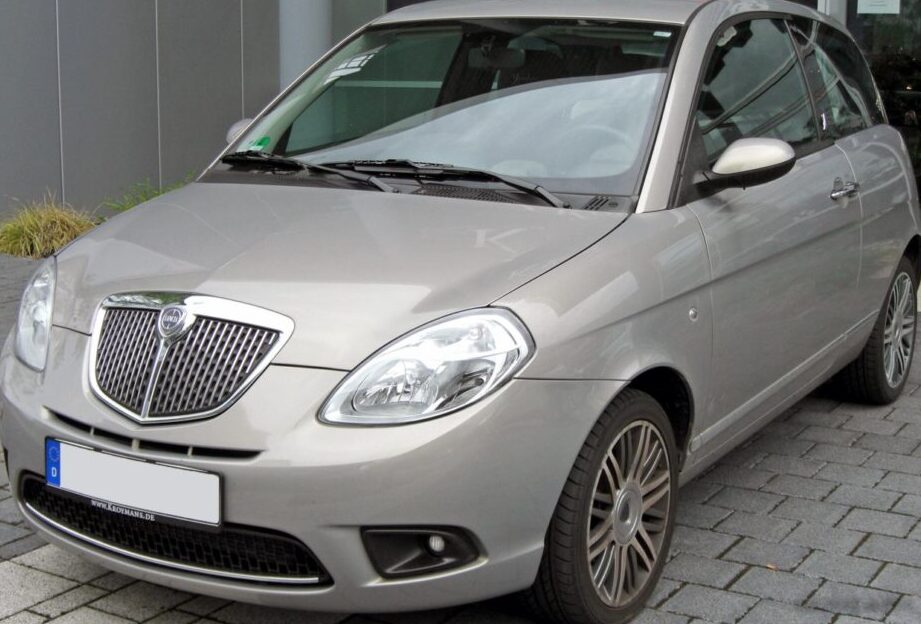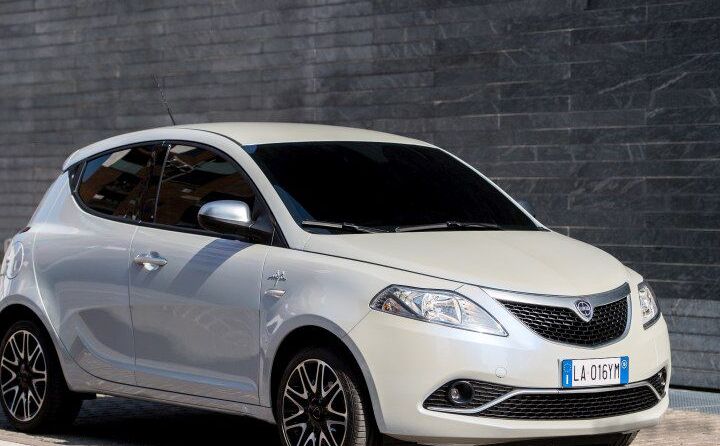
The Lancia Ypsilon 0.9 Methane (80 hp) represents a unique offering within the Ypsilon (846) facelift range, produced from 2016 to August 2018. This variant aimed to provide an economical and environmentally conscious option in the European city car segment, leveraging both gasoline and Compressed Natural Gas (CNG) fuel sources. Positioned as an entry-level to mid-range trim, it catered to buyers seeking lower running costs without entirely sacrificing practicality. The Ypsilon, throughout its various iterations, has been a mainstay of the Italian automotive market, known for its stylish design and compact dimensions, and this methane-powered version continued that tradition.
Technical Specifications
| Brand | Lancia |
| Model | Ypsilon |
| Generation | Ypsilon (846, facelift 2015) |
| Type (Engine) | 0.9 (80 Hp) Methane |
| Start of production | 2016 |
| End of production | August, 2018 |
| Powertrain Architecture | Internal Combustion engine |
| Body type | Hatchback |
| Seats | 5 |
| Doors | 5 |
| Fuel consumption (economy) – urban | 5.8 l/100 km (40.6 US mpg, 48.7 UK mpg, 17.2 km/l) |
| Fuel consumption (economy) – urban (CNG) | 4.0 kg/100 km |
| Fuel consumption (economy) – extra urban | 3.9 l/100 km (60.3 US mpg, 72.4 UK mpg, 25.6 km/l) |
| Fuel consumption (economy) – extra urban (CNG) | 2.6 kg/100 km |
| Fuel consumption (economy) – combined | 4.6 l/100 km (51.1 US mpg, 61.4 UK mpg, 21.7 km/l) |
| Fuel consumption (economy) – combined (CNG) | 3.1 kg/100 km |
| CO2 emissions | 107 g/km |
| CO2 emissions (CNG) | 86 g/km |
| Fuel Type | Petrol / CNG |
| Acceleration 0 – 100 km/h | 13.1 sec |
| Acceleration 0 – 62 mph | 13.1 sec |
| Acceleration 0 – 60 mph | 12.4 sec |
| Maximum speed | 167 km/h (103.77 mph) |
| Emission standard | Euro 5 |
| Weight-to-power ratio | 13.6 kg/Hp, 73.4 Hp/tonne |
| Weight-to-torque ratio | 7.8 kg/Nm, 128.4 Nm/tonne |
| Power | 80 Hp @ 5500 rpm |
| Torque | 140 Nm @ 2500 rpm (103.26 lb.-ft. @ 2500 rpm) |
| Engine layout | Front, Transverse |
| Engine Model/Code | 312 A2.000 |
| Engine displacement | 875 cm3 (53.4 cu. in.) |
| Engine configuration | Inline |
| Compression ratio | 10:1 |
| Fuel injection system | Multi-port manifold injection |
| Engine aspiration | Turbocharger, Intercooler |
| Engine oil capacity | 3.2 l (3.38 US qt, 2.82 UK qt) |
| Coolant | 5.3 l (5.6 US qt, 4.66 UK qt) |
| Kerb Weight | 1090 kg (2403.04 lbs) |
| Trunk (boot) space – minimum | 202 l (7.13 cu. ft) |
| Fuel tank capacity | 40 l (10.57 US gal, 8.8 UK gal) |
| CNG cylinder capacity | 12 kg |
| Length | 3842 mm (151.26 in) |
| Width | 1676 mm (65.98 in) |
| Height | 1554 mm (61.18 in) |
| Wheelbase | 2390 mm (94.09 in) |
| Front track | 1422 mm (55.98 in) |
| Rear (Back) track | 1414 mm (55.67 in) |
| Minimum turning circle | 9.4 m (30.84 ft) |
| Drivetrain Architecture | ICE drives front wheels |
| Drive wheel | Front wheel drive |
| Number of gears and type of gearbox | 5 gears, manual transmission |
| Front suspension | Independent, McPherson with coil spring and anti-roll bar |
| Rear suspension | Semi-independent, coil spring |
| Front brakes | Ventilated discs |
| Rear brakes | Drum |
| Assisting systems | ABS (Anti-lock braking system) |
| Steering type | Steering rack and pinion |
| Power steering | Electric |
| Tires size | 175/65 R15 84T |
| Wheel rims size | 15 |
Powertrain & Engine Architecture
The heart of the Ypsilon 0.9 Methane is the 312 A2.000 engine, a 875cc turbocharged inline-two cylinder petrol engine. This engine, part of Fiat’s “FireFly” family, is notable for its compact size and relatively sophisticated technology for its displacement. It utilizes a multi-point fuel injection system and an intercooled turbocharger to boost power output to 80 horsepower at 5500 rpm and 140 Nm (103 lb-ft) of torque at 2500 rpm. The engine is designed to run on both gasoline and CNG, with a system that automatically switches between the two fuels depending on CNG availability. When running on CNG, the engine produces slightly less power and torque, but offers significantly reduced emissions. The transmission is a five-speed manual gearbox, chosen for its simplicity and efficiency. While an automated manual transmission (Dualogic) was available on other Ypsilon variants, it was not offered with the methane powertrain.
Driving Characteristics
The 80 hp engine, coupled with the five-speed manual transmission, provides adequate, though not exhilarating, performance. Acceleration from 0 to 100 km/h (0-62 mph) takes around 13.1 seconds, and top speed is 167 km/h (104 mph). The turbocharger helps to mitigate the small engine displacement, providing a reasonable amount of low-end torque for city driving. However, overtaking maneuvers on highways require careful planning. Compared to the 1.2-liter petrol version, the 0.9 Methane offers similar performance but with improved fuel economy. It falls significantly short of the performance offered by the more powerful 1.4-liter variants, but targets a different demographic – those prioritizing economy over outright speed. The gear ratios are tuned for efficiency, with a relatively long fifth gear to aid in highway cruising.
Equipment & Trim Levels
The 0.9 Methane trim typically included standard features such as air conditioning, power steering, electric front windows, and a basic audio system. Safety equipment included ABS brakes and driver/passenger airbags. Higher trim levels, available as options, added features like alloy wheels, a touchscreen infotainment system, and parking sensors. Interior upholstery was typically cloth, with a focus on durability rather than luxury. The dashboard layout was functional and straightforward, reflecting the car’s budget-conscious positioning.
Chassis & Braking
The Ypsilon 0.9 Methane utilizes a McPherson strut front suspension and a semi-independent coil spring rear suspension. This setup provides a comfortable ride quality, well-suited for urban environments. The front brakes are ventilated discs, while the rear brakes are drums. This configuration is typical for cars in this weight class and price range. The electric power steering provides light and easy steering, making it maneuverable in tight spaces. The car’s relatively light weight (1090 kg / 2403 lbs) helps to compensate for the modest engine power.
Market Reception & Comparison
The Lancia Ypsilon 0.9 Methane was generally well-received by critics for its fuel efficiency and low running costs. It offered a compelling alternative to traditional petrol-powered city cars, particularly in countries with well-developed CNG infrastructure. Compared to the standard petrol versions, the methane variant offered significant savings on fuel costs, although the initial purchase price was slightly higher. Reliability was generally good, although the complex dual-fuel system required regular maintenance. Compared to competitors like the Fiat 500 and Volkswagen up!, the Ypsilon offered a more stylish design and a more spacious interior, but lacked the brand recognition of its rivals.
Legacy
The Lancia Ypsilon 0.9 Methane represents a significant step towards alternative fuel vehicles in the European market. While CNG infrastructure remains limited in some regions, the car demonstrated the potential for reducing emissions and fuel costs. On the used car market, these models are sought after by buyers looking for an economical and environmentally friendly city car. The 312 A2.000 engine has proven to be relatively reliable, although regular maintenance is essential to ensure the proper functioning of the dual-fuel system. The Ypsilon 0.9 Methane remains a testament to Lancia’s commitment to innovation and its ability to create stylish and practical vehicles for the urban environment.