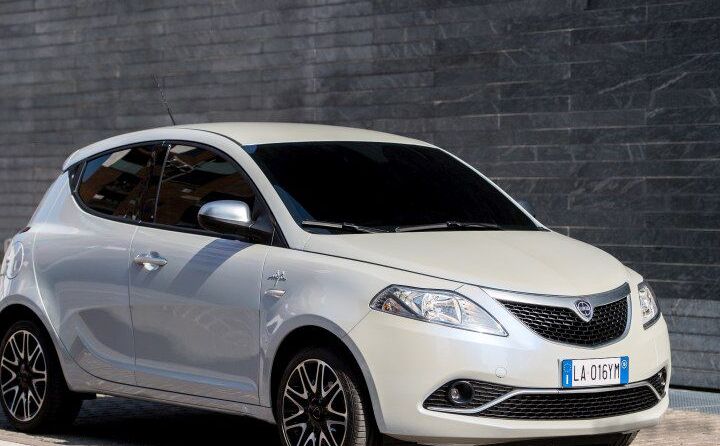
The Lancia Ypsilon (846 series, post-facelift introduced in 2015) 1.2, producing 69 horsepower, represented the entry point into the Ypsilon range during its final years of production, which concluded in August 2018. This variant was primarily aimed at the Italian domestic market, where the Ypsilon enjoyed a strong following as a stylish and compact city car. The 846 series, based on the Fiat 500 platform (though significantly different in styling and interior appointments), was a continuation of the Ypsilon lineage, a model known for its fashionable design and relatively upscale positioning within the small car segment. The 2015 facelift brought subtle styling updates and refinements to the interior, aiming to maintain the Ypsilon’s appeal in a competitive market.
Technical Specifications
| Brand | Lancia |
| Model | Ypsilon |
| Generation | Ypsilon (846, facelift 2015) |
| Type (Engine) | 1.2 (69 Hp) |
| Start of production | 2015 |
| End of production | August, 2018 |
| Powertrain Architecture | Internal Combustion engine |
| Body type | Hatchback |
| Seats | 5 |
| Doors | 5 |
| Fuel consumption (urban) | 6.7 l/100 km (35.1 US mpg, 42.2 UK mpg, 14.9 km/l) |
| Fuel consumption (extra urban) | 4.3 l/100 km (54.7 US mpg, 65.7 UK mpg, 23.3 km/l) |
| Fuel consumption (combined) | 5.2 l/100 km (45.2 US mpg, 54.3 UK mpg, 19.2 km/l) |
| CO2 emissions | 120 g/km |
| Fuel Type | Petrol (Gasoline) |
| Acceleration 0 – 100 km/h | 14.5 sec |
| Acceleration 0 – 62 mph | 14.5 sec |
| Acceleration 0 – 60 mph | 13.8 sec |
| Maximum speed | 163 km/h (101.28 mph) |
| Emission standard | Euro 5 |
| Weight-to-power ratio | 14 kg/Hp, 71.5 Hp/tonne |
| Weight-to-torque ratio | 9.5 kg/Nm, 105.7 Nm/tonne |
| Power | 69 Hp @ 5500 rpm |
| Power per litre | 55.6 Hp/l |
| Torque | 102 Nm @ 3000 rpm (75.23 lb.-ft. @ 3000 rpm) |
| Engine layout | Front, Transverse |
| Engine Model/Code | 169 A4.000 |
| Engine displacement | 1242 cm3 (75.79 cu. in.) |
| Number of cylinders | 4 |
| Engine configuration | Inline |
| Compression ratio | 11:1 |
| Number of valves per cylinder | 2 |
| Fuel injection system | Multi-port manifold injection |
| Engine aspiration | Naturally aspirated engine |
| Engine oil capacity | 2.8 l (2.96 US qt | 2.46 UK qt) |
| Coolant capacity | 4.9 l (5.18 US qt | 4.31 UK qt) |
| Kerb Weight | 965 kg (2127.46 lbs.) |
| Trunk (boot) space – minimum | 245 l (8.65 cu. ft.) |
| Fuel tank capacity | 40 l (10.57 US gal | 8.8 UK gal) |
| Length | 3842 mm (151.26 in.) |
| Width | 1875 mm (73.82 in.) |
| Height | 1520 mm (59.84 in.) |
| Wheelbase | 2390 mm (94.09 in.) |
| Front track | 1422 mm (55.98 in.) |
| Rear track | 1414 mm (55.67 in.) |
| Minimum turning circle | 9.4 m (30.84 ft.) |
| Drivetrain Architecture | Front wheel drive |
| Number of gears and type of gearbox | 5 gears, manual transmission |
| Front suspension | Independent, type McPherson with coil spring and anti-roll bar |
| Rear suspension | Semi-independent, coil spring |
| Front brakes | Disc |
| Rear brakes | Drum |
| Assisting systems | ABS (Anti-lock braking system) |
| Steering type | Steering rack and pinion |
| Power steering | Electric Steering |
| Tires size | 185/55 R15 82 H |
| Wheel rims size | 15 |
Powertrain & Engine Architecture
The 1.2-liter engine, designated the 169 A4.000, is a naturally aspirated, inline-four cylinder petrol engine. It’s a relatively simple design, utilizing a multi-port fuel injection system and a two-valve per cylinder configuration. This engine is a descendant of Fiat’s FIRE (Fully Integrated Robotized Engine) family, known for its robustness and affordability. The 69 horsepower output is achieved at 5500 rpm, while peak torque of 102 Nm (75.23 lb-ft) arrives at 3000 rpm. The engine features a compression ratio of 11:1. The Ypsilon 1.2 typically came equipped with a five-speed manual transmission, designed to maximize fuel efficiency and provide adequate performance for urban driving. The transmission is a standard configuration, prioritizing simplicity and reliability over sporty driving dynamics.
Driving Characteristics
The 1.2-liter 69 hp Ypsilon is not a performance-oriented vehicle. Acceleration is leisurely, taking around 14.5 seconds to reach 100 km/h (62 mph). The focus is on fuel economy and ease of driving in city environments. The five-speed manual transmission is geared to keep the engine within its optimal operating range for efficiency. Compared to higher-output versions of the Ypsilon, such as those with the 1.4-liter engine, the 1.2 feels noticeably slower, particularly when fully loaded or tackling inclines. However, the lighter engine weight contributes to nimble handling in urban conditions. The gear ratios are spaced to provide acceptable acceleration in everyday driving, but downshifting is often required for overtaking maneuvers.
Equipment & Trim Levels
The 1.2-liter Ypsilon typically served as the base trim level. Standard equipment generally included air conditioning, power steering, central locking, and an audio system with USB connectivity. Safety features included ABS brakes and driver/passenger airbags. Interior upholstery was typically cloth, with a relatively basic dashboard design. Optional extras included alloy wheels, a panoramic sunroof, and upgraded audio systems. The interior, while functional, prioritized cost-effectiveness over luxury. The Ypsilon aimed to provide a stylish and well-equipped package for its price point, appealing to buyers seeking a fashionable city car.
Chassis & Braking
The Ypsilon 846 utilizes a McPherson strut front suspension and a semi-independent coil spring rear suspension. This setup provides a comfortable ride quality, well-suited for navigating city streets. The front brakes are discs, while the rear brakes are drums, a cost-saving measure common in this segment. The steering is electrically assisted, providing light and easy maneuverability. The chassis is tuned for comfort rather than sporty handling, with a focus on minimizing body roll and providing a stable driving experience. Stabilizer bars are present to reduce body roll during cornering, but the overall handling characteristics are geared towards everyday usability.
Market Reception & Comparison
The Lancia Ypsilon 1.2 was generally well-received as an affordable and stylish city car, particularly in Italy. Critics praised its attractive design and comfortable interior, but noted its lack of performance. Compared to other small cars in the segment, such as the Fiat 500 (with which it shares a platform) and the Renault Twingo, the Ypsilon offered a more upscale interior and a more distinctive exterior design. However, its fuel economy was comparable to its rivals, and its reliability record was generally good, though not exceptional. The 1.2-liter engine was considered adequate for urban driving, but less suitable for long highway journeys.
Legacy
The Lancia Ypsilon 1.2, while not a performance icon, represents a significant part of Lancia’s history as a stylish and innovative car manufacturer. The 169 A4.000 engine is known for its durability and relatively low maintenance costs. On the used car market, these Ypsilons are generally affordable and represent a good value for buyers seeking a fashionable and economical city car. However, potential buyers should be aware of the age of the vehicles and the potential for wear and tear on components such as the suspension and brakes. The Ypsilon 1.2 remains a popular choice for those seeking a small, stylish, and relatively reliable vehicle for urban commuting.