Technical Specifications
| Brand | Lancia |
| Model | Ypsilon |
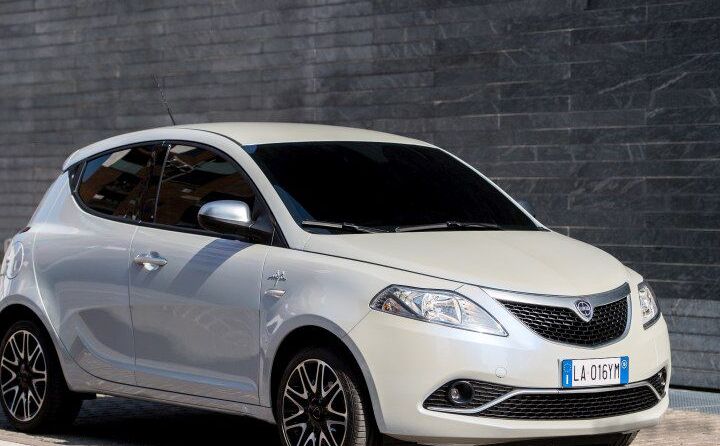
| Generation | Ypsilon (846, facelift 2015) |
| Type (Engine) | 1.3 MultiJet2 (95 Hp) Start&Stop |
| Start of production | 2015 |
| End of production | August, 2018 |
| Powertrain Architecture | Internal Combustion engine |
| Body type | Hatchback |
| Seats | 5 |
| Doors | 5 |
| Fuel consumption (urban) | 4.7 l/100 km (50 US mpg, 60.1 UK mpg, 21.3 km/l) |
| Fuel consumption (extra urban) | 3.2 l/100 km (73.5 US mpg, 88.3 UK mpg, 31.3 km/l) |
| Fuel consumption (combined) | 3.8 l/100 km (61.9 US mpg, 74.3 UK mpg, 26.3 km/l) |
| CO2 emissions | 99 g/km |
| Fuel Type | Diesel |
| Acceleration 0 – 100 km/h | 11.4 sec |
| Acceleration 0 – 62 mph | 11.4 sec |
| Acceleration 0 – 60 mph | 10.8 sec |
| Maximum speed | 183 km/h (113.71 mph) |
| Emission standard | Euro 5 |
| Weight-to-power ratio | 11.1 kg/Hp, 90.5 Hp/tonne |
| Weight-to-torque ratio | 5.3 kg/Nm, 190.5 Nm/tonne |
| Power | 95 Hp @ 4000 rpm |
| Power per litre | 76.1 Hp/l |
| Torque | 200 Nm @ 1500 rpm (147.51 lb.-ft. @ 1500 rpm) |
| Engine layout | Front, Transverse |
| Engine Model/Code | 312 B1.000 |
| Engine displacement | 1248 cm3 (76.16 cu. in.) |
| Number of cylinders | 4 |
| Engine configuration | Inline |
| Compression ratio | 16.8:1 |
| Number of valves per cylinder | 4 |
| Fuel injection system | Diesel Commonrail |
| Engine aspiration | Turbocharger, Intercooler |
| Engine oil capacity | 3 l (3.17 US qt | 2.64 UK qt) |
| Coolant capacity | 6.35 l (6.71 US qt | 5.59 UK qt) |
| Kerb Weight | 1050 kg (2314.85 lbs.) |
| Trunk (boot) space – minimum | 245 l (8.65 cu. ft.) |
| Fuel tank capacity | 40 l (10.57 US gal | 8.8 UK gal) |
| Length | 3842 mm (151.26 in.) |
| Width | 1875 mm (73.82 in.) |
| Height | 1520 mm (59.84 in.) |
| Wheelbase | 2390 mm (94.09 in.) |
| Front track | 1422 mm (55.98 in.) |
| Rear track | 1414 mm (55.67 in.) |
| Minimum turning circle | 9.4 m (30.84 ft.) |
| Drivetrain Architecture | Front wheel drive |
| Number of gears and type of gearbox | 5 gears, manual transmission |
| Front suspension | Independent, type McPherson with coil spring and anti-roll bar |
| Rear suspension | Semi-independent, coil spring |
| Front brakes | Ventilated discs |
| Rear brakes | Drum |
| Assisting systems | ABS (Anti-lock braking system) |
| Steering type | Steering rack and pinion |
| Power steering | Electric Steering |
| Tires size | 185/55 R15 82 H |
| Wheel rims size | 15 |
The Lancia Ypsilon 1.3 MultiJet2 (95 hp) Start&Stop, launched in 2015 as part of the 846 series facelift, was a key offering in Lancia’s lineup. The Ypsilon, a long-running model in Europe, had been repositioned as a more premium and stylish supermini. This particular variant aimed to provide a compelling blend of fuel economy and usability, targeting buyers who prioritized low running costs and a comfortable driving experience. The “Start&Stop” system, a standard feature, further enhanced its efficiency in urban environments. It built upon the foundation of the 846 platform, shared with the Fiat 500 and Ford Ka, but distinguished itself through unique styling and a more refined interior.
Powertrain & Engine Architecture
At the heart of this Ypsilon variant lies the 312 B1.000 1.3 MultiJet2 diesel engine. This is a four-cylinder, inline engine displacing 1248 cc. It utilizes a second-generation common rail direct injection system, delivering fuel at extremely high pressures for optimized combustion. The engine is turbocharged and intercooled, boosting power output to 95 hp at 4000 rpm and 200 Nm of torque at a low 1500 rpm. This torque characteristic is particularly beneficial for city driving, providing ample pulling power at lower speeds. The engine also features a fixed-geometry turbocharger. The 5-speed manual transmission was the standard offering, chosen for its simplicity and efficiency. The Start&Stop system automatically shuts off the engine when the vehicle is stationary, reducing fuel consumption and emissions.
Driving Characteristics
The 1.3 MultiJet2 engine, paired with the 5-speed manual gearbox, provided a surprisingly capable driving experience for a supermini. While not overtly sporty, the 95 hp output and 200 Nm of torque offered adequate acceleration, with a 0-60 mph time of around 10.8 seconds. The engine’s strong low-end torque made it particularly well-suited to urban driving, allowing for effortless overtaking and smooth progress in traffic. Compared to higher-powered Ypsilon variants, such as those with petrol engines, this diesel version prioritized fuel economy over outright performance. The gear ratios were tuned for efficiency, with a relatively long fifth gear designed for comfortable cruising on the highway. The driving experience was generally comfortable, although the engine could become somewhat noisy under hard acceleration.
Equipment & Trim Levels
The Ypsilon 1.3 MultiJet2 (95 hp) Start&Stop typically came equipped with a reasonable level of standard equipment. This included air conditioning, power steering, electric front windows, a radio with USB connectivity, and ABS brakes. Higher trim levels offered additional features such as alloy wheels, a touchscreen infotainment system, rear parking sensors, and climate control. Interior upholstery was typically cloth, with options for upgraded materials and colors. The Ypsilon’s interior was known for its stylish design and attention to detail, setting it apart from some of its more utilitarian competitors. Optional extras included a panoramic sunroof and a premium sound system.
Chassis & Braking
The Ypsilon 846 series utilized a McPherson strut front suspension and a semi-independent coil spring rear suspension. This setup provided a good balance between ride comfort and handling. The front brakes were ventilated discs, offering good stopping power, while the rear brakes were drums, a cost-saving measure common in this segment. ABS (Anti-lock Braking System) was standard, enhancing safety. The chassis was relatively lightweight, contributing to the car’s fuel efficiency and agility. Stabilizer bars were fitted to both the front and rear axles to reduce body roll during cornering.
Market Reception & Comparison
The Lancia Ypsilon 1.3 MultiJet2 (95 hp) Start&Stop was generally well-received by critics for its fuel efficiency, stylish design, and comfortable interior. However, some reviewers noted that the engine could be noisy and that the performance was not particularly exhilarating. Compared to other Ypsilon variants, the diesel version offered significantly better fuel economy but less outright performance. Against competitors such as the Fiat 500, Volkswagen Polo, and Renault Clio, the Ypsilon distinguished itself through its more premium image and distinctive styling. Its fuel economy was competitive within its class, and its reliability was generally considered to be good.
Legacy
The 1.3 MultiJet2 engine proved to be a reliable and durable unit, and examples of the Ypsilon 1.3 MultiJet2 (95 hp) Start&Stop continue to be found on the used car market today. While diesel engines have faced increasing scrutiny in recent years, this particular engine remains a viable option for those seeking a fuel-efficient and economical supermini. Maintenance costs are generally reasonable, and parts availability is good. The Ypsilon’s stylish design and comfortable interior have helped it maintain a loyal following, and it remains a popular choice for urban commuters and those seeking a small, practical, and well-equipped vehicle.