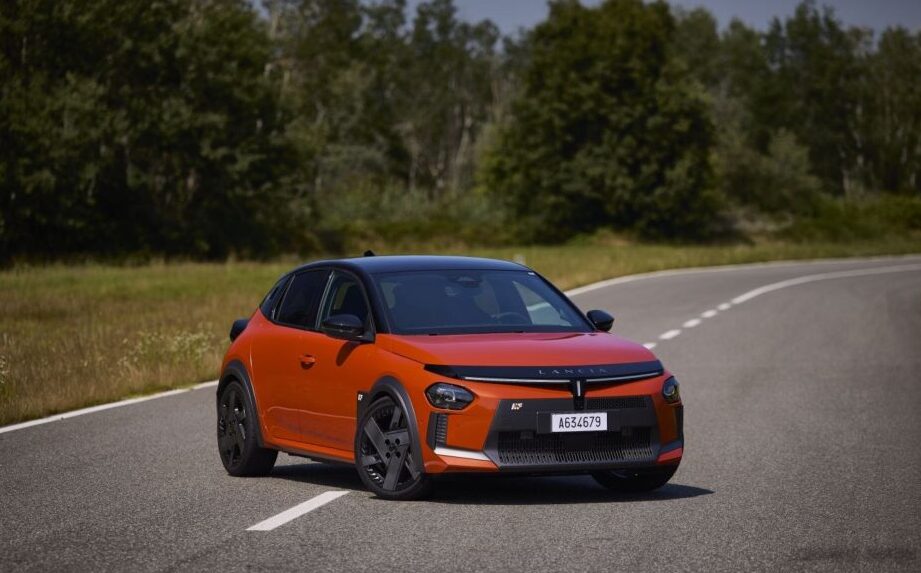
The Lancia Ypsilon (L21) HF 54 kWh is the high-performance, all-electric variant of the latest generation Ypsilon, launched in June 2025. Representing a significant departure for the traditionally combustion-engine focused Lancia brand, the HF model showcases the company’s commitment to electrification and a renewed focus on sporty driving dynamics. Positioned as the flagship of the Ypsilon range, it offers a substantial power upgrade over the standard electric models and aims to attract a buyer seeking both premium Italian style and spirited performance in a compact package. The Ypsilon L21 platform is a significant redesign for the model, moving towards a more modern and technologically advanced vehicle.
Technical Specifications
| Brand | Lancia |
| Model | Ypsilon |
| Generation | Ypsilon (L21) |
| Type (Engine) | HF 54 kWh (280 Hp) Electric |
| Start of production | June, 2025 |
| Powertrain Architecture | BEV (Electric Vehicle) |
| Body type | Hatchback |
| Seats | 5 |
| Doors | 5 |
| Fuel Type | Electricity |
| Acceleration 0 – 100 km/h | 5.6 sec |
| Acceleration 0 – 62 mph | 5.6 sec |
| Acceleration 0 – 60 mph | 5.3 sec |
| Maximum speed | 180 km/h (111.85 mph) |
| Weight-to-power ratio | 5.5 kg/Hp, 182.9 Hp/tonne |
| Weight-to-torque ratio | 4.4 kg/Nm, 225.3 Nm/tonne |
| Gross battery capacity | 54 kWh |
| Net (usable) battery capacity | 51 kWh |
| Battery voltage | 400 V |
| Battery technology | Lithium nickel manganese cobalt oxides (Li-NMC) |
| Battery weight | 340 kg (749.57 lbs) |
| Battery location | Below the floor |
| All-electric range (WLTP) | 373 km (231.77 mi) |
| Average Energy consumption (WLTP) | 16.1 kWh/100 km (25.91 kWh/100 mi) |
| MPGe | 130 |
| km/kWh | 6.2 |
| mi/kWh | 3.9 |
| Electric motor power | 280 Hp |
| Electric motor Torque | 345 Nm (254.46 lb.-ft.) |
| Electric motor location | Front axle, Transverse |
| Electric motor type | Synchronous |
| System power | 280 Hp |
| System torque | 345 Nm (254.46 lb.-ft.) |
| Kerb Weight | 1531 kg (3375.28 lbs) |
| Max. weight | 1925 kg (4243.9 lbs) |
| Max load | 394 kg (868.62 lbs) |
| Trunk (boot) space – minimum | 309 l (10.91 cu. ft.) |
| Trunk (boot) space – maximum | 1118 l (39.48 cu. ft.) |
| Length | 4078 mm (160.55 in) |
| Width | 1787 mm (70.35 in) |
| Width including mirrors | 1955 mm (76.97 in) |
| Height | 1424 mm (56.06 in) |
| Wheelbase | 2556 mm (100.63 in) |
| Front track | 1546 mm (60.87 in) |
| Rear (Back) track | 1528 mm (60.16 in) |
| Minimum turning circle | 10.31 m (33.83 ft) |
| Drive wheel | Front wheel drive |
| Number of gears | 1 |
| Gearbox type | automatic transmission |
| Front brakes | Disc, 355 mm |
| Rear brakes | Disc, 268 mm |
| Tires size | 225/40 R18 |
| Wheel rims size | 18 |
Powertrain & Engine Architecture
The Lancia Ypsilon HF 54 kWh utilizes a single electric motor driving the front wheels, a configuration common in modern electric vehicles. The motor, a synchronous type, delivers a peak output of 280 horsepower and 345 Nm (254.46 lb.-ft.) of torque. This power is supplied by a 54 kWh battery pack utilizing Lithium Nickel Manganese Cobalt Oxide (Li-NMC) chemistry, providing a usable capacity of 51 kWh. The 400V architecture is a standard for many current EVs, balancing charging speed and cost. The battery is positioned under the floor of the vehicle, contributing to a lower center of gravity and improved handling. The single-speed automatic transmission is typical for electric vehicles, providing seamless acceleration without the need for gear changes.
Driving Characteristics
The HF variant offers a noticeably more engaging driving experience compared to the lower-powered Ypsilon electric models. The 0-60 mph acceleration time of 5.3 seconds is brisk for a vehicle in this segment. The instant torque delivery characteristic of electric motors provides strong off-the-line acceleration. While the single-speed transmission simplifies the driving experience, it does mean that the car doesn’t have the traditional gear changes that some drivers may prefer. The relatively low kerb weight of 1531 kg (3375.28 lbs) contributes to the car’s agility, and the lowered suspension (specific to the HF trim) further enhances handling.
Equipment & Trim Levels
The HF trim level represents the top specification for the Ypsilon L21. Standard features include premium interior upholstery, likely a combination of leather and Alcantara, along with sport seats designed to provide greater lateral support. The dashboard features a modern digital instrument cluster and a large touchscreen infotainment system. Additional standard equipment likely includes advanced driver-assistance systems (ADAS) such as adaptive cruise control, lane-keeping assist, and automatic emergency braking. Optional extras may include a premium sound system, panoramic sunroof, and unique exterior styling elements.
Chassis & Braking
The Ypsilon HF features a front-wheel-drive layout with a MacPherson strut suspension at the front and a torsion beam suspension at the rear. The HF trim benefits from a slightly stiffer suspension setup compared to other Ypsilon variants, aimed at improving handling and reducing body roll. The braking system consists of disc brakes on all four wheels, with larger 355mm discs at the front to provide increased stopping power. The inclusion of ABS (Anti-lock Braking System) and electronic stability control are standard safety features. The electric power steering provides a responsive and precise steering feel.
Market Reception & Comparison
As a newly launched model, comprehensive market reception data for the Ypsilon HF is still emerging. However, initial reviews suggest that the car is well-received for its stylish design, engaging driving dynamics, and competitive range. Compared to other electric hatchbacks in the same price range, such as the Fiat 500e and Renault Zoe, the Ypsilon HF offers a more powerful motor and a more premium interior. Its range of 373 km (231.77 mi) is competitive, although some rivals offer slightly longer ranges. The energy consumption of 16.1 kWh/100 km (25.91 kWh/100 mi) is typical for a vehicle in this class.
Legacy
The Lancia Ypsilon HF 54 kWh represents a pivotal moment for the Lancia brand, signaling its commitment to electrification and a more performance-oriented future. The long-term reliability of the powertrain remains to be seen, but the use of proven Li-NMC battery technology and a robust electric motor suggests a reasonable expectation of durability. In the used car market, the HF variant is likely to hold its value well due to its high performance and premium features. It will be interesting to see how this model contributes to the revitalization of the Lancia brand and its position in the European automotive landscape.